
Klappergrasmücke vs Wintergoldhähnchen
Curruca curruca gegen Regulus regulus
Ein Quiz mit Klappergrasmücke und Wintergoldhähnchen spielen
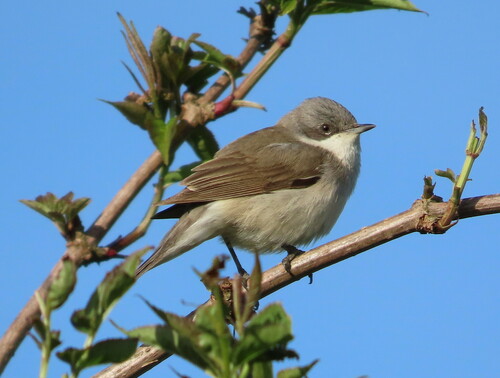 Klappergrasmücke
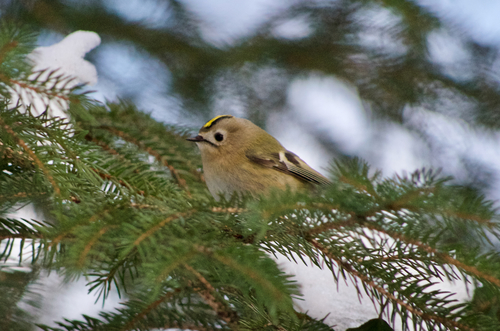 Wintergoldhähnchen
Kurz gesagt
Das zuverlässigste Feldmerkmal zur Unterscheidung der Klappergrasmücke von Wintergoldhähnchen ist der Kopf und das Gesicht: Klappergrasmücke hat einen grauen Kopf mit einer dunklen 'Banditenmaske' durch die Augen und einen weißen Hals, während Wintergoldhähnchen ein schlichtes Gesicht mit einer auffälligen gelben (oder orange-gelben bei Männchen) Haube auf dem Kopf zeigt, die von Schwarz umrandet ist. Juvenile Wintergoldhähnchen haben die gefärbte Haube nicht, zeigen aber trotzdem ein schlichtes Gesicht und zwei auffällige weiße Flügelstreifen, im Gegensatz zur Klappergrasmücke. Wintergoldhähnchen ist auch viel kleiner, mit einer runderen, kompakteren Form und einem merklich kürzeren, feineren Schnabel. Im Flug oder sitzend stehen die Flügelstreifen und die ständige Unruhe des Wintergoldhähnchens im Kontrast zur zurückhaltenderen, warblerartigen Klappergrasmücke. Beide sind kleine, aktive Singvögel, aber ihre Struktur, Kopfzeichnung und Flügelmarkierungen sind unterschiedlich.
Bestimmungstipps
- Head pattern: Klappergrasmücke has a grey head with a dark 'bandit mask' through the eye and a white throat; Wintergoldhähnchen has a plain face with black irises and a bright yellow (or orange-yellow) crest bordered by black in adults. This is the single most reliable mark for all ages.
- Crest: Adult Goldcrests show a yellow crest (orange in males) bordered by black; Klappergrasmücke never shows any colored crown or crest. Juvenile Goldcrests lack the colored crest but still have a plain face.
- Wingbars: Wintergoldhähnchen (all ages) has two bold white wingbars; Klappergrasmücke lacks wingbars entirely. This is especially useful in flight or when the wings are visible.
- Size and structure: Wintergoldhähnchen is much smaller and more compact, with a very short tail and tiny, needle-like bill. Klappergrasmücke is slightly larger, with a longer tail and a more typical warbler shape and bill.
- Bill shape: Wintergoldhähnchen's bill is very short and fine, suited to picking insects from needles; Klappergrasmücke has a longer, slightly heavier warbler bill.
- Upperparts color: Wintergoldhähnchen is olive-green above; Klappergrasmücke is grey-backed. In poor light, this can be subtle, but the difference is clear in good views.
- Underparts: Both have pale underparts, but Wintergoldhähnchen's are buff-white, while Klappergrasmücke's are more whitish, often with a sharp contrast to the grey head and white throat.
- Tail: Wintergoldhähnchen's tail is very short and often appears almost stubby; Klappergrasmücke has a longer, more pointed tail typical of warblers.
- Behavior: Wintergoldhähnchen is constantly moving, often hovering or hanging from branches; Klappergrasmücke moves more deliberately and rarely hovers.
- Habitat: Wintergoldhähnchen favors conifers and dense evergreens; Klappergrasmücke prefers open scrub, hedgerows, and woodland edges. Use habitat as a supporting clue, not a primary mark.
- Voice: Wintergoldhähnchen's song is a high, thin series of notes; Klappergrasmücke's is a fast, rattling 'tet' or 'che' sequence. If you hear the song, identification is straightforward.
- Sex and age: Both species are sexually similar, but only male Wintergoldhähnchen has an orange center to the crest; females have all-yellow crests. Juvenile Goldcrests lack the colored crest but retain the plain face and wingbars, never showing a mask or throat contrast.
- Flight style: Wintergoldhähnchen's flight is whirring and often includes abrupt changes of direction and hovering; Klappergrasmücke flies more directly and rarely hovers.
- Common pitfalls: Juvenile Wintergoldhähnchen can be mistaken for a drab warbler due to the lack of crest color, but the plain face and wingbars are always present. Klappergrasmücke never shows wingbars or a crest, even in juveniles.
- When marks fail: In poor light or quick views, focus on the presence or absence of wingbars and the head pattern. If only a silhouette is seen, Wintergoldhähnchen's tiny, round shape and short tail are distinctive compared to the more elongated Klappergrasmücke.
Größe
Wintergoldhähnchen ist der kleinste europäische Vogel, misst 8,5–9,5 cm in der Länge mit einer Flügelspannweite von 13,5–15,5 cm und wiegt nur 4,5–7,0 g [wikipedia]. Klappergrasmücke ist etwas größer als das Wintergoldhähnchen (obwohl immer noch ein kleiner Warbler), mit einem längeren Körper und einem längeren Schwanz, ist aber kleiner als die Dorngrasmücke. Wintergoldhähnchen erscheint viel kompakter, fast rundlich, mit einem sehr kurzen Schwanz und einem winzigen, nadelartigen Schnabel. Im Feld ist die winzige Größe des Wintergoldhähnchens oft sofort erkennbar, insbesondere wenn es neben anderen kleinen Vögeln gesehen wird.
Gefieder
- Juveniles/erstes Winter-Wintergoldhähnchen: Mattes olivfarbenes Obergefieder, fehlt die gefärbte Haube der Erwachsenen, zeigt aber trotzdem zwei auffällige weiße Flügelstreifen und ein schlichtes Gesicht. Bis zum ersten Winter sind junge Wintergoldhähnchen fast nicht von Erwachsenen zu unterscheiden, außer durch etwas stumpfere Töne.
- Erwachsenes Wintergoldhähnchen: Olivgrünes Obergefieder, buff-weiße Unterseite, zwei leuchtend weiße Flügelstreifen, schlichtes Gesicht mit schwarzen Iris und einer hellgelben Haube (orange-zentriert bei Männchen, ganz gelb bei Weibchen), die von Schwarz umrandet ist. Die Haube wird oft zur Schau erhoben. Keine Gesichtsmaske oder Halskontrast.
- Klappergrasmücke (alle Altersgruppen/Geschlechter): Grauer Rücken, weißliche Unterseite, grauer Kopf mit einer ausgeprägten dunklen 'Banditenmaske' durch das Auge und einem weißen Hals. Fehlen Flügelstreifen und jegliche gefärbte Haube. Keine kastanienbraunen Flügelpatches. Die Geschlechter sind fast identisch. Der Kontrast zwischen Kopf und Hals ist ein wichtiges Merkmal, ebenso wie das Fehlen eines Flügelmusters oder einer Kronenfarbe.
Zusammenfassend zeigt das Wintergoldhähnchen immer Flügelstreifen und (bei Erwachsenen) eine gefärbte Haube, während die Klappergrasmücke ein maskiertes Gesicht und einen weißen Hals zeigt, aber keine Flügelstreifen oder Haube.
Verhalten
Wintergoldhähnchen ist extrem aktiv, bewegt sich ständig durch das Laub, schwebt oft, kriecht entlang von Ästen und macht kurze, surrende Flüge mit abrupten Richtungswechseln. Es ernährt sich häufig durch schnelles Dashing und Flattern, manchmal kopfüber hängend. Klappergrasmücke ist ein aktiver Warbler, bewegt sich aber gezielter, fliegt typischerweise durch Sträucher und niedrige Bäume, schwebt selten. Die Unruhe des Wintergoldhähnchens und die Vorliebe für Nadelbäume oder dichte Vegetation stehen im Kontrast zu den methodischeren Bewegungen der Klappergrasmücke auf Buschhöhe.
Lebensraum
Klappergrasmücke brütet in gemäßigtem Europa (außer im Südwesten) und über den westlichen und zentralen Paläarktis, bevorzugt Sträucher, Hecken und offene Waldränder. Sie ist stark migratorisch und überwintert in Afrika, Arabien und Indien. Wintergoldhähnchen ist weit verbreitet in der Paläarktis, oft in Nadelwäldern, Mischwäldern, Parks und Gärten zu finden. In Europa ist das Wintergoldhähnchen eher in Nadelbäumen oder dichten immergrünen Pflanzen anzutreffen, während die Klappergrasmücke offene, buschige Lebensräume bevorzugt. Überlappungen können während der Migration auftreten, aber die Lebensraumpräferenz ist oft ein nützlicher Hinweis.
Stimme
Das Lied der Klappergrasmücke ist eine schnelle, rasselnde Sequenz von 'tet' oder 'che'-Rufen, ganz anders als das des Wintergoldhähnchens. Wintergoldhähnchen singt eine Reihe von hohen, dünnen Noten, höher und zarter als die meisten Warbler. Ihre Rufe und Lieder sind nicht leicht zu verwechseln: Das Lied des Wintergoldhähnchens ist eine dünne, hochfrequente Wiederholung, während das der Klappergrasmücke rauer und rasselnd ist.
Klappergrasmücke · Wintergoldhähnchen · Meine schwierigen Vögel