

Hawaïbuizerd vs Kortstaartbuizerd
Buteo solitarius versus Buteo brachyurus
Speel een quiz met Hawaïbuizerd en Kortstaartbuizerd
 Hawaïbuizerd
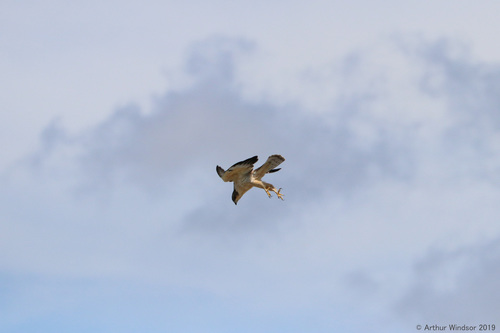 Kortstaartbuizerd
Kort gezegd
The most reliable way to separate Hawaiian Hawk from Short-tailed Hawk is range: Hawaiian Hawk is endemic to Hawai‘i (now only on the Big Island), while Short-tailed Hawk is found in the Americas. In the field, both species show variable plumage with light and dark morphs, but the Hawaiian Hawk is chunkier and often shows yellow legs (adults) or greenish legs (juveniles), while Short-tailed Hawk is slimmer and more often seen soaring high. Juvenile leg color and subtle differences in underwing pattern may help, but beware of overlap in plumage. Perched birds are especially tricky; focus on structure and context.
Herkenningstips
- Geographic range is decisive: Hawaiian Hawk is only found on the Big Island of Hawai‘i; Short-tailed Hawk is never found in Hawai‘i. If you are outside the Big Island, rule out Hawaiian Hawk immediately.
- Leg color: Adult Hawaiian Hawks have yellow legs, while juveniles have greenish legs. Short-tailed Hawk leg color is not specified, but this difference can help if legs are visible and you suspect a juvenile.
- Plumage morphs overlap: Both species have light and dark morphs, so do not rely on overall color alone. The dark morph Hawaiian Hawk is uniformly dark brown, while the light morph has a dark head and pale underparts; Short-tailed Hawk morphs are similar but not described in detail here.
- Yellow forecap in breeding season: One Hawaiian Hawk (likely the female) may show a yellow patch above the bill during breeding—this is not seen in Short-tailed Hawk.
- Structure: Hawaiian Hawk is chunkier and more robust, with a stocky build. Short-tailed Hawk is slimmer and less bulky, especially in flight.
- Behavior when perched: Short-tailed Hawk is rarely seen perched and often hides in dense canopy, showing only the head. Hawaiian Hawk is more likely to be seen perched openly in native forest.
- Flight behavior: Short-tailed Hawk is often seen soaring high and kiting (hovering into the wind with stationary wings), then swooping vertically at prey. Hawaiian Hawk's flight style is less detailed in these notes but is generally less aerial.
- Habitat: Hawaiian Hawk is restricted to native ʻōhiʻa lehua forests on the Big Island. Short-tailed Hawk prefers wooded edges and open areas in the Americas.
- Size: Hawaiian Hawk is slightly larger and bulkier, but size is not always reliable unless the birds are side by side.
- Juvenile marks: No distinctive juvenile upperwing or flight marks are described for either species in these notes, so do not rely on wing pattern for immatures.
- Perched vs soaring: If you see a Buteo soaring high and kiting in the Americas, Short-tailed Hawk is likely. A chunky Buteo perched in a Hawaiian forest is likely Hawaiian Hawk.
- Sexual dimorphism: Female Hawaiian Hawks are larger than males, but this is not a field mark unless you see a pair together.
- Vocalizations: No diagnostic vocal differences are provided in these notes.
- Pitfalls: Do not rely on overall color or morph; both species are highly variable. Use structure, leg color, and especially location and habitat.
- Context: Always consider where you are birding—range and habitat are the most reliable clues for separating these two Buteos.
Grootte
Hawaiian Hawk is slightly larger and bulkier, measuring 40–46 cm in length, with females averaging 605 g and males 441 g [wikipedia]. Short-tailed Hawk is not directly measured in the provided notes, but is generally described as slimmer and less robust than most Buteos. In practice, size differences are subtle and not always reliable in the field, especially at a distance or in flight.
Verenkleed
Both species come in light and dark morphs, making plumage alone unreliable for quick ID. Hawaiian Hawk adults have yellow legs, while juveniles show greenish legs—a subtle but useful mark if seen well. The Hawaiian Hawk's dark morph is uniformly dark brown on head, breast, and underwings, while the light morph has a dark head contrasting with a pale breast and underwings. Short-tailed Hawk also has light and dark morphs, but field notes do not specify unique juvenile or upperwing patterns for either species. No distinctive age-specific upperwing marks are described for either species, so focus on leg color and overall contrast. During breeding, one Hawaiian Hawk (likely the female) may show a yellow forecap above the bill, which is not seen in Short-tailed Hawk.
Gedrag
Short-tailed Hawk is most often seen soaring high and is rarely visible when perched, as it tends to hide in dense canopy with only the head showing. It hunts mainly from the air, using kiting and vertical swoops. Hawaiian Hawk, while also a Buteo, is less described for aerial hunting style in these notes, but is generally more likely to be seen perched in open native forest. If you see a Buteo soaring high and kiting, especially in the Americas, Short-tailed Hawk is more likely; a chunky Buteo perched in a Hawaiian forest is likely Hawaiian Hawk.
Habitat
Hawaiian Hawk is now restricted to the Big Island of Hawai‘i, breeding in native ʻōhiʻa lehua forests. Short-tailed Hawk is found in the Americas, from northern Argentina and Brazil through Central America to Florida and Arizona, preferring wooded edges and open areas for hunting. If you are not on the Big Island, you are not seeing a Hawaiian Hawk. Short-tailed Hawk is local and hard to spot when perched, but may be seen soaring over forests or open country.