

Roze kaketoe vs Grote geelkuifkaketoe
Eolophus roseicapilla versus Cacatua galerita
Speel een quiz met Roze kaketoe en Grote geelkuifkaketoe
 Roze kaketoe
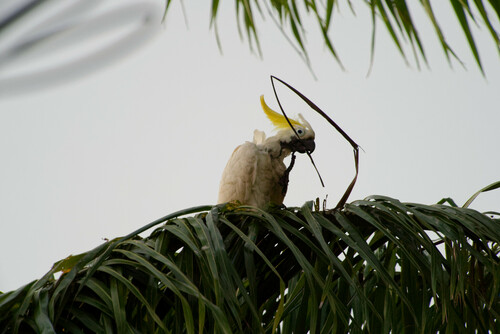 Grote geelkuifkaketoe
Kort gezegd
De meest betrouwbare manier om Roze kaketoe van Grote geelkuifkaketoe in het veld te scheiden, is op basis van de algehele kleur van het verenkleed: Roze kaketoe is duidelijk roze en grijs, terwijl Grote geelkuifkaketoe volledig wit is met een gele kuif. Dit contrast geldt voor alle leeftijden en zowel in de vlucht als zittend. Juveniele Roze kaketoes kunnen doffer en grijzer lijken, maar benaderen nooit de volledig witte uitstraling van Grote geelkuifkaketoe. Structureel is Grote geelkuifkaketoe groter en zwaarder, met een prominente gele kuif, terwijl Roze kaketoe een kortere, lichtere bouw en een bleke roze kuif heeft. Beide soorten kunnen samen worden gezien in open Australische habitats, maar hun kleur en grootte maken verwarring kortstondig met een verrekijker.
Herkenningstips
- Algehele kleur: Roze kaketoe is altijd roze en grijs; Grote geelkuifkaketoe is altijd wit met een gele kuif. Dit is het snelste en meest betrouwbare veldkenmerk voor alle leeftijden en seizoenen.
- Kleur en vorm van de kuif: Roze kaketoe heeft een lichtroze, kortere kuif; Grote geelkuifkaketoe heeft een lange, expressieve gele kuif die vaak omhoog staat. Als je een gele kuif ziet, is het nooit een Roze kaketoe.
- Kleur van de snavel: De snavel van Roze kaketoe is licht botkleurig; die van Grote geelkuifkaketoe is zwart. Dit is zichtbaar van dichtbij of met goede optiek.
- Grootte: Grote geelkuifkaketoe is veel groter en zwaarder dan Roze kaketoe. Als de vogel groot en imposant lijkt, vooral naast andere kaketoes, is het waarschijnlijk Grote geelkuifkaketoe.
- Vluchtprofiel: Grote geelkuifkaketoe vliegt met langzame, diepe vleugelslagen en lijkt zwaar; Roze kaketoe is sneller en wendbaarder in de vlucht.
- Onderwingkleur: Grote geelkuifkaketoe heeft geelachtige ondervleugels en onderstaart; de ondervleugel van Roze kaketoe is grijs, nooit geel of wit.
- Verwarring bij juvenielen: Jonge Roze kaketoes zijn doffer maar tonen nog steeds roze en grijs; ze lijken nooit wit. Juveniele Grote geelkuifkaketoe is vanaf het begin wit.
- Oogkleur: Beide soorten hebben subtiele sekseverschillen in iris kleur (mannetjes donkerder, vrouwtjes bruiner of roder), maar dit is zelden nuttig in het veld.
- Pootkleur: Beide hebben grijze poten, wat geen nuttige scheiding is.
- Stem: De roep van Grote geelkuifkaketoe is een luide, harde schreeuw; die van Roze kaketoe is hoger en meer nasaal. Als je een doordringende schreeuw hoort, denk dan aan Grote geelkuifkaketoe.
- Habitatoverlap: Beide kunnen samen voorkomen in open gebieden, parken en voorsteden, dus vertrouw niet alleen op het habitat.
- Zittende houding: Grote geelkuifkaketoe lijkt vaak groter-hoofdig en rechterop; Roze kaketoe is compacter en ronder.
- Hybride verwarring: Roze kaketoe kan hybridiseren met Grote geelkuifkaketoe, maar hybriden zijn zeldzaam en vertonen tussenliggende kenmerken; als je een vogel ziet met roze en wit/geel, overweeg dan deze mogelijkheid, maar pure vogels zijn gemakkelijk te scheiden.
- Voedingsgedrag: Beide foerageren op de grond, maar Grote geelkuifkaketoe is waarschijnlijker te zien terwijl ze objecten manipuleren of als een wachter optreden.
- Verkeerde identiteit: Verwissel Grote geelkuifkaketoe niet met corella's (die kleiner zijn, geen gele kuif hebben en een bleke snavel hebben) of met Major Mitchell's Cockatoo (die meer roze en wit is, niet grijs). Roze kaketoe is uniek in zijn combinatie van roze en grijs.
Grootte
Grote geelkuifkaketoe is aanzienlijk groter, met een lengte van 44–55 cm en weegt meer dan Roze kaketoe, die ongeveer 35 cm lang is en 270–350 g in massa [wikipedia][avonet]. In het veld lijkt Grote geelkuifkaketoe omvangrijker en met een langere staart, met een zwaardere snavel en een groter hoofd. Roze kaketoe is compacter en lichter in het algemeen, met een kortere staart en een kleiner hoofd. Deze grootteverschillen zijn het meest opvallend wanneer beide soorten samen worden gezien, maar zelfs alleen is de grootte en aanwezigheid van de Grote geelkuifkaketoe opmerkelijk.
Verenkleed
- Juvenielen: Jonge Roze kaketoes zijn doffer dan volwassenen, met een grijzere borst, kroon en kuif, maar behouden nog steeds een roze gezicht en onderdelen met een grijze rug en vleugels. Ze lijken nooit volledig wit. Juveniele Grote geelkuifkaketoe zijn over het algemeen wit met geelachtige ondervleugels en kuif, zonder enige roze of grijze tinten op enige leeftijd.
- Volwassenen: Volwassen Roze kaketoes tonen een helder roze gezicht, borst en kuif, met een bleke grijze rug, vleugels en staart. De kuif is lichtroze en beweeglijk. Grote geelkuifkaketoe zijn puur wit met een heldere gele, expressieve kuif en een geelachtige wash op de ondervleugel en onderstaart. Hun snavel is zwart, wat contrasteert met de botkleurige snavel van Roze kaketoe. Oogkleur kan verschillen per geslacht in beide soorten, maar is subtiel en niet betrouwbaar in het veld.
- In de vlucht: De bovenvleugel van Roze kaketoe is grijs, wat overeenkomt met de rug, zonder wit of geel. Grote geelkuifkaketoe toont witte vleugels met gele tinten eronder, en de gele kuif kan zichtbaar zijn als deze omhoog staat. Er zijn geen complexe vleugelpatronen in beide soorten die verwarring in de vlucht zouden veroorzaken.
Gedrag
Beide soorten zijn sociaal en vaak te zien in groepen, soms samen. Grote geelkuifkaketoe zijn zeer intelligent en kunnen worden gezien terwijl ze objecten manipuleren, vuilnisbakken openen of als wachters optreden terwijl anderen zich voeden. Roze kaketoes zijn ook sociaal en aanpasbaar, maar zijn minder geneigd om hetzelfde niveau van objectmanipulatie te tonen. In de vlucht lijken Grote geelkuifkaketoe zwaarder en krachtiger, met langzamere, diepere vleugelslagen, terwijl Roze kaketoes sneller en wendbaarder zijn. Beide soorten zitten opvallend en foerageren op de grond of in bomen.
Habitat
Beide soorten zijn wijdverspreid in Australië en hebben zich goed aangepast aan door mensen veranderde landschappen, vaak gezien in stedelijke parken, landbouwgrond en open bossen. Grote geelkuifkaketoe komt ook voor in Nieuw-Guinea en delen van Indonesië, terwijl Roze kaketoe endemisch is voor het vasteland van Australië. Roze kaketoe is talrijker in open habitats met verspreide bomen, terwijl Grote geelkuifkaketoe de voorkeur geeft aan bosrijke gebieden maar ook algemeen voorkomt in steden en voorsteden. Beide vermijden dichte, natte bossen.
Geluid
Grote geelkuifkaketoe is beroemd om zijn luide, schreeuwerige schreeuwen en gekwetter, die over lange afstanden hoorbaar zijn en vaak worden gehoord voordat de vogel wordt gezien. De roepen van Roze kaketoe zijn ook luid, maar zijn hoger, meer nasaal en minder hard dan die van Grote geelkuifkaketoe. Beide kunnen luidruchtig zijn in groepen, maar de roep van Grote geelkuifkaketoe is doordringender en schurend, terwijl die van Roze kaketoe meer kletsend en converserend is.