

アメリカハイイロチュウヒ 対 アシボソハイタカ
Circus hudsonius 対 Accipiter striatus
アメリカハイイロチュウヒとアシボソハイタカのクイズ
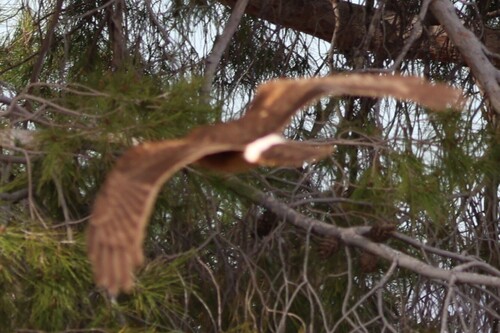 アメリカハイイロチュウヒ
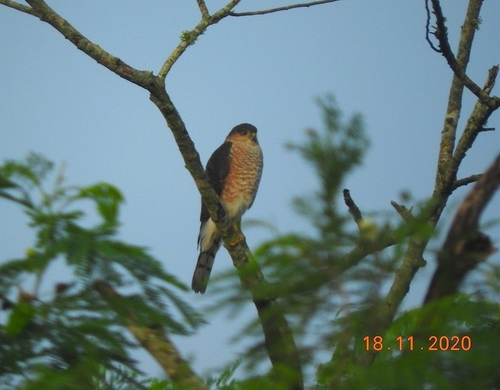 アシボソハイタカ
要点
The most reliable field mark to separate Northern Harrier from Sharp-shinned Hawk in the field—especially for immatures in flight—is the harrier’s long, slim wings held in a shallow V and its long tail, versus the sharpie’s short, rounded wings and squared-off tail. Juvenile harriers show a distinctive white rump patch and fly low over open ground, while sharp-shinned hawks lack the rump patch and have a more compact, flap-and-glide flight. Adult male harriers are pale gray above, but females and immatures are brownish and can be confused with Accipiters; look for the harrier’s owl-like facial disc and overall lanky proportions. Sharp-shinned Hawks are much smaller, with proportionally shorter wings and tail, and are most often seen darting through woods or ambushing birds at feeders.
識別のコツ
- White rump patch: Northern Harrier of any age or sex shows a bold white rump patch above the tail, visible in all postures—Sharp-shinned Hawk never shows this. If you see a white rump, it's a harrier.
- Wing shape and flight style: Harriers have long, slim wings held in a shallow V (dihedral) and fly low with buoyant, tilting glides; sharpies have short, rounded wings and fly with rapid flapping and short glides, usually in a straight line or weaving through trees.
- Tail shape: Harrier tails are long and rounded, often fanned; sharpie tails are shorter, squared-off or slightly notched, with a narrow white tip sometimes visible.
- Size: Even a female sharpie is much smaller than a male harrier; harriers look lanky and elongated, sharpies compact and stubby. Size is best judged with experience or when birds are side by side.
- Facial disc: Harriers have an owl-like facial disc, giving a flat-faced look in good light; sharpies have a typical hawk face with a dark cap and no disc.
- Perched posture: Harriers rarely perch in trees except at nest or roost, usually seen on the ground or low posts; sharpies perch upright in trees or on posts, often looking alert and compact.
- Plumage—juvenile: Juvenile harriers are brown above, streaked below, with a white rump; juvenile sharpies are brown above with a scaly look, heavily streaked below, but no rump patch.
- Plumage—adult: Adult male harriers are pale gray above and below; adult sharpies are blue-gray above with a dark cap and rufous barring below. Female and immature harriers are brownish, but still show the white rump.
- Legs: Sharp-shinned Hawks have very thin, long yellow legs (hence the name); harrier legs are proportionally longer than most hawks, but not as spindly as a sharpie’s.
- Eye color: Sharpie juveniles have yellow eyes, adults orange to red; harrier eye color is less obvious in the field and not a primary mark.
- Habitat: Harriers are in open country, sharpies in woods or at feeders. Context is a strong clue.
- Hunting behavior: Harriers course low over fields; sharpies dash through trees or ambush at feeders.
- Vocalizations: Both are mostly silent away from the nest; calls are not reliable for field ID.
- Common pitfalls: Immature harriers and sharpies are both brown above and streaked below; always check for the white rump and flight style. A harrier in woodland is rare; a sharpie over a marsh is unusual.
- Sexual dimorphism: Both species show female-larger dimorphism, but this does not help separate them in the field.
大きさ
Northern Harrier is substantially larger and longer-winged: males are 41–52 cm (16–20 in) long with a 97–122 cm (38–48 in) wingspan, females even heavier and longer. Sharp-shinned Hawk is much smaller, with males 23–30 cm (9.1–11.8 in) long and a 42–58 cm (17–23 in) wingspan; females are larger than males but still well below harrier size. Even a female sharpie is dwarfed by a male harrier. In the field, harriers look rangy and slim, sharpies compact and stubby.
羽色
Juvenile/immature Northern Harriers of both sexes show a prominent white rump patch at all ages, visible in all postures but especially in flight—this is absent in Sharp-shinned Hawk of any age. Juvenile harriers are brown above with streaked underparts, while sharpie juveniles are brown above with a scaly appearance and heavy brown streaking below, but no white rump. Adult male harriers are pale gray above and below (the 'Gray Ghost'), females and immatures are brownish with a rufous cast. Sharp-shinned adults have blue-gray upperparts, a dark cap, and rufous barring below; their tail is banded and usually square-tipped, sometimes narrowly white-tipped. In flight, harrier wings are long and narrow with a straight trailing edge, while sharpie wings are short, broad, and rounded, with a squared-off tail and no rump patch. Juvenile sharpies have yellow eyes, adults orange to red; harrier eye color is less distinctive in the field.
行動
Northern Harriers hunt by coursing low over open fields and marshes, wings held in a shallow dihedral (V), often tilting and gliding with buoyant, owl-like flight. They rarely perch in trees except at roost or nest. Sharp-shinned Hawks are woodland ambush predators, flying with rapid bursts of flapping and short glides, often darting through dense cover or ambushing small birds at feeders. Sharpies perch in trees or on fenceposts, rarely seen flying low over open ground for extended periods.
生息環境
Northern Harriers are birds of open country—marshes, grasslands, prairies, and fields—rarely venturing into dense woodland. Sharp-shinned Hawks prefer forests and woodland edges, but may be seen in suburban yards, especially near bird feeders. If you see a raptor flying low over a marsh or field, harrier is far more likely; a small hawk darting through trees or near feeders is almost certainly a sharpie.
声
Northern Harriers are mostly silent, but both sexes give short, rapid 'kek' notes, especially when alarmed or during breeding. Females may scream loudly in the breeding season. Sharp-shinned Hawks are also generally quiet, with high-pitched, rapid 'kik-kik-kik' calls at the nest or when alarmed, but these are rarely heard in migration or while hunting. Vocalizations are not usually helpful for field separation.
アメリカハイイロチュウヒ · アシボソハイタカ · 苦手な鳥