

Motmot

ヒメテンニョゲラ 対 チャバネテンニョゲラ

Celeus loricatus 対 Celeus castaneus

ヒメテンニョゲラとチャバネテンニョゲラのクイズ
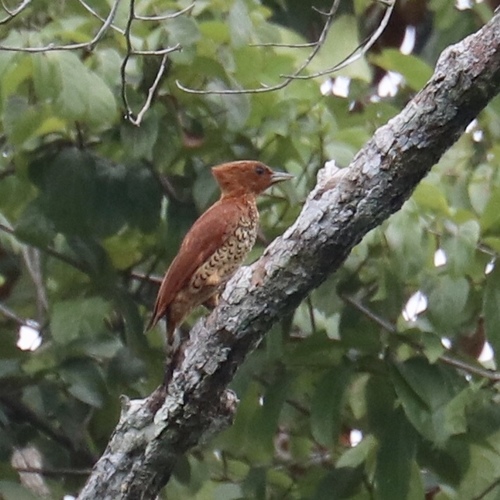
ヒメテンニョゲラ (Celeus loricatus) ヒメテンニョゲラ
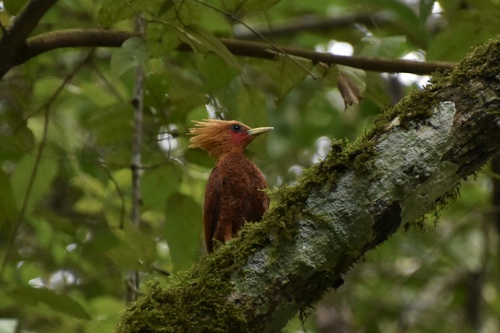
チャバネテンニョゲラ (Celeus castaneus) チャバネテンニョゲラ

メディア

読み込み中…

要点

シナモンテンニョゲラとチャバネテンニョゲラを区別する最も信頼できるフィールドマークは、頭部と喉のパターンです:シナモンテンニョゲラのオスは赤褐色の頭に赤い顎と喉を持ち、チャバネテンニョゲラのオスは、目の後ろから喉の下まで、より広範囲で明るい赤を示し、尖った冠を持っています。両種のメスは顔に赤がありませんが、シナモンテンニョゲラのメスは均一な赤褐色の頭を持ち、チャバネテンニョゲラのメスは鈍いオクラ色または黄褐色の頭を示します。両種は黒い縞模様のある赤褐色または栗色の上面を持っていますが、シナモンテンニョゲラは一般的により淡く、特に一部の亜種ではシナモン色が強いです。両種の幼鳥は成鳥に似ていますが、より鈍く、喉や頬に暗い斑点を示すため、年齢だけでは強い区別にはなりません。サイズと構造は似ていますが、チャバネテンニョゲラは平均してわずかに大きく、重いです。最も一貫したフィールドの区別のためには、頭部のパターン、喉の色、上面のトーンに注目してください。

識別のコツ

  1. Head and Crest Shape: シナモンテンニョゲラは冠に黒い縞模様のあるふさふさした冠を持ち、チャバネテンニョゲラの冠は尖っていて、頭は鈍いオクラ色または黄褐色です(赤褐色ではありません)。
  2. Male Face and Throat: オスのシナモンテンニョゲラは赤褐色の頭に赤い顎と喉(黒い縞模様あり)を示します;オスのチャバネテンニョゲラは、目の後ろから喉の下まで、より広範囲で明るい赤のマスクを持ち、時には顎や上喉まで含まれます。チャバネテンニョゲラの赤は、より明白で広範囲です。
  3. Female Face: メスのシナモンテンニョゲラは赤がない均一な赤褐色の頭を持ちます;メスのチャバネテンニョゲラは鈍いオクラ色または黄褐色の頭を持ち、赤はありませんが、全体のトーンはシナモンよりも豊かではありません。
  4. Upperparts Tone: シナモンテンニョゲラは一般的に上面がより淡く、シナモン色が強いですが、特に一部の亜種(例:innotatusは非常に淡く、縞模様が弱い)ではそうです。チャバネテンニョゲラは、上面がより深い赤褐色で、シナモン色の尻と背中や上尾羽により明確な黒い縞模様があります。
  5. Flight Feather Pattern: シナモンテンニョゲラの飛翔羽は黒っぽく、広い赤褐色の縞模様があります;チャバネテンニョゲラの飛翔羽は赤褐色で鈍い茶色の先端があります。速い飛行中、シナモンは暗い縞模様と赤褐色の縞模様の間によりコントラストを示すことがあります。
  6. Tail Pattern: シナモンテンニョゲラは広いクリーム色から白っぽい縞模様のある黒い尾を持ち、チャバネテンニョゲラは栗色の基部を持つ鈍い黒い尾羽を持っています。尾に淡い縞模様が見えたら、シナモンを考えてください。
  7. Underparts Markings: シナモンテンニョゲラの下部は淡いクリーム色で、太い黒い矢じり型のマークがあります;チャバネテンニョゲラの下部は栗色で、重い黒い「V」または「U」マークがあります。背景色はシナモンで淡く、チャバネテンニョゲラで豊かな栗色です。
  8. Bill Color: シナモンテンニョゲラのくちばしは灰色から黄色がかっています;チャバネテンニョゲラのくちばしはアイボリー色の黄色で、基部に青緑色の色合いがあります。これは微妙ですが、近距離で役立つことがあります。
  9. Iris Color: シナモンテンニョゲラは赤い虹彩を持ち、チャバネテンニョゲラの虹彩は栗色またはガーネットブラウンです。フィールドでは常に明白ではありません。
  10. Leg Color: シナモンテンニョゲラは灰色の脚を持ち、チャバネテンニョゲラの脚は暗いオリーブ色から灰色がかっています。強いフィールドマークではありません。
  11. Juvenile Plumage: 両種の幼鳥は成鳥よりも鈍く、暗い色合いで、喉(シナモン)や頬(チャバネテンニョゲラ)に暗い斑点があり、下部にはより不規則な黒いマークがあります。区別は難しいですが、シナモンの幼鳥は喉の斑点がより多く、チャバネテンニョゲラは全体的に暗くなります。
  12. Size and Structure: チャバネテンニョゲラはわずかに大きく、重いですが、これは rarely obvious unless you have direct comparison.
  13. Range: メキシコ、ベリーズ、グアテマラ、ホンジュラスでは、チャバネテンニョゲラのみが生息しています。コロンビアとエクアドルでは、シナモンのみが生息しています。コスタリカ、ニカラグア、パナマでは、両方が可能です—羽毛を使用してください。
  14. Subspecies Variation: シナモンテンニョゲラの亜種は暗さや縞模様に変化があり、一部は上面と下面がより淡く、縞模様が少ない(例:innotatus)、これによりより豊かなチャバネテンニョゲラとはかなり異なって見えることがあります。
  15. Plumage Pitfalls: 両種は黒いマークや縞模様の強度に変化を示すことがあるため、最初に頭部と喉のパターンに頼り、その後全体のトーンと下部のパターンに頼ってください。

大きさ

チャバネテンニョゲラはシナモンテンニョゲラよりもわずかに大きく、重いです。シナモンテンニョゲラは平均して約19〜23 cmの長さと78 gの質量を持ち、チャバネテンニョゲラは21.5〜25 cmと80〜105 gです。この違いはフィールドでは微妙ですが、チャバネテンニョゲラは横に並んで見ると少しがっしりしていて長く見えることがあります。両種は中型のCeleusキツツキであるため、サイズだけでは直接比較なしには診断できません。

羽色

行動

両種は似たようなCeleusキツツキの行動を共有しています:彼らは幹や枝を登って採餌し、しばしばペアや小さな群れで行動し、木に巣穴を掘ります。フィールドで彼らを確実に区別するための強い行動の違いは、情報源には記載されていません。両種は中層から樹冠で見られ、活発で警戒心の強い鳥です。

生息環境

両種は中米(コスタリカ、ニカラグア、パナマ)で生息域が重なりますが、チャバネテンニョゲラはメキシコ、ベリーズ、グアテマラ、ホンジュラスの北部にさらに広がり、シナモンテンニョゲラはコロンビアとエクアドルの南部にさらに広がります。両種は湿った森林やその周辺に生息しているため、生息地だけでは彼らの生息域が重なる場所では診断できません。メキシコやベリーズで見られた場合はチャバネテンニョゲラです;コロンビアやエクアドルで見られた場合はシナモンです。コスタリカ、ニカラグア、パナマでは、両方が可能です。

より良い説明を送る

比較と同じ項目を使ってください。文章はすぐに公開されます。

The most reliable field mark to separate Cinnamon Woodpecker from Chestnut-coloured Woodpecker is the head and throat pattern: Cinnamon Woodpecker males have a rufous head with a red chin and throat, while Chestnut-coloured males show a much more extensive and brighter red from the lores to behind the eye and down the throat, with a pointed crest. Females of both species lack red on the face, but Cinnamon Woodpecker females have a uniform rufous head, whereas Chestnut-coloured females show a duller ochraceous or tawny head. Both species have rufous or chestnut upperparts with black barring, but Cinnamon Woodpecker is generally paler and more cinnamon-toned, especially in some subspecies. Juveniles of both are similar to adults but duller, and both show dusky mottling on the throat or malar, so age alone is not a strong separator. Size and structure are similar, but Chestnut-coloured Woodpecker is slightly larger and heavier on average. Focus on head pattern, throat color, and the tone of the upperparts for the most consistent field separation.

  1. Head and Crest Shape: Cinnamon Woodpecker has a bushy crest with black streaks on the crown, while Chestnut-coloured Woodpecker's crest is pointed and the head is dull ochraceous or tawny (not rufous).
  2. Male Face and Throat: Male Cinnamon Woodpecker shows a red chin and throat (with black streaks) on a rufous head; male Chestnut-coloured has a much more extensive bright red mask from the lores to behind the eye and down the throat, sometimes including the chin and upper throat. The red is much more obvious and extensive in Chestnut-coloured.
  3. Female Face: Female Cinnamon Woodpecker has a uniform rufous head with no red; female Chestnut-coloured has a dull ochraceous/tawny head, also with no red, but the overall tone is less rich than Cinnamon.
  4. Upperparts Tone: Cinnamon Woodpecker is generally paler and more cinnamon-toned above, especially in some subspecies (e.g., innotatus is very pale with weak barring). Chestnut-coloured Woodpecker is deeper rufous-chestnut above, with a cinnamon-buff rump and more distinct black barring on the back and uppertail coverts.
  5. Flight Feather Pattern: Cinnamon Woodpecker's flight feathers are blackish with wide rufous bars; Chestnut-coloured's are rufous-chestnut with dusky brown tips. In fast flight, Cinnamon may show more contrast between dark and rufous bars.
  6. Tail Pattern: Cinnamon Woodpecker has a black tail with wide buff to whitish bars; Chestnut-coloured has dull black tail feathers with chestnut bases. If you see pale bars in the tail, think Cinnamon.
  7. Underparts Markings: Cinnamon Woodpecker's underparts are paler buff with bold black arrowhead-shaped marks; Chestnut-coloured's underparts are chestnut with heavy black 'V' or 'U' marks. The background color is paler in Cinnamon, richer chestnut in Chestnut-coloured.
  8. Bill Color: Cinnamon Woodpecker's bill is grayish to yellowish; Chestnut-coloured's is ivory-yellow with a blue-green tinge at the base. This is subtle but can help at close range.
  9. Iris Color: Cinnamon Woodpecker has a red iris; Chestnut-coloured's iris is chestnut or garnet brown. Not always obvious in the field.
  10. Leg Color: Cinnamon Woodpecker has gray legs; Chestnut-coloured's legs are dark olive to grayish. Not a strong field mark.
  11. Juvenile Plumage: Both species' juveniles are duller and darker than adults, with dusky mottling on the throat (Cinnamon) or malar (Chestnut-coloured) and more irregular black marks below. Separation is difficult, but Cinnamon juveniles may show more throat mottling, Chestnut-coloured more overall darkness.
  12. Size and Structure: Chestnut-coloured Woodpecker is slightly larger and heavier, but this is rarely obvious unless you have direct comparison.
  13. Range: In Mexico, Belize, Guatemala, and Honduras, only Chestnut-coloured occurs. In Colombia and Ecuador, only Cinnamon. In Costa Rica, Nicaragua, and Panama, both are possible—use plumage.
  14. Subspecies Variation: Cinnamon Woodpecker subspecies vary in darkness and barring; some are paler and less barred above and below (e.g., innotatus), which can make them look quite different from the richer Chestnut-coloured.
  15. Plumage Pitfalls: Both species can show variation in the intensity of black markings and barring, so rely on head and throat pattern first, then overall tone and underpart pattern.

Chestnut-coloured Woodpecker is slightly larger and heavier than Cinnamon Woodpecker. Cinnamon Woodpecker averages about 19–23 cm in length and 78 g in mass, while Chestnut-coloured Woodpecker is 21.5–25 cm and 80–105 g. This difference is subtle in the field, but Chestnut-coloured may appear a bit bulkier and longer, especially when seen side by side. Both species are medium-sized Celeus woodpeckers, so size alone is rarely diagnostic without direct comparison.

  • Juveniles: Both species' juveniles resemble adults but are duller and darker overall, with dusky mottling on the throat (Cinnamon) or malar (Chestnut-coloured) and more irregular, less distinct black markings below. This makes juveniles tricky to separate, but Cinnamon Woodpecker juveniles tend to have more dusky mottling on the throat and irregular underpart markings, while Chestnut-coloured juveniles are overall darker and duller, with less extensive black marks below.

  • Adults: Cinnamon Woodpecker has a rufous head with a bushy crest and black streaks on the crown; males have a red chin and throat, females do not. Chestnut-coloured Woodpecker has a dull ochraceous or tawny head with a pointed crest; males show a bright red mask from the lores to behind the eye and down the throat, sometimes extending to the chin and upper throat, while females lack any red. Cinnamon Woodpecker's upperparts are dark rufous with narrow black bars, flight feathers are blackish with wide rufous bars, and the tail is black with wide buff/whitish bars. Chestnut-coloured Woodpecker's upperparts are rufous-chestnut with a cinnamon-buff rump and black bars, flight feathers are rufous-chestnut with dusky brown tips, and the tail is dull black with chestnut bases. Underparts in Cinnamon are paler buff with bold black arrowhead marks; in Chestnut-coloured, they are chestnut with heavy black 'V' or 'U' marks. Bill color is grayish/yellowish in Cinnamon, ivory-yellow with a blue-green tinge in Chestnut-coloured.

Both species share similar Celeus woodpecker behaviors: they forage by climbing trunks and branches, often in pairs or small groups, and excavate nest cavities in trees. No strong behavioral differences are noted in the sources that would reliably separate them in the field. Both may be seen at mid-levels to canopy and are active, alert birds.

Both species overlap in range in Central America (Costa Rica, Nicaragua, Panama), but Chestnut-coloured Woodpecker extends further north into Mexico, Belize, Guatemala, and Honduras, while Cinnamon Woodpecker reaches further south into Colombia and Ecuador. Both inhabit humid forests and edges, so habitat alone is not diagnostic where their ranges overlap. If seen in Mexico or Belize, it is Chestnut-coloured; if in Colombia or Ecuador, it is Cinnamon. In Costa Rica, Nicaragua, and Panama, both are possible.

変更を破棄しますか?

保存していない編集があります。今離れると失われます。

ヒメテンニョゲラ · チャバネテンニョゲラ · 苦手な鳥