

Cinnamon Woodpecker vs Chestnut-colored Woodpecker
Celeus loricatus contro Celeus castaneus
Fai un quiz con Cinnamon Woodpecker e Chestnut-colored Woodpecker
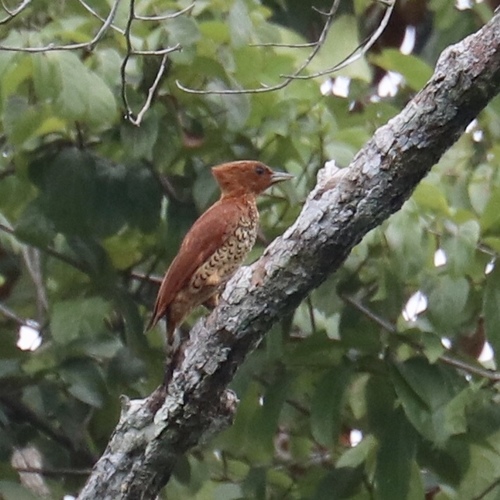 Cinnamon Woodpecker
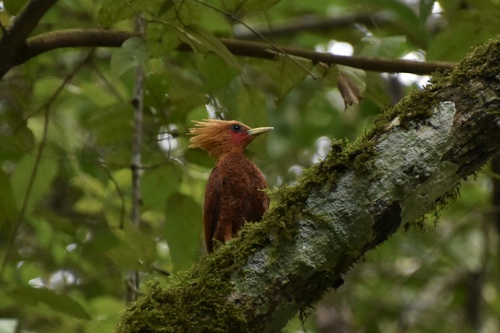 Chestnut-colored Woodpecker
In breve
Il segno di campo più affidabile per separare il Picchio color cannella dal Picchio color castano è il motivo della testa e della gola: i maschi del Picchio color cannella hanno una testa ruggine con un mento e una gola rossi, mentre i maschi del Picchio color castano mostrano un rosso molto più esteso e brillante dalle lore fino dietro l'occhio e giù per la gola, con una cresta appuntita. Le femmine di entrambe le specie non hanno rosso sul viso, ma le femmine del Picchio color cannella hanno una testa ruggine uniforme, mentre le femmine del Picchio color castano mostrano una testa ocra o fulva più opaca. Entrambe le specie hanno parti superiori ruggine o castano con striature nere, ma il Picchio color cannella è generalmente più chiaro e più tonico di cannella, specialmente in alcune sottospecie. I giovani di entrambe le specie sono simili agli adulti ma più opachi, e mostrano macchie scure sulla gola o sul malare, quindi l'età da sola non è un forte separatore. La dimensione e la struttura sono simili, ma il Picchio color castano è leggermente più grande e pesante in media. Concentrati sul motivo della testa, sul colore della gola e sul tono delle parti superiori per la separazione di campo più coerente.
Consigli di identificazione
- Forma della testa e della cresta: Il Picchio color cannella ha una cresta folta con striature nere sulla corona, mentre la cresta del Picchio color castano è appuntita e la testa è ocra o fulva opaca (non ruggine).
- Viso e gola del maschio: Il maschio del Picchio color cannella mostra un mento e una gola rossi (con striature nere) su una testa ruggine; il maschio del Picchio color castano ha una maschera rossa brillante molto più estesa dalle lore fino dietro l'occhio e giù per la gola, a volte includendo il mento e la parte superiore della gola. Il rosso è molto più evidente ed esteso nel Picchio color castano.
- Viso della femmina: La femmina del Picchio color cannella ha una testa ruggine uniforme senza rosso; la femmina del Picchio color castano ha una testa ocra/fulva opaca, anch'essa senza rosso, ma il tono generale è meno ricco rispetto al Cannella.
- Tono delle parti superiori: Il Picchio color cannella è generalmente più chiaro e più tonico di cannella sopra, specialmente in alcune sottospecie (ad es., innotatus è molto chiaro con striature deboli). Il Picchio color castano è di un ruggine-castano più profondo sopra, con un posteriore color cannella e striature nere più distinte sulla schiena e sulle copritrici della coda.
- Motivo delle piume di volo: Le piume di volo del Picchio color cannella sono nere con ampie strisce ruggine; quelle del Picchio color castano sono ruggine-castano con punte brune scure. In volo veloce, il Cannella può mostrare più contrasto tra le strisce scure e ruggine.
- Motivo della coda: Il Picchio color cannella ha una coda nera con ampie strisce color crema fino a bianche; il Picchio color castano ha piume della coda nere opache con basi castane. Se vedi strisce chiare nella coda, pensa al Cannella.
- Marcature delle parti inferiori: Le parti inferiori del Picchio color cannella sono di un color crema più chiaro con marcature nere a forma di freccia; le parti inferiori del Picchio color castano sono castano con pesanti marcature nere a forma di 'V' o 'U'. Il colore di fondo è più chiaro nel Cannella, più ricco di castano nel Picchio color castano.
- Colore del becco: Il becco del Picchio color cannella è grigiastro fino a giallastro; quello del Picchio color castano è giallo avorio con una sfumatura blu-verde alla base. Questo è sottile ma può aiutare a distanza ravvicinata.
- Colore dell'iride: Il Picchio color cannella ha un'iride rossa; l'iride del Picchio color castano è castano o granato. Non sempre evidente sul campo.
- Colore delle zampe: Il Picchio color cannella ha zampe grigie; le zampe del Picchio color castano sono di un verde oliva scuro fino a grigiastre. Non è un segno di campo forte.
- Piumaggio giovanile: I giovani di entrambe le specie sono più opachi e più scuri degli adulti, con macchie scure sulla gola (Cannella) o sul malare (Picchio color castano) e marcature nere più irregolari e meno distinte sotto. La separazione è difficile, ma i giovani del Picchio color cannella possono mostrare più macchie sulla gola, mentre i giovani del Picchio color castano mostrano più oscurità complessiva.
- Dimensione e struttura: Il Picchio color castano è leggermente più grande e pesante, ma questo è raramente evidente a meno che tu non abbia un confronto diretto.
- Distribuzione: In Messico, Belize, Guatemala e Honduras, si trova solo il Picchio color castano. In Colombia ed Ecuador, solo il Cannella. In Costa Rica, Nicaragua e Panama, entrambi sono possibili—usa il piumaggio.
- Variazione delle sottospecie: Le sottospecie del Picchio color cannella variano in oscurità e striature; alcune sono più chiare e meno striate sopra e sotto (ad es., innotatus), il che può farle sembrare piuttosto diverse dal più ricco Picchio color castano.
- Trappole del piumaggio: Entrambe le specie possono mostrare variazione nell'intensità delle marcature nere e delle striature, quindi fai affidamento prima sul motivo della testa e della gola, poi sul tono generale e sul motivo delle parti inferiori.
Taglia
Il Picchio color castano è leggermente più grande e pesante del Picchio color cannella. Il Picchio color cannella misura in media circa 19–23 cm di lunghezza e 78 g di massa, mentre il Picchio color castano è di 21.5–25 cm e 80–105 g. Questa differenza è sottile sul campo, ma il Picchio color castano può apparire un po' più robusto e lungo, specialmente quando visto fianco a fianco. Entrambe le specie sono picchi di dimensioni medie del genere Celeus, quindi la dimensione da sola è raramente diagnostica senza un confronto diretto.
Piumaggio
-
Giovani: I giovani di entrambe le specie somigliano agli adulti ma sono più opachi e più scuri in generale, con macchie scure sulla gola (Cannella) o sul malare (Picchio color castano) e marcature nere più irregolari e meno distinte sotto. Questo rende difficile separare i giovani, ma i giovani del Picchio color cannella tendono ad avere più macchie scure sulla gola e marcature irregolari delle parti inferiori, mentre i giovani del Picchio color castano sono complessivamente più scuri e opachi, con meno marcature nere estese sotto.
-
Adulti: Il Picchio color cannella ha una testa ruggine con una cresta folta e striature nere sulla corona; i maschi hanno un mento e una gola rossi, le femmine no. Il Picchio color castano ha una testa ocra o fulva opaca con una cresta appuntita; i maschi mostrano una maschera rossa brillante dalle lore fino dietro l'occhio e giù per la gola, a volte estendendosi al mento e alla parte superiore della gola, mentre le femmine non hanno alcun rosso. Le parti superiori del Picchio color cannella sono di un ruggine scuro con striature nere strette, le piume di volo sono nere con ampie striature ruggine, e la coda è nera con ampie striature color crema/bianche. Le parti superiori del Picchio color castano sono di un ruggine-castano con un posteriore color cannella e striature nere, le piume di volo sono ruggine-castano con punte brune scure, e la coda è nera opaca con basi castane. Le parti inferiori nel Cannella sono di un color crema più chiaro con marcature nere a forma di freccia; nel Picchio color castano, sono castano con pesanti marcature nere a forma di 'V' o 'U'. Il colore del becco è grigiastro/giallastro nel Cannella, giallo avorio con una sfumatura blu-verde nel Picchio color castano.
Comportamento
Entrambe le specie condividono comportamenti simili dei picchi del genere Celeus: si nutrono arrampicandosi su tronchi e rami, spesso in coppie o piccoli gruppi, e scavano cavità nido negli alberi. Non sono state notate forti differenze comportamentali nelle fonti che possano separarle in modo affidabile sul campo. Entrambi possono essere visti a livelli medi fino alla chioma e sono uccelli attivi e all'erta.
Habitat
Entrambe le specie si sovrappongono nella distribuzione in America Centrale (Costa Rica, Nicaragua, Panama), ma il Picchio color castano si estende più a nord in Messico, Belize, Guatemala e Honduras, mentre il Picchio color cannella raggiunge più a sud in Colombia ed Ecuador. Entrambi abitano foreste umide e margini, quindi l'habitat da solo non è diagnostico dove le loro distribuzioni si sovrappongono. Se visti in Messico o Belize, è il Picchio color castano; se in Colombia o Ecuador, è il Cannella. In Costa Rica, Nicaragua e Panama, entrambi sono possibili.
Cinnamon Woodpecker · Chestnut-colored Woodpecker · I miei uccelli difficili