

Motmot

クビワオグロキヌバネドリ 対 ハグロキヌバネドリ

Trogon melanurus 対 Trogon viridis

クビワオグロキヌバネドリとハグロキヌバネドリのクイズ
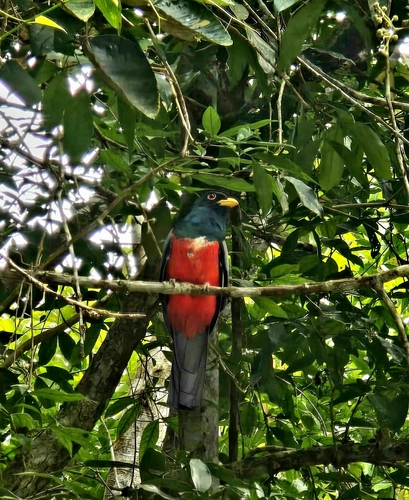
クビワオグロキヌバネドリ (Trogon melanurus) クビワオグロキヌバネドリ
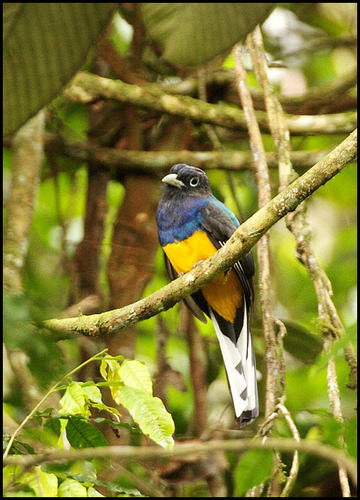
ハグロキヌバネドリ (Trogon viridis) ハグロキヌバネドリ

メディア

読み込み中…

要点

ブラックテイルトロゴンとハグロキヌバネドリを区別する最も信頼できるフィールドマークは、両性の尾の下部のパターンです:ブラックテイルトロゴンは均一に暗い(スレートグレーの)尾の下部を示し、ハグロキヌバネドリは尾の下に目を引く黒と白のパターンを持っています—オスの各羽の広い白い先端と縁、メスの黒と白の縞模様。オスはまた、目のリングの色(ブラックテイルはオレンジレッド、ハグロは淡い青みがかった色)とくちばしの色(ブラックテイルは黄色、ハグロは暗色)でも異なります。両方のメスは上面が灰色ですが、顔のパターンと尾で異なります。両種はサイズと形が似ていますが、尾の下部と頭の詳細に注意を払うことで、特に止まっている鳥を下から見るときに、ほとんどのフィールドの混乱を解消できます。

識別のコツ

  1. Undertail pattern (all ages, both sexes): ブラックテイルトロゴンは常に平坦なスレートグレーの尾の下部を示します。ハグロキヌバネドリは常に大胆な黒と白のパターンを示します—オスの広い白い先端と縁、メスの黒と白の縞模様。これは下から見るときの最も信頼できるフィールドマークです。
  2. Male head and breast color: ブラックテイルトロゴンのオスは緑の冠、うなじ、上面、胸を持ち、ハグロキヌバネドリのオスは暗い青(しばしば黒っぽく見える)頭と上胸を持ち、緑の背中があります。このコントラストは良い光の中で見ることができますが、陰では微妙です。
  3. Belly color (male): ブラックテイルトロゴンは明るい赤い腹を持ち、緑の胸とは白い帯で明確に分かれています。ハグロキヌバネドリはオレンジ黄色の下部を持ち、上には鋭い白い帯はありません。
  4. Eye-ring color (male): ブラックテイルトロゴンのオスは特徴的なオレンジレッドの目のリングを持ち、ハグロキヌバネドリのオスは淡い青みがかった目のリングを持っています。これは微妙ですが、近距離または写真で見ると目立ちます。
  5. Bill color (male): ブラックテイルトロゴンのオスは黄色いくちばしを持ち、ハグロキヌバネドリのオスは暗いくちばしを持っています。ブラックテイルのメスはスレート色の上顎を持っています。
  6. Female head and back: 両方とも上面は灰色ですが、ブラックテイルトロゴンのメスはオスが緑の部分が灰色で、灰色は上腹部にさらに広がっています。ハグロキヌバネドリのメスも灰色ですが、淡い青みがかった目のリングと尾により広範囲の黒と白の縞模様があります。
  7. Female facial pattern: ブラックテイルトロゴンのメスは目の前後に白い弧を示し、ハグロキヌバネドリのメスは完全な淡い青みがかった目のリングを持っています。
  8. Female undertail: ブラックテイルトロゴンのメスは平坦なスレート色の尾の下部を持ち、ハグロキヌバネドリのメスは各羽の外側のウェブに主に黒と白の縞模様があります。
  9. Wing vermiculation (male): 両方とも縞模様のある翼を持っていますが、ブラックテイルトロゴンのオス(特に T. m. macroura)は粗い縞模様を示すことがあります。ハグロキヌバネドリの翼は黒で、白で縞模様があります。これは微妙で、遠くからは診断的な特徴はほとんどありません。
  10. Perched jizz: 両方とも直立して動かず止まりますが、尾の下部のパターンは下または後ろから見ると最もよく見えます。飛行中の視点では、診断的なマークはほとんど見えませんが、尾の下部は可能性があります。
  11. Habitat and range: アマゾン熱帯雨林や大西洋の森にいる場合、ハグロキヌバネドリの方が可能性が高いです。パナマ、北コロンビア、または丘陵の森にいる場合、ブラックテイルトロゴンの方が可能性が高いです。ただし、北南アメリカの一部では範囲が重なることがあります。
  12. Voice: 聞こえた場合、ハグロキヌバネドリの歌は一連の「牛」の音で、ブラックテイルトロゴンよりも高い音です。両方に慣れていない限り、注意して使用してください。
  13. Size: 両方ともサイズと形が似ています。フィールドで区別するためにサイズに頼らないでください。
  14. Sexual dimorphism: 両種は強い性的二形性を持っていますが、尾の下部のパターンは両性にとって信頼できます。
  15. Pitfalls: 未熟な鳥やメスの鳥は特に混乱を招くことがあります。常に尾の下部のパターンを確認し、可能であれば目のリングの色と顔のパターンを確認してください。

大きさ

両種は大きなトロゴンで、長さ(28–30 cm)と体重(ブラックテイルトロゴン:最大122 g [wikidata])が似ています。情報源には意味のある構造的なサイズの違いは記載されておらず、両方とも頑丈で広いくちばしを持ち、属の典型的な特徴です。

羽色

幼鳥や未熟な特有の上翼や飛行マークは両種について記載されていないため、成人と一般的な羽毛に焦点を当てます。成鳥のオスでは、ブラックテイルトロゴンは緑の冠、うなじ、上面、胸を持ち、明るい赤い腹とは白い帯で分かれています。尾の下部はスレートグレーで無地です。ハグロキヌバネドリのオスは暗い青(悪い光では黒っぽく見える)頭と上胸、緑の背中、オレンジ黄色の下部を持ち、尾の下部は大胆な黒と白で、各羽は広く白い先端と縁があります。メスでは、両種とも灰色の背中を持っていますが、ブラックテイルトロゴンのメスはより広範囲の灰色の洗い流しと目の前後に白い弧を持ち、ハグロキヌバネドリのメスは外側の尾羽に黒と白の縞模様と淡い青みがかった目のリングを示します。ブラックテイルトロゴンの両性は平坦な暗い尾の下部を持ち、ハグロキヌバネドリの両性は尾の下に明確な黒と白のパターンを示します。

行動

両種は直立して止まっており、一般的に遠くに飛ぶことをためらいます。これはトロゴンの典型的な特徴です。ハグロキヌバネドリは特に静止しているとされ、混合種の群れに加わる可能性が低いですが、ブラックテイルトロゴンは時々加わります。両方とも果物や昆虫、時には小さな脊椎動物を食べます。飛行スタイルや採餌行動における診断的な違いは記載されていません。

生息環境

両種は湿った熱帯林に生息していますが、その範囲は部分的に重なっています。ブラックテイルトロゴンはパナマから北南アメリカを通り、さまざまな低地や丘陵の森に生息し、時にはアンデスの西側で2,200 mまで見られます。ハグロキヌバネドリはアマゾン、ギアナシールド、トリニダード、大西洋の森に広く分布し、その範囲で最も一般的なトロゴンであることが多いです。両方とも一次および二次の熱帯雨林を好みますが、ハグロキヌバネドリはより厳密にアマゾンと大西洋の森に生息し、ブラックテイルトロゴンは丘陵やいくつかの乾燥した森林タイプにさらに広がります。

声

ハグロキヌバネドリの歌は約20の「牛」の音の連続で、遅く始まり加速し、ホワイトテイルトロゴンよりも遅く、ブラックテイルトロゴンよりも高い音と説明されています。ブラックテイルトロゴンの歌についての詳細な説明は直接比較のために提供されていませんが、音程とテンポの違いは両方に慣れている場合に役立つかもしれません。

より良い説明を送る

比較と同じ項目を使ってください。文章はすぐに公開されます。

The most reliable field mark to separate Black-tailed Trogon from Green-backed Trogon is the pattern of the undertail in both sexes: Black-tailed Trogon shows a uniformly dark (slaty gray) undertail, while Green-backed Trogon has a striking black-and-white pattern below the tail—broad white tips and edges on each feather in males, and black-and-white barring in females. Males also differ in eye-ring color (orange-red in Black-tailed, pale bluish in Green-backed) and bill color (yellow in Black-tailed, dark in Green-backed). Females of both are grayish above, but differ in facial pattern and tail. Both species are similar in size and shape, but careful attention to undertail and head details will resolve most field confusion, especially when perched birds are seen from below.

  1. Undertail pattern (all ages, both sexes): Black-tailed Trogon always shows a plain, slaty gray undertail; Green-backed Trogon always shows a bold black-and-white pattern—broad white tips and edges in males, black-and-white barring in females. This is the single most reliable field mark when viewing from below.
  2. Male head and breast color: Black-tailed Trogon males have a green crown, nape, upperparts, and breast; Green-backed Trogon males have a dark blue (often appearing blackish) head and upper breast, with a green back. This contrast is visible in good light but can be subtle in shade.
  3. Belly color (male): Black-tailed Trogon has a bright red belly, sharply separated from the green breast by a white band. Green-backed Trogon has orange-yellow lower underparts, with no sharp white band above.
  4. Eye-ring color (male): Black-tailed Trogon males have a distinctive orange-red eye-ring; Green-backed Trogon males have a pale bluish eye-ring. This is subtle but visible at close range or in photos.
  5. Bill color (male): Black-tailed Trogon males have a yellow bill; Green-backed Trogon males have a dark bill. Females of Black-tailed have a slaty maxilla.
  6. Female head and back: Both are gray above, but Black-tailed Trogon females are gray where the male is green, with the gray extending further into the upper belly. Green-backed Trogon females are also gray but have a paler bluish eye-ring and more extensive black-and-white barring on the tail.
  7. Female facial pattern: Black-tailed Trogon females show white arcs before and after the eye; Green-backed Trogon females have a complete pale bluish eye-ring.
  8. Female undertail: Black-tailed Trogon females have a plain slaty undertail; Green-backed Trogon females have black-and-white barring, mainly on the outer webs of each feather.
  9. Wing vermiculation (male): Both have vermiculated wings, but Black-tailed Trogon males (especially T. m. macroura) may show coarser vermiculation; Green-backed Trogon wings are black, vermiculated with white. This is subtle and rarely diagnostic at a distance.
  10. Perched jizz: Both perch upright and motionless, but undertail pattern is best seen from below or behind. Flight views rarely show diagnostic marks except possibly the undertail.
  11. Habitat and range: If in Amazonian rainforest or Atlantic Forest, Green-backed Trogon is more likely; if in Panama, northern Colombia, or foothill forests, Black-tailed Trogon is more likely. However, ranges can overlap in parts of northern South America.
  12. Voice: If heard, Green-backed Trogon's song is a series of 'cow' notes, higher-pitched than Black-tailed Trogon. Use with caution unless familiar with both.
  13. Size: Both are similar in size and shape; do not rely on size to separate them in the field.
  14. Sexual dimorphism: Both species are strongly sexually dimorphic, but the undertail pattern is reliable for both sexes.
  15. Pitfalls: Immature and female birds can be especially confusing; always check the undertail pattern and, if possible, eye-ring color and facial pattern for confirmation.

Both species are large trogons, with similar lengths (28–30 cm) and body mass (Black-tailed Trogon: up to 122 g [wikidata]). No meaningful structural size difference is noted in the sources; both appear robust and broad-billed, typical of the genus.

Juvenile and immature-specific upperwing or flight marks are not described for either species, so focus is on adult and general plumage. In adult males, Black-tailed Trogon has a green crown, nape, upperparts, and breast, separated from a bright red belly by a white band; the undertail is slaty gray and unmarked. Green-backed Trogon males have a dark blue (appearing blackish in poor light) head and upper breast, green back, and orange-yellow lower underparts; their undertail is boldly black and white, with each feather broadly tipped and edged white. In females, both species are gray-backed, but Black-tailed Trogon females have a more extensive gray wash and white arcs before and after the eye, while Green-backed Trogon females show black-and-white barring on the outer tail feathers and a pale bluish eye-ring. Both sexes of Black-tailed Trogon have a plain dark undertail, while both sexes of Green-backed Trogon show marked black-and-white patterning below the tail.

Both species perch upright and are generally reluctant to fly far, typical of trogons. Green-backed Trogon is noted as especially sedentary and less likely to join mixed-species flocks, while Black-tailed Trogon sometimes does. Both feed on fruit and insects, sometimes small vertebrates. No diagnostic difference in flight style or foraging behavior is described.

Both species inhabit humid tropical forests, but their ranges only partially overlap. Black-tailed Trogon is found from Panama through northern South America, including various lowland and foothill forests, sometimes up to 2,200 m west of the Andes. Green-backed Trogon is widespread in the Amazon, Guiana Shield, Trinidad, and Atlantic Forest, and is often the commonest trogon in its range. Both prefer primary and secondary rainforest, but Green-backed Trogon is more strictly Amazonian and Atlantic Forest, while Black-tailed Trogon ranges further into foothills and some drier forest types.

Green-backed Trogon's song is a series of about 20 'cow' notes, starting slow and accelerating, and is described as slower than White-tailed Trogon and higher-pitched than Black-tailed Trogon. No detailed description of Black-tailed Trogon's song is provided for direct comparison, but pitch and tempo differences may be useful if familiar with both.

変更を破棄しますか?

保存していない編集があります。今離れると失われます。

クビワオグロキヌバネドリ · ハグロキヌバネドリ · 苦手な鳥