

Motmot

アクレコビトドリモドキ 対 キゴシフウキンチョウ

Hemitriccus cohnhafti 対 Hemithraupis flavicollis

アクレコビトドリモドキとキゴシフウキンチョウのクイズ

アクレコビトドリモドキ (Hemitriccus cohnhafti) アクレコビトドリモドキ
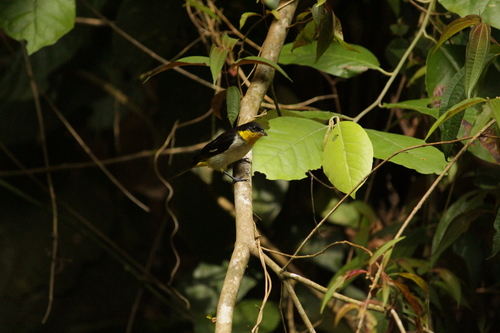
キゴシフウキンチョウ (Hemithraupis flavicollis) キゴシフウキンチョウ

メディア

読み込み中…

要点

アクレコビトドリモドキとキゴシフウキンチョウの最も信頼できるフィールドマークは、全体の色と翼のパターンの組み合わせです:アクレコビトドリモドキ(すべての年齢と性別)は、鮮やかな黄色がかった茶色の翼帯と黄色の縁取りのある飛翔羽を持つ緑がかったオリーブ色の体を示します。一方、キゴシフウキンチョウのオスは際立って黒と黄色で、メスは上面がオリーブグリーンで、腹部が黄色で、わずかに黄色がかった緑の翼の縁しかありません。コビトドリモドキは小さく、平らで幅広い嘴とコンパクトで短い尾の姿勢を持ち、フウキンチョウは長く、スリムで、より典型的な尖った嘴を持っています。フィールドでは、混乱が最も起こりやすいのはメスまたは未熟なフウキンチョウで、緑がかって見えることがありますが、コビトドリモドキは常に喉と胸に強い縞模様と独特の顔のパターンを示します。生息地の重複は可能ですが、コビトドリモドキははるかに局所的で希少です。声の違いがあります:コビトドリモドキは短く低いトリルと単独の「ティック」音を出し、フウキンチョウの歌はここでは説明されていません。

識別のコツ

  1. Wing bars and edges: アクレコビトドリモドキはすべての年齢で2本の鮮やかな黄色がかった茶色の翼帯と飛翔羽の黄色い外縁を示します;キゴシフウキンチョウ(メス/未熟)はわずかに黄色がかった緑の縁しかなく、強い翼帯はありません。
  2. Throat and breast streaking: コビトドリモドリはオリーブグリーンの喉と胸にクリーミーな黄色の縞模様があります(すべての年齢/性別);フウキンチョウは下部が無地で、黄色またはオフホワイトの腹部を持っています。
  3. Face pattern: コビトドリモドリは顔に茶色のロアと茶色の洗いがあり、緑がかったオリーブ色の頭と対照的です;メスのフウキンチョウは強いロアがない無地のオリーブグリーンの顔を持っています。
  4. Back and rump: コビトドリモドリは全体が緑がかったオリーブ色です;オスのフウキンチョウは黒い上背と明るい黄色の下背/尾を持ち、メスのフウキンチョウは上面がオリーブグリーンですが、コビトドリモドリの縞模様のある冠は欠けています。
  5. Bill shape: コビトドリモドリは平らで幅広い嘴を持ち、大きな楕円形の鼻孔があります;フウキンチョウの嘴は細く尖っており、小さな歌鳥に典型的です。
  6. Tail: コビトドリモドリの尾は短く黒っぽく、内側の羽は暗緑色です;フウキンチョウの尾は長く均一に暗いです。
  7. Underparts: コビトドリモドリはオリーブグリーンの上腹部と側腹部を持ち、硫黄黄色の下腹部と尾羽を持っています;メスのフウキンチョウは下部が黄色で、喉/胸が最も明るく、オリーブがかった側腹部を持っています。
  8. Sexual dimorphism: コビトドリモドリの性別は似ています;フウキンチョウのオスは際立って黒と黄色で、メスは緑がかって黄色であるため、混乱を引き起こす可能性があるのはメス/未熟なフウキンチョウだけです。
  9. Size and jizz: コビトドリモドリは小さく、よりコンパクトで短い尾を持っています;フウキンチョウは長く、スリムで、より活発です。
  10. Behavior: コビトドリモドリは直立して止まり、しばしば密な森林の低い位置にいます;フウキンチョウはより活発で、より高い位置でよりオープンに採餌し、しばしば群れで見られます。
  11. Vocalizations: コビトドリモドリは短く低いトリルと単独の「ティック」音を出します;フウキンチョウの歌はここでは説明されていませんが、似ていません。
  12. Habitat: コビトドリモドリは密なアマゾンの森林に局所的で希少です;フウキンチョウは広範囲に分布し、さまざまな森林の生息地で一般的です。
  13. Iris and leg color: コビトドリモドリはクリームから茶色がかったヘーゼル色の虹彩と灰色の脚を持っています;フウキンチョウは暗い茶色の虹彩と暗い灰色の脚を持っています。
  14. Mandible color: コビトドリモドリは嘴の基部がクリーミーです;フウキンチョウの嘴はピンクがかった黄色です。
  15. Pitfalls: メス/未熟なフウキンチョウは上面が緑がかって見え、下部が黄色に見えることがありますが、常にコビトドリモドリの大胆な翼帯、縞模様のある喉、コンパクトな姿勢が欠けています。強い翼帯と縞模様のある喉を持つ緑がかった鳥を見たら、それはコビトドリモドリです。

大きさ

アクレコビトドリモドキは小さく軽量で、約11 cmの長さで、約9 g(単一のオスに基づく)です。コンパクトで短い尾の外観を持っています。キゴシフウキンチョウは大きく重く、約13 cmの長さで、平均12.8 g(範囲11–15 g)で、より細長い体と比例的に長い尾を持っています。サイズの違いは微妙ですが、良い視界や混合群れでは目立ちます。

羽色

どちらの種についても年齢特有の上翼パターンは説明されていませんが、成鳥と未熟な個体は全体の色と翼のマーキングによって区別できます。アクレコビトドリモドキはすべての年齢と性別で緑がかったオリーブ色の上面を持ち、冠には暗い縞模様、茶色のロア、顔には茶色の洗いがあります。翼は黒っぽく、黄色の外縁と2本の明確な黄色がかった茶色の翼帯があります。下部はオリーブグリーンで、喉と胸にはクリーミーな黄色の縞模様があり、腹部は硫黄黄色です。対照的に、キゴシフウキンチョウのオスは主に黒で、明るい黄色の下背、尾、喉を持ち、外側の一次羽には薄い白い斑点があります。メスは上面がオリーブグリーンで、黄色がかった緑の縁のある翼(強い翼帯はなし)を持ち、下部は主に黄色で、喉と胸が最も明るいです。フウキンチョウの両性は暗い尾と対照的な黄色の下尾を持っています。コビトドリモドキの縞模様のある喉と胸、そして大胆な翼帯は、フウキンチョウには決して見られず、メスは緑がかって見えることがありますが、縞模様がなく、下部はより均一な黄色です。

行動

アクレコビトドリモドキは通常、コンパクトで直立した姿勢を示し、密な森林の低い位置または中間の高さに止まることが多く、昆虫を捕まえるために飛び出すことがあります。その動きは素早く、やや隠れたものです。キゴシフウキンチョウはより活発で社交的で、しばしばペアや小さな群れで見られ、樹冠の高い位置や森林の端でよりオープンに採餌し、より自由に移動します。フウキンチョウの飛行は、コビトドリモドキのものよりも直接的で、よりフラッターが少ないです。

生息環境

両種は南アメリカの低地熱帯林に生息していますが、アクレコビトドリモドキははるかに局所的で、ボリビア、ブラジル、ペルーの限られた地域に生息し、通常は密で湿った森林に見られます。キゴシフウキンチョウはパナマから南アメリカのほとんどの地域(南端を除く)に広く分布し、森林の端や二次成長を含むさまざまな森林の生息地で一般的です。アクレ地域の外で見られた場合、フウキンチョウの可能性が高いです。

声

アクレコビトドリモドキは短く低音の「ティック」音のトリルを出し、通常は導入音なしで、単独の「スケップ」または「キーク」コールと低い「クプ」コールも出します。キゴシフウキンチョウの声はこれらのメモでは説明されていませんが、コビトドリモドキのトリルとは似ていません。短い機械的なトリルを聞いたら、コビトドリモドリを疑ってください。

より良い説明を送る

比較と同じ項目を使ってください。文章はすぐに公開されます。

The most reliable field mark between Acre Tody-Tyrant and Yellow-backed Tanager is the combination of overall color and wing pattern: Acre Tody-Tyrant (all ages and sexes) shows a greenish-olive body with bold yellowish-tawny wing bars and yellow-edged flight feathers, while Yellow-backed Tanager males are strikingly black and yellow, and females are olive-green above with yellow underparts and only faint yellowish-green wing edges. The Tody-Tyrant is smaller, with a flat, broad-based bill and a compact, stubby-tailed jizz; the tanager is longer, slimmer, and has a more typical pointed bill. In the field, confusion is most likely with female or immature tanagers, which can appear greenish, but the Tody-Tyrant always shows strong streaking on the throat and breast and a distinctive face pattern. Habitat overlap is possible, but the Tody-Tyrant is much more localized and scarce. Vocalizations differ: the Tody-Tyrant gives short, low trills and single 'tick' notes, while the tanager's song is not described here.

  1. Wing bars and edges: Acre Tody-Tyrant of all ages shows two bold yellowish-tawny wing bars and yellow outer edges to the flight feathers; Yellow-backed Tanager (female/immature) has only faint yellowish-green edges and no strong wing bars.
  2. Throat and breast streaking: Tody-Tyrant has creamy yellowish streaks on the olive-green throat and breast (all ages/sexes); tanager is unstreaked below, with yellow or off-white underparts.
  3. Face pattern: Tody-Tyrant shows tawny lores and a tawny wash on the face, contrasting with the greenish-olive head; female tanager has a plain olive-green face with no strong lores.
  4. Back and rump: Tody-Tyrant is greenish-olive throughout; male tanager has a black upper back and bright yellow lower back/rump, female tanager is olive-green above but lacks the Tody-Tyrant's streaked crown.
  5. Bill shape: Tody-Tyrant has a flat, broad-based bill with large oval nostrils; tanager's bill is slender and pointed, more typical of a small songbird.
  6. Tail: Tody-Tyrant's tail is short and blackish with dark green inner vanes; tanager's tail is longer and uniformly dark.
  7. Underparts: Tody-Tyrant has olive-green upper belly and flanks, with a sulphur-yellow lower belly and undertail; female tanager is yellow below, brightest on throat/breast, with olive-tinged flanks.
  8. Sexual dimorphism: Tody-Tyrant sexes are alike; tanager males are strikingly black and yellow, females are greenish and yellow, so only female/immature tanagers are likely to cause confusion.
  9. Size and jizz: Tody-Tyrant is smaller, more compact, and short-tailed; tanager is longer, slimmer, and more active.
  10. Behavior: Tody-Tyrant perches upright, often low in dense forest; tanager is more active, foraging higher and more openly, often in groups.
  11. Vocalizations: Tody-Tyrant gives short, low trills and single 'tick' notes; tanager's song is not described here but is not similar.
  12. Habitat: Tody-Tyrant is local and scarce in dense Amazonian forest; tanager is widespread and common in a range of wooded habitats.
  13. Iris and leg color: Tody-Tyrant has a cream to brownish hazel iris and gray legs; tanager has a dark brown iris and dark gray legs.
  14. Mandible color: Tody-Tyrant has a creamy base to the mandible; tanager's mandible is pinkish to yellow.
  15. Pitfalls: Female/immature tanagers may look greenish above and yellow below, but always lack the Tody-Tyrant's bold wing bars, streaked throat, and compact jizz. If you see a greenish bird with strong wing bars and a streaked throat, it's the Tody-Tyrant.

Acre Tody-Tyrant is smaller and lighter, about 11 cm long and weighing around 9 g (based on a single male), with a compact, short-tailed appearance. Yellow-backed Tanager is larger and heavier, about 13 cm long and averaging 12.8 g (range 11–15 g), with a more elongated body and proportionately longer tail. The size difference is subtle but noticeable with good views or in mixed flocks.

No age-specific upperwing patterns are described for either species, but adults and immatures are separable by overall color and wing markings. Acre Tody-Tyrant of all ages and sexes is greenish-olive above with darker streaks on the crown, tawny lores, and a tawny wash on the face. The wings are blackish with yellow outer edges and two distinct yellowish-tawny wing bars. Underparts are olive-green with creamy yellowish streaks on the throat and breast, and the belly is sulphur-yellow. In contrast, Yellow-backed Tanager males are mostly black above with a bright yellow lower back, rump, and throat, and a thin white patch on the outer primaries. Females are olive-green above with yellowish-green edged wings (no strong wing bars), and mostly yellow underparts, brightest on the throat and breast. Both sexes of the tanager have a dark tail and a contrasting yellow undertail. The Tody-Tyrant's streaked throat and breast and bold wing bars are never matched by the tanager, whose females may look greenish but lack streaking and have more uniform yellow below.

Acre Tody-Tyrant typically shows a compact, upright posture, often perching low or mid-level in dense forest, and may sally for insects. Its movements are quick and somewhat furtive. Yellow-backed Tanager is more active and social, often seen in pairs or small groups, foraging higher in the canopy or at forest edges, and moving more openly. The tanager's flight is more direct and less fluttery than the Tody-Tyrant's, which may appear more hesitant and bouncy.

Both species occur in lowland tropical forests of South America, but Acre Tody-Tyrant is much more local, found in a limited area of Bolivia, Brazil, and Peru, usually in dense, humid forest. Yellow-backed Tanager is widespread from Panama south through most of South America (except the far south), and is common in a variety of wooded habitats, including forest edges and second growth. If seen outside the core Acre region, the odds strongly favor the tanager.

Acre Tody-Tyrant gives a short, low-pitched trill of 'tick' notes, usually without introductory notes, and also single 'skep' or 'keek' calls and lower 'kup' calls. The Yellow-backed Tanager's vocalizations are not described in these notes, but are not similar to the Tody-Tyrant's trills. If you hear a short, mechanical trill, suspect the Tody-Tyrant.

変更を破棄しますか?

保存していない編集があります。今離れると失われます。

アクレコビトドリモドキ · キゴシフウキンチョウ · 苦手な鳥