

Titirijí de Acre vs Tangara Gorjigualda
Hemitriccus cohnhafti frente a Hemithraupis flavicollis
Juega un quiz con Titirijí de Acre y Tangara Gorjigualda
 Titirijí de Acre
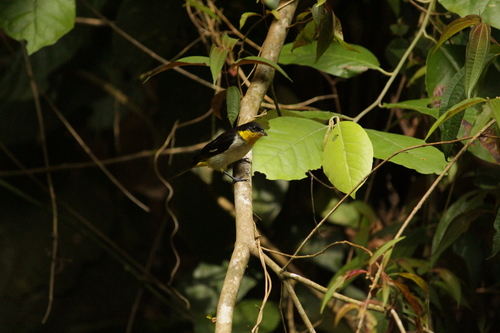 Tangara Gorjigualda
En breve
La marca de campo más confiable entre el Titirijí de Acre y la Tangara Gorjigualda es la combinación de color general y patrón de alas: el Titirijí de Acre (todas las edades y sexos) muestra un cuerpo verde oliva con barras alares amarillas y amarillentas audaces y plumas de vuelo con bordes amarillos, mientras que los machos de la Tangara Gorjigualda son strikingmente negros y amarillos, y las hembras son verde oliva por encima con partes inferiores amarillas y solo bordes de alas amarillentos y verdes tenues. El Titirijí es más pequeño, con un pico plano y de base ancha y una apariencia compacta y de cola corta; la tangara es más larga, más delgada y tiene un pico más típicamente puntiagudo. En el campo, la confusión es más probable con hembras o tangaras inmaduras, que pueden parecer verdosas, pero el Titirijí siempre muestra un fuerte veteado en la garganta y el pecho y un patrón facial distintivo. La superposición de hábitats es posible, pero el Titirijí es mucho más localizado y escaso. Las vocalizaciones difieren: el Titirijí emite trinos cortos y bajos y notas individuales de 'tick', mientras que la canción de la tangara no se describe aquí.
Consejos de identificación
- Barras y bordes de alas: El Titirijí de Acre de todas las edades muestra dos barras alares amarillas y amarillentas audaces y bordes exteriores amarillos en las plumas de vuelo; la Tangara Gorjigualda (hembra/inmadura) solo tiene bordes amarillentos y verdes tenues y no barras alares fuertes.
- Veteado en la garganta y el pecho: El Titirijí tiene vetas amarillas cremosas en la garganta y el pecho verde oliva (todas las edades/sexis); la tangara no tiene veteado por debajo, con partes inferiores amarillas o blanco sucio.
- Patrón facial: El Titirijí muestra lóbulos amarillentos y un lavado amarillento en la cara, contrastando con la cabeza verde oliva; la hembra de la tangara tiene una cara verde oliva simple sin lóbulos fuertes.
- Espalda y rabadilla: El Titirijí es verde oliva en todo; el macho de la tangara tiene una espalda superior negra y una rabadilla/parte inferior brillante amarilla, la hembra de la tangara es verde oliva por encima pero carece de la corona veteada del Titirijí.
- Forma del pico: El Titirijí tiene un pico plano y de base ancha con grandes fosas nasales ovaladas; el pico de la tangara es delgado y puntiagudo, más típico de un pequeño pájaro cantor.
- Cola: La cola del Titirijí es corta y negruzca con plumas internas de color verde oscuro; la cola de la tangara es más larga y uniformemente oscura.
- Partes inferiores: El Titirijí tiene un vientre y flancos verde oliva, con un vientre y subcola de color amarillo azufre; la hembra de la tangara es amarilla por debajo, más brillante en la garganta/pecho, con flancos con matices oliva.
- Dimorfismo sexual: Los sexos del Titirijí son similares; los machos de la tangara son strikingmente negros y amarillos, las hembras son verdosas y amarillas, por lo que solo las hembras/tangaras inmaduras son propensas a causar confusión.
- Tamaño y apariencia: El Titirijí es más pequeño, más compacto y de cola corta; la tangara es más larga, más delgada y más activa.
- Comportamiento: El Titirijí se posó erguido, a menudo bajo en el denso bosque; la tangara es más activa, buscando alimento más alto y más abiertamente, a menudo en grupos.
- Vocalizaciones: El Titirijí emite trinos cortos y bajos y notas individuales de 'tick'; la canción de la tangara no se describe aquí pero no es similar.
- Hábitat: El Titirijí es local y escaso en el denso bosque amazónico; la tangara es amplia y común en una variedad de hábitats boscosos.
- Color del iris y las patas: El Titirijí tiene un iris de color crema a marrón avellana y patas grises; la tangara tiene un iris marrón oscuro y patas gris oscuro.
- Color de la mandíbula: El Titirijí tiene una base cremosa en la mandíbula; la mandíbula de la tangara es rosada a amarilla.
- Trampas: Las hembras/tangaras inmaduras pueden parecer verdosas por encima y amarillas por debajo, pero siempre carecen de las audaces barras alares del Titirijí, el veteado en la garganta y la apariencia compacta. Si ves un pájaro verdoso con barras alares fuertes y una garganta veteada, es el Titirijí.
Tamaño
El Titirijí de Acre es más pequeño y ligero, mide aproximadamente 11 cm de largo y pesa alrededor de 9 g (basado en un solo macho), con una apariencia compacta y de cola corta. La Tangara Gorjigualda es más grande y pesada, mide aproximadamente 13 cm de largo y promedia 12.8 g (rango 11–15 g), con un cuerpo más alargado y una cola proporcionalmente más larga. La diferencia de tamaño es sutil pero notable con buenas vistas o en bandadas mixtas.
Plumaje
No se describen patrones de alas específicos por edad para ninguna de las especies, pero los adultos y las inmaduras son separables por color general y marcas en las alas. El Titirijí de Acre de todas las edades y sexos es verde oliva por encima con vetas más oscuras en la corona, lóbulos amarillentos y un lavado amarillento en la cara. Las alas son negruzcas con bordes exteriores amarillos y dos barras alares amarillas y amarillentas distintas. Las partes inferiores son verde oliva con vetas amarillentas cremosas en la garganta y el pecho, y el vientre es amarillo azufre. En contraste, los machos de la Tangara Gorjigualda son mayormente negros por encima con una parte inferior de la espalda, rabadilla y garganta amarillas brillantes, y una delgada mancha blanca en las primarias exteriores. Las hembras son verde oliva por encima con alas con bordes amarillentos y verdes (sin barras alares fuertes), y partes inferiores mayormente amarillas, más brillantes en la garganta y el pecho. Ambos sexos de la tangara tienen una cola oscura y una subcola amarilla contrastante. La garganta y el pecho veteados del Titirijí y las audaces barras alares nunca son igualados por la tangara, cuyas hembras pueden parecer verdosas pero carecen de veteado y tienen un color amarillo más uniforme por debajo.
Comportamiento
El Titirijí de Acre generalmente muestra una postura compacta y erguida, a menudo posándose bajo o a nivel medio en el denso bosque, y puede lanzarse para atrapar insectos. Sus movimientos son rápidos y algo furtivos. La Tangara Gorjigualda es más activa y social, a menudo vista en parejas o pequeños grupos, buscando alimento más alto en el dosel o en los bordes del bosque, y moviéndose más abiertamente. El vuelo de la tangara es más directo y menos tembloroso que el del Titirijí, que puede parecer más vacilante y rebotante.
Hábitat
Ambas especies ocurren en bosques tropicales de tierras bajas de América del Sur, pero el Titirijí de Acre es mucho más local, encontrado en un área limitada de Bolivia, Brasil y Perú, generalmente en bosques densos y húmedos. La Tangara Gorjigualda es amplia desde Panamá hacia el sur a través de la mayor parte de América del Sur (excepto el extremo sur), y es común en una variedad de hábitats boscosos, incluidos los bordes del bosque y el crecimiento secundario. Si se ve fuera de la región central de Acre, las probabilidades favorecen fuertemente a la tangara.
Voz
El Titirijí de Acre emite un trino corto y de tono bajo de notas de 'tick', generalmente sin notas introductorias, y también llamadas individuales de 'skep' o 'keek' y llamadas más bajas de 'kup'. Las vocalizaciones de la Tangara Gorjigualda no se describen en estas notas, pero no son similares a los trinos del Titirijí. Si escuchas un trino corto y mecánico, sospecha del Titirijí.