

Acre Tody-Tyrant vs Yellow-backed Tanager
Hemitriccus cohnhafti contro Hemithraupis flavicollis
Fai un quiz con Acre Tody-Tyrant e Yellow-backed Tanager
 Acre Tody-Tyrant
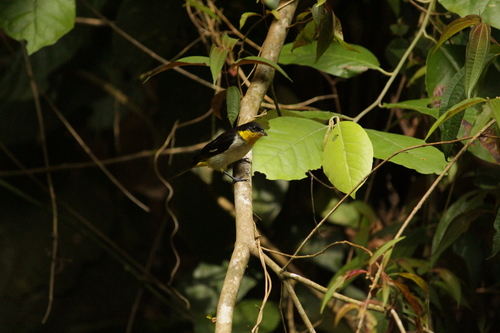 Yellow-backed Tanager
In breve
Il segno di campo più affidabile tra Acre Tody-Tyrant e Yellow-backed Tanager è la combinazione di colore generale e modello delle ali: Acre Tody-Tyrant (tutte le età e i sessi) mostra un corpo verde-oliva con barre alari giallo-tawny audaci e penne di volo con bordi gialli, mentre i maschi di Yellow-backed Tanager sono sorprendentemente neri e gialli, e le femmine sono verde-oliva sopra con parti inferiori gialle e solo deboli bordi giallo-verdi sulle ali. Il Tody-Tyrant è più piccolo, con un becco piatto e a base larga e un aspetto compatto e tozzo; il tanager è più lungo, più snello e ha un becco più tipicamente appuntito. Sul campo, la confusione è più probabile con i tanager femmina o immaturi, che possono apparire verdastri, ma il Tody-Tyrant mostra sempre forti striature sulla gola e sul petto e un modello facciale distintivo. È possibile una sovrapposizione degli habitat, ma il Tody-Tyrant è molto più localizzato e raro. Le vocalizzazioni differiscono: il Tody-Tyrant emette brevi trilli bassi e note singole 'tick', mentre il canto del tanager non è descritto qui.
Consigli di identificazione
- Barre e bordi delle ali: Acre Tody-Tyrant di tutte le età mostra due barre alari giallo-tawny audaci e bordi esterni gialli sulle penne di volo; Yellow-backed Tanager (femmina/immatura) ha solo deboli bordi giallo-verdi e nessuna barra alare forte.
- Striature sulla gola e sul petto: Tody-Tyrant ha striature giallo-cremose sulla gola e sul petto verde-oliva (tutte le età/sessi); il tanager è senza striature sotto, con parti inferiori gialle o bianco sporco.
- Modello facciale: Tody-Tyrant mostra lore tawny e un lavaggio tawny sul viso, in contrasto con la testa verde-oliva; la femmina del tanager ha un viso verde-oliva semplice senza forti lore.
- Schiena e groppa: Tody-Tyrant è verde-oliva in tutto; il maschio del tanager ha una schiena superiore nera e una groppa/groppa inferiore gialla brillante, la femmina del tanager è verde-oliva sopra ma manca della corona striata del Tody-Tyrant.
- Forma del becco: Tody-Tyrant ha un becco piatto e a base larga con grandi narici ovali; il becco del tanager è snello e appuntito, più tipico di un piccolo uccello canoro.
- Coda: La coda del Tody-Tyrant è corta e nerastre con vane interne di un verde scuro; la coda del tanager è più lunga e uniformemente scura.
- Parti inferiori: Tody-Tyrant ha un ventre e fianchi verde-oliva superiori, con un ventre inferiore e sottocoda giallo-solfureo; la femmina del tanager è gialla sotto, più brillante sulla gola/petto, con fianchi con sfumature olive.
- Dimorfismo sessuale: I sessi del Tody-Tyrant sono simili; i maschi del tanager sono sorprendentemente neri e gialli, le femmine sono verdastre e gialle, quindi solo i tanager femmina/immaturi sono probabili a causare confusione.
- Dimensione e aspetto: Tody-Tyrant è più piccolo, più compatto e con coda corta; il tanager è più lungo, più snello e più attivo.
- Comportamento: Tody-Tyrant si posa eretto, spesso basso in dense foreste; il tanager è più attivo, cercando cibo più in alto e più apertamente, spesso in gruppi.
- Vocalizzazioni: Tody-Tyrant emette brevi trilli bassi e note singole 'tick'; il canto del tanager non è descritto qui ma non è simile.
- Habitat: Tody-Tyrant è locale e raro in foreste dense amazzoniche; il tanager è diffuso e comune in una varietà di habitat boschivi.
- Colore dell'iride e delle gambe: Tody-Tyrant ha un'iride nocciola da crema a marrone e gambe grigie; il tanager ha un'iride marrone scuro e gambe grigio scuro.
- Colore del mandibola: Tody-Tyrant ha una base cremosa per il mandibola; il mandibola del tanager è rosa a giallo.
- Trappole: I tanager femmina/immaturi possono apparire verdastri sopra e gialli sotto, ma mancano sempre delle audaci barre alari del Tody-Tyrant, della gola striata e dell'aspetto compatto. Se vedi un uccello verdastro con forti barre alari e una gola striata, è il Tody-Tyrant.
Taglia
Acre Tody-Tyrant è più piccolo e leggero, circa 11 cm di lunghezza e pesa circa 9 g (basato su un singolo maschio), con un aspetto compatto e con coda corta. Yellow-backed Tanager è più grande e pesante, circa 13 cm di lunghezza e con un peso medio di 12,8 g (intervallo 11–15 g), con un corpo più allungato e una coda proporzionalmente più lunga. La differenza di dimensione è sottile ma evidente con buone visuali o in stormi misti.
Piumaggio
Non sono descritti modelli specifici per l'età delle ali superiori per nessuna delle due specie, ma gli adulti e gli immaturi sono separabili per colore generale e marcature delle ali. Acre Tody-Tyrant di tutte le età e sessi è verde-oliva sopra con striature più scure sulla corona, lore tawny e un lavaggio tawny sul viso. Le ali sono nerastre con bordi esterni gialli e due distinte barre alari giallo-tawny. Le parti inferiori sono verde-oliva con striature giallo-cremose sulla gola e sul petto, e il ventre è giallo-solfureo. Al contrario, i maschi di Yellow-backed Tanager sono per lo più neri sopra con una groppa inferiore, groppa e gola gialla brillante, e una sottile macchia bianca sulle primarie esterne. Le femmine sono verde-oliva sopra con ali bordate di giallo-verde (senza barre alari forti), e per lo più gialle sotto, più brillanti sulla gola e sul petto. Entrambi i sessi del tanager hanno una coda scura e una sottocoda gialla contrastante. Le striature sulla gola e sul petto del Tody-Tyrant e le audaci barre alari non sono mai eguagliate dal tanager, le cui femmine possono apparire verdastre ma mancano di striature e hanno un giallo più uniforme sotto.
Comportamento
Acre Tody-Tyrant mostra tipicamente una postura compatta e eretta, spesso posandosi basso o a livello medio in foreste dense, e può lanciarsi per catturare insetti. I suoi movimenti sono rapidi e piuttosto furtivi. Yellow-backed Tanager è più attivo e sociale, spesso visto in coppie o piccoli gruppi, cercando cibo più in alto nella chioma o ai margini della foresta, e muovendosi più apertamente. Il volo del tanager è più diretto e meno tremolante rispetto a quello del Tody-Tyrant, che può apparire più esitante e rimbalzante.
Habitat
Entrambe le specie si trovano nelle foreste tropicali di pianura dell'America del Sud, ma Acre Tody-Tyrant è molto più locale, trovato in un'area limitata di Bolivia, Brasile e Perù, di solito in foreste dense e umide. Yellow-backed Tanager è diffuso da Panama a sud attraverso la maggior parte dell'America del Sud (eccetto il sud estremo), ed è comune in una varietà di habitat boschivi, inclusi i margini forestali e la crescita secondaria. Se visto al di fuori della regione centrale di Acre, le probabilità favoriscono fortemente il tanager.
Voce
Acre Tody-Tyrant emette un breve trillo a bassa tonalità di note 'tick', di solito senza note introduttive, e anche singole chiamate 'skep' o 'keek' e chiamate 'kup' più basse. Le vocalizzazioni del Yellow-backed Tanager non sono descritte in queste note, ma non sono simili ai trilli del Tody-Tyrant. Se senti un breve trillo meccanico, sospetta il Tody-Tyrant.
Acre Tody-Tyrant · Yellow-backed Tanager · I miei uccelli difficili