

Black-headed Trogon vs Northern Black-throated Trogon
Trogon melanocephalus contro Trogon tenellus
Fai un quiz con Black-headed Trogon e Northern Black-throated Trogon
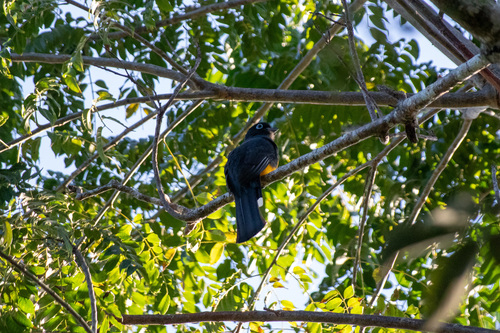 Black-headed Trogon
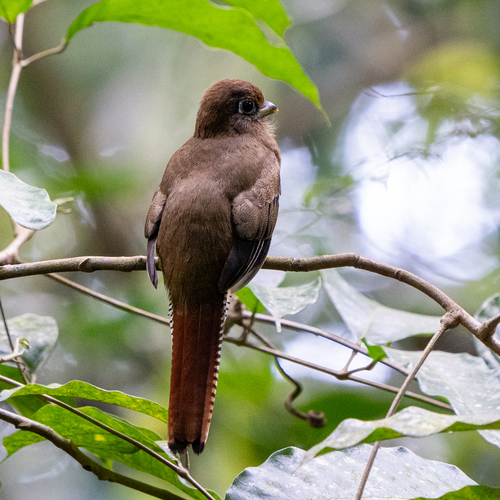 Northern Black-throated Trogon
In breve
Il segno di campo più affidabile per separare il Black-headed Trogon dal Northern Black-throated Trogon è il colore e l'estensione del nero sulla testa, sul petto e sulle parti superiori: il Black-headed Trogon di tutte le età e sessi mostra una testa, un collo e un petto neri solidi (o grigio-neri), mentre i maschi del Northern Black-throated Trogon hanno un viso e una gola neri ma un petto superiore e una corona verde metallico, e le femmine hanno la testa marrone. I Black-headed Trogon immaturi hanno più bianco nelle ali e meno bianco nella coda rispetto agli adulti, ma non mostrano mai i complessi motivi a barre e ruggine della coda del Northern Black-throated Trogon. Anche le dimensioni sono un forte indizio: il Black-headed Trogon è nettamente più grande e pesante. I motivi della coda e delle ali, specialmente in volo o per gli immaturi, sono fondamentali: cerca le penne della coda interne metalliche e la semplice coda bianca e nera del Black-headed rispetto alla complessa barratura nera, bianca e ruggine del Northern Black-throated. Entrambe le specie hanno parti inferiori gialle e un anello oculare blu pallido, ma differiscono nel colore e nel motivo delle parti superiori e della coda.
Consigli di identificazione
- Head and Chest Color (All Ages): Il Black-headed Trogon mostra sempre una testa, un collo e un petto neri solidi o grigio-neri, nettamente separati dal ventre giallo da una sottile linea bianca. I maschi del Northern Black-throated Trogon hanno solo un viso e una gola neri, con corona, dorso e petto superiore verde metallico; le femmine hanno la testa marrone e il viso marrone.
- Upperparts (Sex/Age): Il maschio del Black-headed Trogon ha parti superiori di un verde metallico bluastro brillante a verde dorato, con un sottocoda blu metallico a violetto bluastro; le femmine sono di un grigio scuro sopra. I maschi del Northern Black-throated sono verdi metalliche sopra con copritrici della coda bluastre; le femmine sono marroni sopra con una corona più scura e un sottocoda più chiaro.
- Tail Pattern (All Ages): Il Black-headed Trogon ha penne centrali della coda verde bronzo metallico a verde bluastro con punte nere, la coppia successiva è tutta nera, e outer three pairs black with broad white tips. Gli immaturi hanno meno bianco nella coda. Il Northern Black-throated Trogon ha una coda più complessa: le penne centrali sono bluastre con punte nere, le coppie successive hanno membrane interne nere, e le tre coppie esterne hanno basi nere, punte bianche e barre nere e bianche in mezzo; il lato inferiore è a barre nere e bianche con una larga punta bianca. La femmina del Northern Black-throated mostra penne centrali della coda marrone ruggine a castano con punte nere strette e bande color cannella.
- Wing Pattern (Immatures): Gli immaturi del Black-headed Trogon hanno più bianco nelle ali rispetto agli adulti, ma non mostrano mai la complessa barratura nera e bianca del Northern Black-throated Trogon. I maschi del Northern Black-throated hanno penne da volo e copritrici con motivi neri e bianchi; le femmine hanno primarie nere fuligginose con bordi bianchi stretti, secondarie ramate e copritrici minori nere con punte marroni.
- Bill Color: Il Black-headed Trogon ha un becco scuro. I maschi del Northern Black-throated hanno un becco principalmente giallo brillante a giallo-verde; i beccucci delle femmine sono variabili, da neri con un po' di giallo a giallo scuro con un po' di nero.
- Eye-ring: Entrambi hanno un anello oculare blu pallido, ma quello del Black-headed è descritto come blu cielo e quello del Northern Black-throated come blu pallido o bianco pallido a blu pallido. Questo è sottile e non sempre affidabile sul campo.
- Underparts: Entrambe le specie hanno parti inferiori gialle, ma quelle del Black-headed sono giallo cadmio a giallo cromo, più chiare al vent. Il Northern Black-throated ha un petto inferiore e un ventre gialli, a volte con una sottile banda bianca sotto il petto superiore (sempre presente nelle femmine).
- White Chest Band: Entrambe le specie possono mostrare una banda bianca che separa il petto superiore e inferiore, ma nel Black-headed Trogon questa è una sottile linea sotto il petto nero, mentre nel Northern Black-throated è sotto il petto superiore verde metallico (maschio) o marrone pallido (femmina).
- Size and Structure: Il Black-headed Trogon è nettamente più grande e pesante, con un aspetto più robusto. Il Northern Black-throated è più piccolo e leggero, con una struttura più delicata.
- Sex Differences: La femmina del Black-headed Trogon è di un grigio scuro sopra e ha la testa nera; la femmina del Northern Black-throated è marrone sopra e ha la testa marrone, con toni ruggine o castano nella coda.
- Tail in Flight (All Ages): La coda del Black-headed Trogon è più semplice, priva della barratura nera e bianca e dei toni ruggine del Northern Black-throated. In volo, cerca le penne interne della coda metalliche e le ampie punte bianche sulle penne esterne della coda nel Black-headed; nel Northern Black-throated, cerca le penne esterne della coda a barre e ruggine, specialmente nelle femmine.
- Range (if known): Se visto in Messico, Belize, Guatemala o El Salvador, è il Black-headed Trogon. In Colombia, è il Northern Black-throated. In Honduras o Nicaragua, entrambi sono possibili: usa il piumaggio e le dimensioni.
- Habitat: Entrambi utilizzano habitat forestali, ma l'abbondanza locale può differire. Se segui i gruppi di scimmie, è più probabile vedere il Northern Black-throated, ma questo non è diagnostico.
- Behavior: Entrambi si posano eretti e rimangono immobili per lunghi periodi; il comportamento non è un forte separatore.
- Pitfalls: I Black-headed Trogon immaturi possono apparire con ali più chiare e meno bianche nella coda rispetto agli adulti, ma non mostrano mai i motivi a barre o ruggine della coda del Northern Black-throated. Il colore del becco è variabile nella femmina del Northern Black-throated e non sempre affidabile.
Taglia
Il Black-headed Trogon è nettamente più grande e pesante: 27–28 cm di lunghezza e 74–95 g di peso. Il Northern Black-throated Trogon è più piccolo e leggero, con 23–26 cm e 50–59 g. Questa differenza di dimensioni è evidente sul campo, specialmente se visti fianco a fianco o con esperienza. L'aspetto più grande e robusto del Black-headed è un utile indizio di supporto, ma non diagnostico da solo.
Piumaggio
I Black-headed Trogon immaturi e adulti di entrambi i sessi hanno una testa, un collo e un petto neri solidi (o grigio-neri), con una sottile banda bianca che separa il petto nero dalle parti inferiori gialle brillanti. Le loro parti superiori sono verdi metalliche (maschio) o grigio scuro (femmina), e la coda è per lo più verde bronzo metallico a verde bluastro sulle penne interne con nero e bianco sulle penne esterne. I Black-headed Trogon immaturi hanno più bianco nelle ali e meno bianco nella coda rispetto agli adulti, ma la coda non mostra mai la complessa barratura o i toni ruggine del Northern Black-throated. Al contrario, i Black-throated Trogon maschi adulti hanno un viso e una gola neri, ma la corona, il dorso e il petto superiore sono verdi metallici, non neri. La loro coda è complessa: le penne centrali sono bluastre con punte nere, le coppie successive hanno membrane interne nere, e le penne esterne della coda sono con basi nere, punte bianche e barre nere e bianche in mezzo; il lato inferiore della coda è a barre nere e bianche con una larga punta bianca. Le femmine adulte sono per lo più marroni sopra, con un viso e una corona marroni, e la coda mostra toni marrone ruggine a castano con punte nere e bande color cannella. Entrambi i sessi del Northern Black-throated hanno una banda bianca sotto il petto superiore, ma il petto superiore è verde metallico (maschio) o marrone pallido (femmina), non nero. Anche il colore del becco è variabile: il Black-headed ha un becco scuro, mentre il maschio del Northern Black-throated ha un becco giallo brillante a giallo-verde, e i beccucci delle femmine sono variabili. Entrambi hanno un anello oculare blu pallido o bluastro, ma quello del Black-headed è descritto come blu cielo e quello del Northern Black-throated come blu pallido o bianco pallido a blu pallido.
Comportamento
Entrambe le specie si posano erette e rimangono immobili per lunghi periodi, tipico dei trogoni. Il Northern Black-throated Trogon è noto per nutrirsi nel sottobosco forestale fino al medio strato, spesso lanciandosi o sospendendosi per catturare insetti o raccogliere frutta, e a volte segue i gruppi di scimmie per catturare prede disturbate. Non ci sono differenze comportamentali specifiche notate per il Black-headed Trogon nelle fonti, quindi il comportamento non è un forte separatore.
Habitat
Il Black-headed Trogon si estende dal Messico alla Costa Rica, inclusi Belize, El Salvador, Guatemala, Honduras e Nicaragua. Il Northern Black-throated Trogon si trova dal sud-est dell'Honduras fino al nord-ovest della Colombia. I loro areali si sovrappongono in Honduras e Nicaragua, ma il Black-headed è più settentrionale nel complesso, mentre il Northern Black-throated si estende più a sud. Entrambi abitano aree forestali, ma l'abbondanza locale e le precise preferenze di habitat non sono dettagliate nelle note.
Black-headed Trogon · Northern Black-throated Trogon · I miei uccelli difficili