

Motmot

White-bellied Nothura vs Spotted Nothura

Nothura boraquira versus Nothura maculosa

Play a quiz with White-bellied Nothura and Spotted Nothura
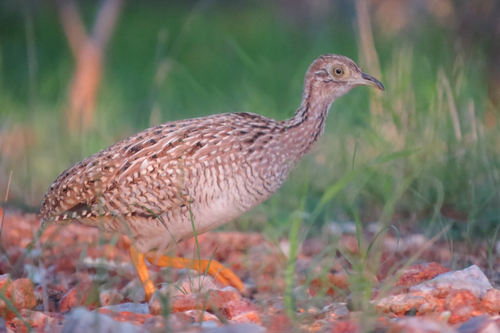
White-bellied Nothura (Nothura boraquira) White-bellied Nothura
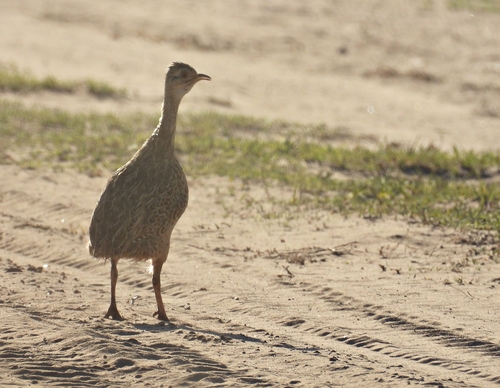
Spotted Nothura (Nothura maculosa) Spotted Nothura

Media

Loading…

In short

The most reliable field mark to separate White-bellied Nothura from Spotted Nothura in the field is the pattern of the primaries: White-bellied Nothura has uniformly dark inner webs on its primaries, while Spotted Nothura shows barring on both webs of the primaries (all ages). This difference is most obvious on birds in flight or when the wing is spread. Perched birds can be separated by leg color (bright yellow in White-bellied, dull yellowish-grey or brown in Spotted) and by underpart contrast: White-bellied has a strikingly white belly, while Spotted is more uniformly buff below with barring extending onto the flanks. Both are similar in size and shape, but White-bellied is slightly larger and prefers drier shrubland compared to the more grassland-associated Spotted Nothura.

Identification tips

  1. Primary barring in flight (all ages): Spotted Nothura shows barring on both webs of the primaries, visible as a barred panel in flight or on spread wing. White-bellied Nothura's primaries have uniformly dark inner webs, lacking this barring. This is the single most reliable field mark, especially for birds flushed or seen flying.
  2. Leg color: White-bellied Nothura has bright yellow legs, while Spotted Nothura's legs are dull yellowish-grey or brown. This is best seen on perched or walking birds at close range.
  3. Belly color: White-bellied Nothura has a strikingly white belly, contrasting with its buff breast. Spotted Nothura is more uniformly buff below, with barring extending onto the flanks and less contrast between breast and belly.
  4. Breast and flank pattern: Spotted Nothura shows buff underparts streaked with black and brown on the breast, with barring on the flanks. White-bellied Nothura's breast is buff with black streaking, but the belly is clean white and unmarked.
  5. Crown and head pattern: White-bellied Nothura has a dark brown crown and buff sides of the head. Spotted Nothura's crown is black streaked with buff, and the overall head can look more streaked.
  6. Upperparts: Both are brown above, but White-bellied Nothura is lighter brown, barred black with white streaks. Spotted Nothura is brown with buff streaks, and can be more variable in tone depending on locality.
  7. Throat: Both have white throats, so this is not helpful for separation.
  8. Size: White-bellied Nothura is slightly larger (27 cm vs 24–25.5 cm), but this is subtle and rarely diagnostic in the field.
  9. Habitat: If in dry shrubland, especially in northeastern Bolivia, western Paraguay, or northeastern Brazil, White-bellied Nothura is more likely. In open grassland or savanna, especially further south, Spotted Nothura is more expected.
  10. Geographic variation: Spotted Nothura is highly variable in color across its range, sometimes matching local soil tones. Do not rely solely on overall color hue for identification.
  11. Behavior: Both species behave similarly and are not reliably separated by jizz or foraging style.
  12. Sex and age: No strong sexual dimorphism or age-related differences in the key field marks; the primary barring vs uniform dark inner webs is consistent across ages and sexes.
  13. When marks fail: If the bird is only glimpsed on the ground and the wing is not visible, rely on leg color and belly contrast if possible, and use habitat as a supporting clue. If in doubt, try to flush the bird gently to view the wing pattern in flight.
  14. Common pitfalls: Juvenile or worn birds of Spotted Nothura may appear paler or less distinctly barred, but the primary barring should still be visible in flight. White-bellied Nothura never shows barred primaries.
  15. Summary tip: Always prioritize wing pattern in flight for a definitive separation, then check leg color and belly contrast on perched birds.

Size

White-bellied Nothura is a bit larger, averaging about 27 cm in length, while Spotted Nothura is slightly smaller at 24–25.5 cm. This difference is subtle and not always obvious in the field, especially at a distance or without direct comparison. Both are small, ground-dwelling tinamous with similar proportions.

Plumage

The most diagnostic plumage difference, visible in all ages, is the wing pattern: Spotted Nothura has barring on both webs of the primaries, which shows as a barred panel in flight or when the wing is open. White-bellied Nothura, in contrast, has uniformly dark inner webs on its primaries, lacking the barred effect. On perched birds, White-bellied shows a white belly and buff breast, with the upperparts light brown barred black and streaked white; its crown is dark brown, and the sides of the head are buff. Spotted Nothura is more variable in color but generally has brown upperparts with buff streaks, a buff breast streaked with black and brown, and barring that extends onto the flanks. Its crown is black streaked with buff. Both have white throats, but leg color differs: bright yellow in White-bellied, dull yellowish-grey or brown in Spotted. These differences hold across age classes, though overall color can vary regionally in Spotted Nothura.

Behaviour

Both species are ground-dwelling and secretive, typically walking or running through cover rather than flushing unless closely approached. Their general behavior is similar, and they are most often seen singly or in pairs. No strong behavioral differences are noted in the sources for field separation.

Habitat

White-bellied Nothura is found in dry shrublands of northeastern Bolivia, western Paraguay, and northeastern Brazil. Spotted Nothura occupies grassy habitats, including open grasslands and savannas, across a broader range: eastern and southern Brazil, Paraguay, Bolivia, Uruguay, and eastern/northern Argentina. While ranges overlap in some areas, habitat preference can help: White-bellied favors drier, brushier areas, while Spotted is more typical in open grasslands.

Submit a better description

Use the same sections as the comparison. Your text is published immediately.

The most reliable field mark to separate White-bellied Nothura from Spotted Nothura in the field is the pattern of the primaries: White-bellied Nothura has uniformly dark inner webs on its primaries, while Spotted Nothura shows barring on both webs of the primaries (all ages). This difference is most obvious on birds in flight or when the wing is spread. Perched birds can be separated by leg color (bright yellow in White-bellied, dull yellowish-grey or brown in Spotted) and by underpart contrast: White-bellied has a strikingly white belly, while Spotted is more uniformly buff below with barring extending onto the flanks. Both are similar in size and shape, but White-bellied is slightly larger and prefers drier shrubland compared to the more grassland-associated Spotted Nothura.

  1. Primary barring in flight (all ages): Spotted Nothura shows barring on both webs of the primaries, visible as a barred panel in flight or on spread wing. White-bellied Nothura's primaries have uniformly dark inner webs, lacking this barring. This is the single most reliable field mark, especially for birds flushed or seen flying.
  2. Leg color: White-bellied Nothura has bright yellow legs, while Spotted Nothura's legs are dull yellowish-grey or brown. This is best seen on perched or walking birds at close range.
  3. Belly color: White-bellied Nothura has a strikingly white belly, contrasting with its buff breast. Spotted Nothura is more uniformly buff below, with barring extending onto the flanks and less contrast between breast and belly.
  4. Breast and flank pattern: Spotted Nothura shows buff underparts streaked with black and brown on the breast, with barring on the flanks. White-bellied Nothura's breast is buff with black streaking, but the belly is clean white and unmarked.
  5. Crown and head pattern: White-bellied Nothura has a dark brown crown and buff sides of the head. Spotted Nothura's crown is black streaked with buff, and the overall head can look more streaked.
  6. Upperparts: Both are brown above, but White-bellied Nothura is lighter brown, barred black with white streaks. Spotted Nothura is brown with buff streaks, and can be more variable in tone depending on locality.
  7. Throat: Both have white throats, so this is not helpful for separation.
  8. Size: White-bellied Nothura is slightly larger (27 cm vs 24–25.5 cm), but this is subtle and rarely diagnostic in the field.
  9. Habitat: If in dry shrubland, especially in northeastern Bolivia, western Paraguay, or northeastern Brazil, White-bellied Nothura is more likely. In open grassland or savanna, especially further south, Spotted Nothura is more expected.
  10. Geographic variation: Spotted Nothura is highly variable in color across its range, sometimes matching local soil tones. Do not rely solely on overall color hue for identification.
  11. Behavior: Both species behave similarly and are not reliably separated by jizz or foraging style.
  12. Sex and age: No strong sexual dimorphism or age-related differences in the key field marks; the primary barring vs uniform dark inner webs is consistent across ages and sexes.
  13. When marks fail: If the bird is only glimpsed on the ground and the wing is not visible, rely on leg color and belly contrast if possible, and use habitat as a supporting clue. If in doubt, try to flush the bird gently to view the wing pattern in flight.
  14. Common pitfalls: Juvenile or worn birds of Spotted Nothura may appear paler or less distinctly barred, but the primary barring should still be visible in flight. White-bellied Nothura never shows barred primaries.
  15. Summary tip: Always prioritize wing pattern in flight for a definitive separation, then check leg color and belly contrast on perched birds.

White-bellied Nothura is a bit larger, averaging about 27 cm in length, while Spotted Nothura is slightly smaller at 24–25.5 cm. This difference is subtle and not always obvious in the field, especially at a distance or without direct comparison. Both are small, ground-dwelling tinamous with similar proportions.

The most diagnostic plumage difference, visible in all ages, is the wing pattern: Spotted Nothura has barring on both webs of the primaries, which shows as a barred panel in flight or when the wing is open. White-bellied Nothura, in contrast, has uniformly dark inner webs on its primaries, lacking the barred effect. On perched birds, White-bellied shows a white belly and buff breast, with the upperparts light brown barred black and streaked white; its crown is dark brown, and the sides of the head are buff. Spotted Nothura is more variable in color but generally has brown upperparts with buff streaks, a buff breast streaked with black and brown, and barring that extends onto the flanks. Its crown is black streaked with buff. Both have white throats, but leg color differs: bright yellow in White-bellied, dull yellowish-grey or brown in Spotted. These differences hold across age classes, though overall color can vary regionally in Spotted Nothura.

Both species are ground-dwelling and secretive, typically walking or running through cover rather than flushing unless closely approached. Their general behavior is similar, and they are most often seen singly or in pairs. No strong behavioral differences are noted in the sources for field separation.

White-bellied Nothura is found in dry shrublands of northeastern Bolivia, western Paraguay, and northeastern Brazil. Spotted Nothura occupies grassy habitats, including open grasslands and savannas, across a broader range: eastern and southern Brazil, Paraguay, Bolivia, Uruguay, and eastern/northern Argentina. While ranges overlap in some areas, habitat preference can help: White-bellied favors drier, brushier areas, while Spotted is more typical in open grasslands.

Discard your changes?

You have unsaved edits. If you leave now, those changes will be lost.

White-bellied Nothura · Spotted Nothura · My Tricky Birds