

Motmot

ウズラシギダチョウ 対 マダラシギダチョウ

Nothura boraquira 対 Nothura maculosa

ウズラシギダチョウとマダラシギダチョウのクイズ
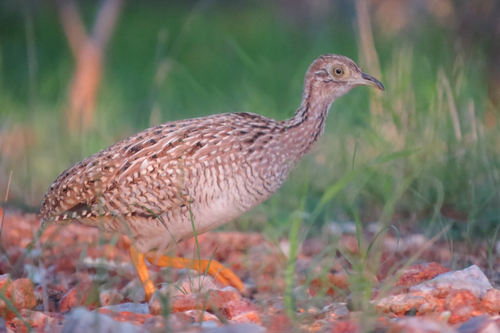
ウズラシギダチョウ (Nothura boraquira) ウズラシギダチョウ
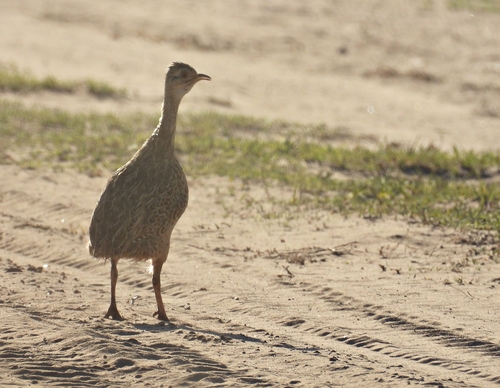
マダラシギダチョウ (Nothura maculosa) マダラシギダチョウ

メディア

読み込み中…

要点

フィールドでウズラシギダチョウとマダラシギダチョウを区別する最も信頼できるフィールドマークは、初列風切のパターンです:ウズラシギダチョウは初列風切の内側の羽が均一に暗い色をしているのに対し、マダラシギダチョウは初列風切の両方の羽に縞模様が見られます(すべての年齢)。この違いは、飛んでいる鳥や翼を広げたときに最も明らかです。止まっている鳥は、脚の色(ウズラシギダチョウは明るい黄色、マダラシギダチョウは鈍い黄色がかった灰色または茶色)や下部のコントラストによって区別できます:ウズラシギダチョウは目立つ白い腹を持ち、マダラシギダチョウは下部がより均一にバフ色で、横腹に縞模様が広がっています。両者はサイズと形が似ていますが、ウズラシギダチョウはわずかに大きく、より乾燥した低木地を好むのに対し、マダラシギダチョウはより草地に関連しています。

識別のコツ

  1. Primary barring in flight (all ages): マダラシギダチョウは初列風切の両方の羽に縞模様が見られ、飛行中や翼を広げたときに縞模様のパネルとして確認できます。ウズラシギダチョウの初列風切は均一に暗い内側の羽を持ち、この縞模様はありません。これは、特に飛んでいる鳥を見たときや追い立てたときに最も信頼できるフィールドマークです。
  2. Leg color: ウズラシギダチョウは明るい黄色の脚を持ち、マダラシギダチョウの脚は鈍い黄色がかった灰色または茶色です。これは、止まっているまたは歩いている鳥を近くで見るときに最もよく確認できます。
  3. Belly color: ウズラシギダチョウは目立つ白い腹を持ち、バフ色の胸と対照的です。マダラシギダチョウは下部がより均一にバフ色で、横腹に縞模様が広がり、胸と腹の間のコントラストが少なくなっています。
  4. Breast and flank pattern: マダラシギダチョウは胸に黒と茶色の縞模様が入ったバフ色の下部を持ち、横腹には縞模様があります。ウズラシギダチョウの胸はバフ色で黒い縞模様がありますが、腹は清潔な白色で無地です。
  5. Crown and head pattern: ウズラシギダチョウは暗い茶色の冠とバフ色の頭の側面を持ちます。マダラシギダチョウの冠は黒にバフ色の縞模様があり、全体的に頭がより縞模様に見えることがあります。
  6. Upperparts: 両者は上面が茶色ですが、ウズラシギダチョウはより明るい茶色で、黒と白の縞模様があります。マダラシギダチョウはバフ色の縞模様が入った茶色で、地域によって色合いがより変動することがあります。
  7. Throat: 両者は白い喉を持つため、これでは区別できません。
  8. Size: ウズラシギダチョウはわずかに大きく(27 cm対24–25.5 cm)、これは微妙で、フィールドでは診断的であることは稀です。
  9. Habitat: 乾燥した低木地にいる場合、特にボリビア北東部、西パラグアイ、またはブラジル北東部では、ウズラシギダチョウの可能性が高いです。開けた草地やサバンナでは、特に南部ではマダラシギダチョウがより期待されます。
  10. Geographic variation: マダラシギダチョウはその範囲内で色が非常に変動し、時には地元の土壌の色合いに合うことがあります。識別のために全体の色合いにのみ依存しないでください。
  11. Behavior: 両種は行動が似ており、近づかない限り、通常は飛び立つのではなく、カバーの中を歩いたり走ったりします。
  12. Sex and age: 主要なフィールドマークにおいて強い性差や年齢による違いはなく、初列風切の縞模様と均一な暗い内側の羽は年齢や性別に関係なく一貫しています。
  13. When marks fail: 鳥が地面でちらっと見え、翼が見えない場合は、可能であれば脚の色と腹のコントラストに依存し、ハビタットを補助的な手がかりとして使用してください。疑わしい場合は、鳥を優しく追い立てて飛行中の翼のパターンを確認してください。
  14. Common pitfalls: マダラシギダチョウの幼鳥や摩耗した鳥は、より淡い色に見えたり、縞模様が不明瞭に見えることがありますが、初列風切の縞模様は飛行中に依然として見えるはずです。ウズラシギダチョウは決して縞模様の初列風切を示しません。
  15. Summary tip: 明確な区別のために常に飛行中の翼のパターンを優先し、次に止まっている鳥の脚の色と腹のコントラストを確認してください。

大きさ

ウズラシギダチョウはわずかに大きく、平均して約27 cmの長さで、マダラシギダチョウは24–25.5 cmでわずかに小さいです。この違いは微妙で、特に距離がある場合や直接比較がない場合にはフィールドで明らかではありません。両者は小型で地面に生息するティナモで、比例が似ています。

羽色

最も診断的な羽毛の違いは、すべての年齢で見られる翼のパターンです:マダラシギダチョウは初列風切の両方の羽に縞模様があり、飛行中や翼が開いているときに縞模様のパネルとして確認できます。対照的に、ウズラシギダチョウは初列風切の内側の羽が均一に暗い色をしており、縞模様の効果がありません。止まっている鳥では、ウズラシギダチョウは白い腹とバフ色の胸を示し、上面は明るい茶色で黒と白の縞模様があります;その冠は暗い茶色で、頭の側面はバフ色です。マダラシギダチョウは色がより変動しますが、一般的にはバフ色の縞模様が入った茶色の上面、黒と茶色の縞模様が入ったバフ色の胸、横腹に広がる縞模様があります。冠は黒にバフ色の縞模様があります。両者は白い喉を持っていますが、脚の色は異なります:ウズラシギダチョウは明るい黄色、マダラシギダチョウは鈍い黄色がかった灰色または茶色です。これらの違いは年齢層を通じて保持されますが、全体の色はマダラシギダチョウでは地域によって変動することがあります。

行動

両種は地面に生息し、秘密主義的で、通常は近づかない限り飛び立つことはなく、カバーの中を歩いたり走ったりします。一般的な行動は似ており、最もよく単独またはペアで見られます。フィールドでの区別に関する情報源には強い行動の違いは記載されていません。

生息環境

ウズラシギダチョウはボリビア北東部、西パラグアイ、ブラジル北東部の乾燥した低木地に生息しています。マダラシギダチョウは、東部および南部のブラジル、パラグアイ、ボリビア、ウルグアイ、東部/北部のアルゼンチンを含む、より広範囲の草地の生息地に生息しています。範囲が一部の地域で重なることがありますが、生息地の好みが役立ちます:ウズラシギダチョウはより乾燥した低木の多い地域を好み、マダラシギダチョウは開けた草地に典型的です。

より良い説明を送る

比較と同じ項目を使ってください。文章はすぐに公開されます。

The most reliable field mark to separate White-bellied Nothura from Spotted Nothura in the field is the pattern of the primaries: White-bellied Nothura has uniformly dark inner webs on its primaries, while Spotted Nothura shows barring on both webs of the primaries (all ages). This difference is most obvious on birds in flight or when the wing is spread. Perched birds can be separated by leg color (bright yellow in White-bellied, dull yellowish-grey or brown in Spotted) and by underpart contrast: White-bellied has a strikingly white belly, while Spotted is more uniformly buff below with barring extending onto the flanks. Both are similar in size and shape, but White-bellied is slightly larger and prefers drier shrubland compared to the more grassland-associated Spotted Nothura.

  1. Primary barring in flight (all ages): Spotted Nothura shows barring on both webs of the primaries, visible as a barred panel in flight or on spread wing. White-bellied Nothura's primaries have uniformly dark inner webs, lacking this barring. This is the single most reliable field mark, especially for birds flushed or seen flying.
  2. Leg color: White-bellied Nothura has bright yellow legs, while Spotted Nothura's legs are dull yellowish-grey or brown. This is best seen on perched or walking birds at close range.
  3. Belly color: White-bellied Nothura has a strikingly white belly, contrasting with its buff breast. Spotted Nothura is more uniformly buff below, with barring extending onto the flanks and less contrast between breast and belly.
  4. Breast and flank pattern: Spotted Nothura shows buff underparts streaked with black and brown on the breast, with barring on the flanks. White-bellied Nothura's breast is buff with black streaking, but the belly is clean white and unmarked.
  5. Crown and head pattern: White-bellied Nothura has a dark brown crown and buff sides of the head. Spotted Nothura's crown is black streaked with buff, and the overall head can look more streaked.
  6. Upperparts: Both are brown above, but White-bellied Nothura is lighter brown, barred black with white streaks. Spotted Nothura is brown with buff streaks, and can be more variable in tone depending on locality.
  7. Throat: Both have white throats, so this is not helpful for separation.
  8. Size: White-bellied Nothura is slightly larger (27 cm vs 24–25.5 cm), but this is subtle and rarely diagnostic in the field.
  9. Habitat: If in dry shrubland, especially in northeastern Bolivia, western Paraguay, or northeastern Brazil, White-bellied Nothura is more likely. In open grassland or savanna, especially further south, Spotted Nothura is more expected.
  10. Geographic variation: Spotted Nothura is highly variable in color across its range, sometimes matching local soil tones. Do not rely solely on overall color hue for identification.
  11. Behavior: Both species behave similarly and are not reliably separated by jizz or foraging style.
  12. Sex and age: No strong sexual dimorphism or age-related differences in the key field marks; the primary barring vs uniform dark inner webs is consistent across ages and sexes.
  13. When marks fail: If the bird is only glimpsed on the ground and the wing is not visible, rely on leg color and belly contrast if possible, and use habitat as a supporting clue. If in doubt, try to flush the bird gently to view the wing pattern in flight.
  14. Common pitfalls: Juvenile or worn birds of Spotted Nothura may appear paler or less distinctly barred, but the primary barring should still be visible in flight. White-bellied Nothura never shows barred primaries.
  15. Summary tip: Always prioritize wing pattern in flight for a definitive separation, then check leg color and belly contrast on perched birds.

White-bellied Nothura is a bit larger, averaging about 27 cm in length, while Spotted Nothura is slightly smaller at 24–25.5 cm. This difference is subtle and not always obvious in the field, especially at a distance or without direct comparison. Both are small, ground-dwelling tinamous with similar proportions.

The most diagnostic plumage difference, visible in all ages, is the wing pattern: Spotted Nothura has barring on both webs of the primaries, which shows as a barred panel in flight or when the wing is open. White-bellied Nothura, in contrast, has uniformly dark inner webs on its primaries, lacking the barred effect. On perched birds, White-bellied shows a white belly and buff breast, with the upperparts light brown barred black and streaked white; its crown is dark brown, and the sides of the head are buff. Spotted Nothura is more variable in color but generally has brown upperparts with buff streaks, a buff breast streaked with black and brown, and barring that extends onto the flanks. Its crown is black streaked with buff. Both have white throats, but leg color differs: bright yellow in White-bellied, dull yellowish-grey or brown in Spotted. These differences hold across age classes, though overall color can vary regionally in Spotted Nothura.

Both species are ground-dwelling and secretive, typically walking or running through cover rather than flushing unless closely approached. Their general behavior is similar, and they are most often seen singly or in pairs. No strong behavioral differences are noted in the sources for field separation.

White-bellied Nothura is found in dry shrublands of northeastern Bolivia, western Paraguay, and northeastern Brazil. Spotted Nothura occupies grassy habitats, including open grasslands and savannas, across a broader range: eastern and southern Brazil, Paraguay, Bolivia, Uruguay, and eastern/northern Argentina. While ranges overlap in some areas, habitat preference can help: White-bellied favors drier, brushier areas, while Spotted is more typical in open grasslands.

変更を破棄しますか?

保存していない編集があります。今離れると失われます。

ウズラシギダチョウ · マダラシギダチョウ · 苦手な鳥