

White-bellied Nothura vs Spotted Nothura
Nothura boraquira contro Nothura maculosa
Fai un quiz con White-bellied Nothura e Spotted Nothura
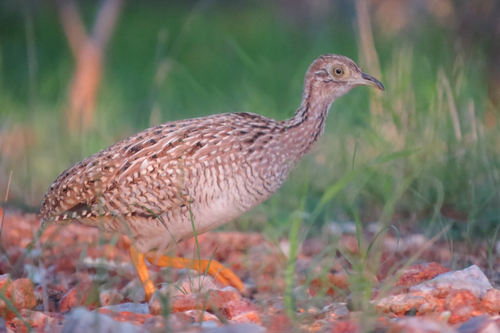 White-bellied Nothura
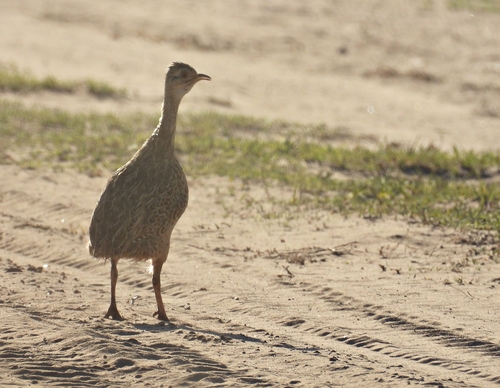 Spotted Nothura
In breve
Il segno di campo più affidabile per separare la White-bellied Nothura dalla Spotted Nothura sul campo è il modello delle primarie: la White-bellied Nothura ha membrane interne uniformemente scure sulle sue primarie, mentre la Spotted Nothura mostra barre su entrambe le membrane delle primarie (tutte le età). Questa differenza è più evidente sugli uccelli in volo o quando l'ala è spiegata. Gli uccelli in posa possono essere separati dal colore delle gambe (giallo brillante nella White-bellied, giallo-grigiastro opaco o marrone nella Spotted) e dal contrasto delle parti inferiori: la White-bellied ha una pancia bianchissima, mentre la Spotted è più uniformemente color sabbia sotto, con barre che si estendono sui fianchi. Entrambi sono simili in dimensioni e forma, ma la White-bellied è leggermente più grande e preferisce terreni arbustivi più secchi rispetto alla Spotted Nothura, che è più associata a praterie.
Consigli di identificazione
- Barre primarie in volo (tutte le età): La Spotted Nothura mostra barre su entrambe le membrane delle primarie, visibili come un pannello barrato in volo o con l'ala spiegata. Le primarie della White-bellied Nothura hanno membrane interne uniformemente scure, prive di queste barre. Questo è il segno di campo più affidabile, specialmente per gli uccelli spaventati o visti volare.
- Colore delle gambe: La White-bellied Nothura ha gambe giallo brillante, mentre le gambe della Spotted Nothura sono giallo-grigiastro opaco o marrone. Questo è meglio visibile su uccelli in posa o in movimento a distanza ravvicinata.
- Colore della pancia: La White-bellied Nothura ha una pancia bianchissima, in contrasto con il suo petto color sabbia. La Spotted Nothura è più uniformemente color sabbia sotto, con barre che si estendono sui fianchi e meno contrasto tra petto e pancia.
- Modello del petto e dei fianchi: La Spotted Nothura mostra parti inferiori color sabbia striate di nero e marrone sul petto, con barre sui fianchi. Il petto della White-bellied Nothura è color sabbia con striature nere, ma la pancia è bianca e pulita.
- Modello della corona e della testa: La White-bellied Nothura ha una corona marrone scuro e lati della testa color sabbia. La corona della Spotted Nothura è nera striata di sabbia, e l'intera testa può apparire più striata.
- Parte superiore: Entrambi sono marroni sopra, ma la White-bellied Nothura è di un marrone più chiaro, barrata di nero con striature bianche. La Spotted Nothura è marrone con striature color sabbia e può essere più variabile nel tono a seconda della località.
- Gola: Entrambi hanno gole bianche, quindi questo non è utile per la separazione.
- Dimensioni: La White-bellied Nothura è leggermente più grande (27 cm contro 24–25,5 cm), ma questa è sottile e raramente diagnostica sul campo.
- Habitat: Se in terreni arbustivi secchi, specialmente nel nord-est della Bolivia, nel Paraguay occidentale o nel nord-est del Brasile, è più probabile che si tratti di una White-bellied Nothura. Nelle praterie aperte o nelle savane, specialmente più a sud, ci si aspetta di più la Spotted Nothura.
- Variazione geografica: La Spotted Nothura è altamente variabile nel colore attraverso il suo areale, a volte corrispondendo ai toni del suolo locale. Non fare affidamento solo sul colore generale per l'identificazione.
- Comportamento: Entrambe le specie si comportano in modo simile e non possono essere separate in modo affidabile dal comportamento o dallo stile di alimentazione.
- Sesso e età: Non ci sono forti dimorfismi sessuali o differenze legate all'età nei segni di campo chiave; le barre primarie rispetto alle membrane interne uniformemente scure sono coerenti tra età e sessi.
- Quando i segni falliscono: Se l'uccello è solo intravisto a terra e l'ala non è visibile, fare affidamento sul colore delle gambe e sul contrasto della pancia se possibile, e utilizzare l'habitat come indizio di supporto. In caso di dubbio, provare a spaventare delicatamente l'uccello per vedere il modello dell'ala in volo.
- Trappole comuni: Gli uccelli giovanili o usurati della Spotted Nothura possono apparire più chiari o meno distintamente barrati, ma le barre primarie dovrebbero comunque essere visibili in volo. La White-bellied Nothura non mostra mai primarie barrate.
- Suggerimento riassuntivo: Dare sempre priorità al modello dell'ala in volo per una separazione definitiva, quindi controllare il colore delle gambe e il contrasto della pancia sugli uccelli in posa.
Taglia
La White-bellied Nothura è un po' più grande, con una lunghezza media di circa 27 cm, mentre la Spotted Nothura è leggermente più piccola a 24–25,5 cm. Questa differenza è sottile e non sempre ovvia sul campo, specialmente a distanza o senza un confronto diretto. Entrambi sono tinamù di piccole dimensioni, terrestri, con proporzioni simili.
Piumaggio
La differenza di piumaggio più diagnostica, visibile in tutte le età, è il modello dell'ala: la Spotted Nothura ha barre su entrambe le membrane delle primarie, che si mostrano come un pannello barrato in volo o quando l'ala è aperta. La White-bellied Nothura, al contrario, ha membrane interne uniformemente scure sulle sue primarie, prive dell'effetto barrato. Sugli uccelli in posa, la White-bellied mostra una pancia bianca e un petto color sabbia, con le parti superiori di un marrone chiaro barrato di nero e striato di bianco; la sua corona è marrone scuro e i lati della testa sono color sabbia. La Spotted Nothura è più variabile nel colore ma generalmente ha parti superiori marroni con striature color sabbia, un petto color sabbia striato di nero e marrone, e barre che si estendono sui fianchi. La sua corona è nera striata di sabbia. Entrambi hanno gole bianche, ma il colore delle gambe differisce: giallo brillante nella White-bellied, giallo-grigiastro opaco o marrone nella Spotted. Queste differenze si mantengono attraverso le classi di età, anche se il colore generale può variare regionalmente nella Spotted Nothura.
Comportamento
Entrambe le specie sono terrestri e segrete, tipicamente camminando o correndo attraverso la vegetazione piuttosto che spaventandosi a meno che non vengano avvicinate. Il loro comportamento generale è simile e vengono più spesso visti singolarmente o in coppie. Non sono state notate forti differenze comportamentali nelle fonti per la separazione sul campo.
Habitat
La White-bellied Nothura si trova in terreni arbustivi secchi nel nord-est della Bolivia, nel Paraguay occidentale e nel nord-est del Brasile. La Spotted Nothura occupa habitat erbosi, comprese praterie aperte e savane, su un areale più ampio: Brasile orientale e meridionale, Paraguay, Bolivia, Uruguay e Argentina orientale/nord-orientale. Sebbene gli areali si sovrappongano in alcune aree, la preferenza per l'habitat può aiutare: la White-bellied predilige aree più secche e cespugliose, mentre la Spotted è più tipica nelle praterie aperte.
White-bellied Nothura · Spotted Nothura · I miei uccelli difficili