

Witbuiknothura vs Gevlekte nothura
Nothura boraquira versus Nothura maculosa
Speel een quiz met Witbuiknothura en Gevlekte nothura
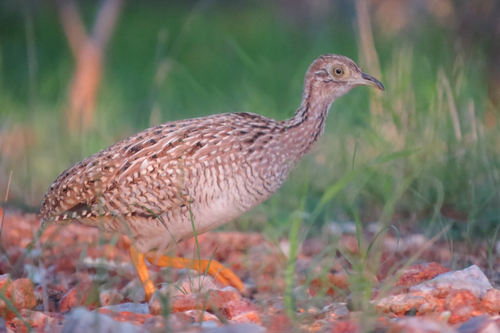 Witbuiknothura
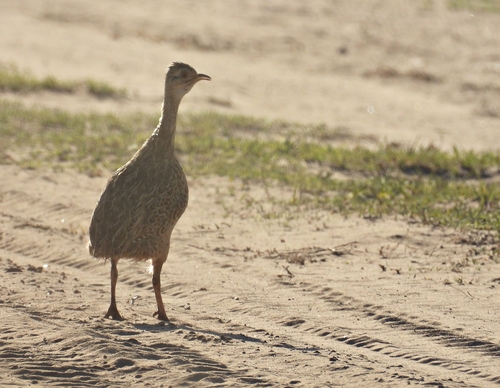 Gevlekte nothura
Kort gezegd
Het meest betrouwbare veldkenmerk om Witbuiknothura van Gevlekte nothura in het veld te scheiden, is het patroon van de primaire veren: Witbuiknothura heeft uniform donkere binnenvleugels op zijn primaire veren, terwijl Gevlekte nothura streepjes vertoont op beide vleugels van de primaire veren (alle leeftijden). Dit verschil is het meest duidelijk bij vogels in de vlucht of wanneer de vleugel is uitgespreid. Zittende vogels kunnen worden gescheiden op basis van de kleur van de poten (helder geel bij Witbuiknothura, dof geelgrijs of bruin bij Gevlekte) en door het contrast van de onderzijde: Witbuiknothura heeft een opvallend witte buik, terwijl Gevlekte meer uniform buff onder is met streepjes die zich uitbreiden naar de flanken. Beide zijn vergelijkbaar in grootte en vorm, maar Witbuiknothura is iets groter en geeft de voorkeur aan drogere struikgebieden in vergelijking met de meer grasland-geassocieerde Gevlekte nothura.
Herkenningstips
- Primaire streepjes in de vlucht (alle leeftijden): Gevlekte nothura vertoont streepjes op beide vleugels van de primaire veren, zichtbaar als een gestreept paneel in de vlucht of op een uitgespreide vleugel. De primaire veren van Witbuiknothura hebben uniform donkere binnenvleugels, zonder deze streepjes. Dit is het enige meest betrouwbare veldkenmerk, vooral voor vogels die opvliegen of vliegend worden gezien.
- Kleur van de poten: Witbuiknothura heeft heldergele poten, terwijl de poten van Gevlekte nothura dof geelgrijs of bruin zijn. Dit is het beste te zien bij zittende of lopende vogels van dichtbij.
- Kleur van de buik: Witbuiknothura heeft een opvallend witte buik, in contrast met zijn buff borst. Gevlekte nothura is meer uniform buff onder, met streepjes die zich uitbreiden naar de flanken en minder contrast tussen borst en buik.
- Patroon van borst en flanken: Gevlekte nothura vertoont buff onderdelen gestreept met zwart en bruin op de borst, met streepjes op de flanken. De borst van Witbuiknothura is buff met zwarte strepen, maar de buik is schoon wit en onopgemerkt.
- Patroon van kroon en hoofd: Witbuiknothura heeft een donkerbruine kroon en buff zijkanten van het hoofd. Gevlekte nothura's kroon is zwart gestreept met buff, en het algehele hoofd kan er meer gestreept uitzien.
- Bovenste delen: Beide zijn bruin boven, maar Witbuiknothura is lichter bruin, gestreept met zwart en witte strepen. Gevlekte nothura is bruin met buff strepen en kan variabeler in toon zijn, afhankelijk van de locatie.
- Keel: Beide hebben witte kelen, dus dit is niet nuttig voor scheiding.
- Grootte: Witbuiknothura is iets groter (27 cm vs 24–25,5 cm), maar dit is subtiel en zelden diagnostisch in het veld.
- Habitat: Als het in droog struikgebied is, vooral in het noordoosten van Bolivia, westelijk Paraguay of noordoostelijk Brazilië, is de kans groter dat het Witbuiknothura is. In open grasland of savanne, vooral verder naar het zuiden, is Gevlekte nothura meer te verwachten.
- Geografische variatie: Gevlekte nothura is zeer variabel in kleur over zijn verspreidingsgebied, soms overeenkomend met lokale bodemtonen. Vertrouw niet alleen op de algehele kleurtoon voor identificatie.
- Gedrag: Beide soorten gedragen zich vergelijkbaar en zijn niet betrouwbaar te scheiden op basis van jizz of foerageerstijl.
- Geslacht en leeftijd: Geen sterke seksuele dimorfie of leeftijdsgebonden verschillen in de belangrijkste veldkenmerken; de primaire streepjes versus uniforme donkere binnenvleugels is consistent over leeftijden en geslachten.
- Wanneer kenmerken falen: Als de vogel alleen op de grond wordt gezien en de vleugel niet zichtbaar is, vertrouw dan op de kleur van de poten en het buikcontrast indien mogelijk, en gebruik habitat als ondersteunende aanwijzing. Als je twijfelt, probeer dan de vogel voorzichtig op te jagen om het vleugelpatroon in de vlucht te bekijken.
- Veelvoorkomende valkuilen: Juveniele of versleten vogels van Gevlekte nothura kunnen bleker of minder duidelijk gestreept lijken, maar de primaire streepjes moeten nog steeds zichtbaar zijn in de vlucht. Witbuiknothura vertoont nooit gestreepte primaire veren.
- Samenvattingstip: Geef altijd prioriteit aan het vleugelpatroon in de vlucht voor een definitieve scheiding, controleer vervolgens de kleur van de poten en het buikcontrast bij zittende vogels.
Grootte
Witbuiknothura is iets groter, met een gemiddelde lengte van ongeveer 27 cm, terwijl Gevlekte nothura iets kleiner is met 24–25,5 cm. Dit verschil is subtiel en niet altijd duidelijk in het veld, vooral op afstand of zonder directe vergelijking. Beide zijn kleine, op de grond levende tinamous met vergelijkbare verhoudingen.
Verenkleed
Het meest diagnostische pluimaged verschil, zichtbaar in alle leeftijden, is het vleugelpatroon: Gevlekte nothura heeft streepjes op beide vleugels van de primaire veren, wat zichtbaar is als een gestreept paneel in de vlucht of wanneer de vleugel open is. Witbuiknothura heeft daarentegen uniform donkere binnenvleugels op zijn primaire veren, zonder het gestreepte effect. Bij zittende vogels toont Witbuiknothura een witte buik en buff borst, met de bovenste delen lichtbruin gestreept met zwart en witte strepen; zijn kroon is donkerbruin, en de zijkanten van het hoofd zijn buff. Gevlekte nothura is variabeler in kleur, maar heeft over het algemeen bruine bovenste delen met buff strepen, een buff borst gestreept met zwart en bruin, en streepjes die zich uitbreiden naar de flanken. Zijn kroon is zwart gestreept met buff. Beide hebben witte kelen, maar de kleur van de poten verschilt: helder geel bij Witbuiknothura, dof geelgrijs of bruin bij Gevlekte. Deze verschillen blijven bestaan over leeftijdsgroepen, hoewel de algehele kleur regionaal kan variëren in Gevlekte nothura.
Gedrag
Beide soorten zijn op de grond levende en geheimzinnige vogels, die typisch door dekking lopen of rennen in plaats van op te vliegen, tenzij ze van dichtbij benaderd worden. Hun algemeen gedrag is vergelijkbaar, en ze worden het vaakst alleen of in paren gezien. Er zijn geen sterke gedragsverschillen opgemerkt in de bronnen voor veldscheiding.
Habitat
Witbuiknothura wordt aangetroffen in droge struikgebieden in het noordoosten van Bolivia, westelijk Paraguay en noordoostelijk Brazilië. Gevlekte nothura bezet grasachtige habitats, waaronder open graslanden en savannes, over een breder bereik: oostelijk en zuidelijk Brazilië, Paraguay, Bolivia, Uruguay en oostelijk/noordelijk Argentinië. Hoewel de verspreidingsgebieden in sommige gebieden overlappen, kan de voorkeur voor habitat helpen: Witbuiknothura geeft de voorkeur aan drogere, bushachtige gebieden, terwijl Gevlekte meer typisch is in open graslanden.