

White-bellied Erpornis vs Mangrove Whistler
Erpornis zantholeuca versus Pachycephala cinerea
Play a quiz with White-bellied Erpornis and Mangrove Whistler
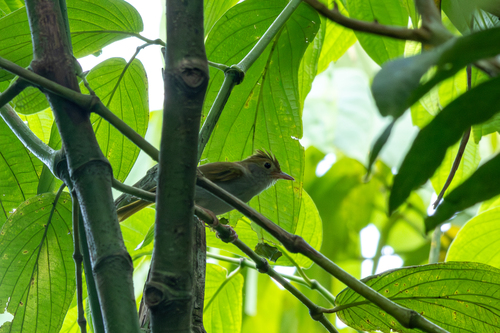 White-bellied Erpornis
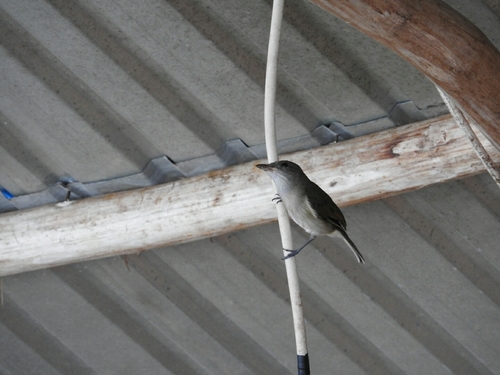 Mangrove Whistler
In short
The most reliable field mark separating White-bellied Erpornis from Mangrove Whistler is the presence of a prominent crest on the erpornis, which is always absent in the whistler. Both species have white underparts, but the erpornis combines this with an olivaceous or golden-brown back and a distinctly crested head, while the whistler is more uniformly greyish above and lacks any crest. Size is also a strong clue: Mangrove Whistler is nearly twice as heavy and appears bulkier. If you see a small, acrobatic bird with a peaked crown and white belly, it is almost certainly an erpornis; a heavier, thickset bird with a plain head and similar underparts points to Mangrove Whistler.
Identification tips
- Crested head (all ages/seasons): White-bellied Erpornis always shows a prominent, pointed crest, giving the head a peaked appearance. Mangrove Whistler never shows a crest; its crown is smoothly rounded.
- Upperpart color (all ages): Erpornis has olivaceous or golden-brown upperparts, contrasting with its white belly. Mangrove Whistler is more uniformly grey above, lacking any olive or brown tones.
- Underparts (all ages): Both species have white underparts, which can cause confusion, but only erpornis combines this with a contrasting, colorful back and crest.
- Size and bulk (all ages): Mangrove Whistler is nearly twice as heavy as erpornis and appears much bulkier in the field. If the bird looks small and light, erpornis is more likely; if thickset and robust, whistler is favored.
- Bill structure (all ages): Erpornis has a finer, more pointed bill adapted for prying bark, while Mangrove Whistler has a stouter, thicker bill typical of Pachycephala.
- Jizz and movement: Erpornis is acrobatic, often hanging or moving nimbly through foliage. Whistler is more sedentary, perching upright and moving with slow hops.
- Head pattern: Only erpornis shows a peaked or crested head profile; whistler's head is plain and rounded.
- Habitat context: Erpornis is widespread in forest and edge habitats, including foothills and montane zones. Whistler is most often found in mangrove or coastal woodland, though some overlap can occur.
- Confusing names: The alternate name 'white-bellied whistler' for Mangrove Whistler can cause confusion, but only erpornis is truly crested and olive-backed.
- No distinctive flight marks: Neither species shows unique upperwing or flight pattern features for age separation, so rely on structure and plumage.
- No strong sexual dimorphism: Both species are similar between sexes, so sex is not a useful field mark.
- No reliable vocal differences described: If you hear calls or songs, they are not described in the sources as diagnostic for separation.
- Contextual abundance: In inland or upland forest, erpornis is more likely; in mangrove, whistler is more likely, but always check plumage and structure.
- Pitfall: Do not rely on white underparts alone—this is shared. Focus on crest, upperpart color, and overall size.
- When in doubt: If you see a small, crested, acrobatic bird with a white belly, it's erpornis. If the bird is larger, plain-headed, and in mangrove, it's likely a whistler.
Size
White-bellied Erpornis is a small, lightweight bird (11.2 g) with a delicate build, while Mangrove Whistler is much heavier (22.0 g) and noticeably bulkier in the field. The whistler's larger size and more robust proportions are often apparent even at a distance, especially when both species are seen in similar habitat. If you are unsure, the whistler will look almost twice the mass of the erpornis.
Plumage
No age-specific upperwing or flight pattern differences are described for either species in the sources, so focus is on adult and general plumage. White-bellied Erpornis shows a striking contrast between its white underparts and olivaceous or golden-brown upperparts, with a prominent crest giving the head a peaked look. Mangrove Whistler, by contrast, is more uniformly greyish above, lacks any crest, and also has white underparts, which can cause confusion. The whistler's head, back, and wings do not show the warm brown or olive tones of erpornis, nor the distinctive head shape. Both species may appear pale-bellied, but only erpornis combines this with a contrasting, crested, and more colorful upperpart.
Behaviour
White-bellied Erpornis is notably acrobatic, often seen foraging actively and using its strong bill to pry bark for insects. Its movements are reminiscent of vireos or yuhinas, with frequent hanging and agile maneuvers in the canopy. Mangrove Whistler is more deliberate and less acrobatic, typically perching upright and moving with slower, more purposeful hops or short flights. The whistler's behavior is less dynamic and more typical of a thickset, perching songbird.
Habitat
Both species occur in Southeast Asia, but White-bellied Erpornis has a much broader range, including foothill and montane forests across South and Southeast Asia. Mangrove Whistler, as its name suggests, is more closely tied to mangrove and coastal woodland habitats. If you are birding in dense inland forest, erpornis is more likely; in mangrove or coastal scrub, whistler is favored. However, there is some overlap in lowland forest edge, so habitat alone is not always diagnostic.
White-bellied Erpornis · Mangrove Whistler · My Tricky Birds