

Western Yellow Wagtail vs Citrine Wagtail
Motacilla flava versus Motacilla citreola
Play a quiz with Western Yellow Wagtail and Citrine Wagtail
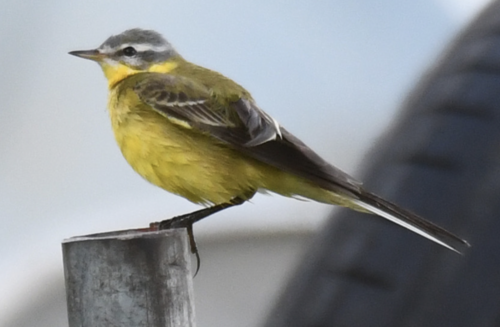 Western Yellow Wagtail
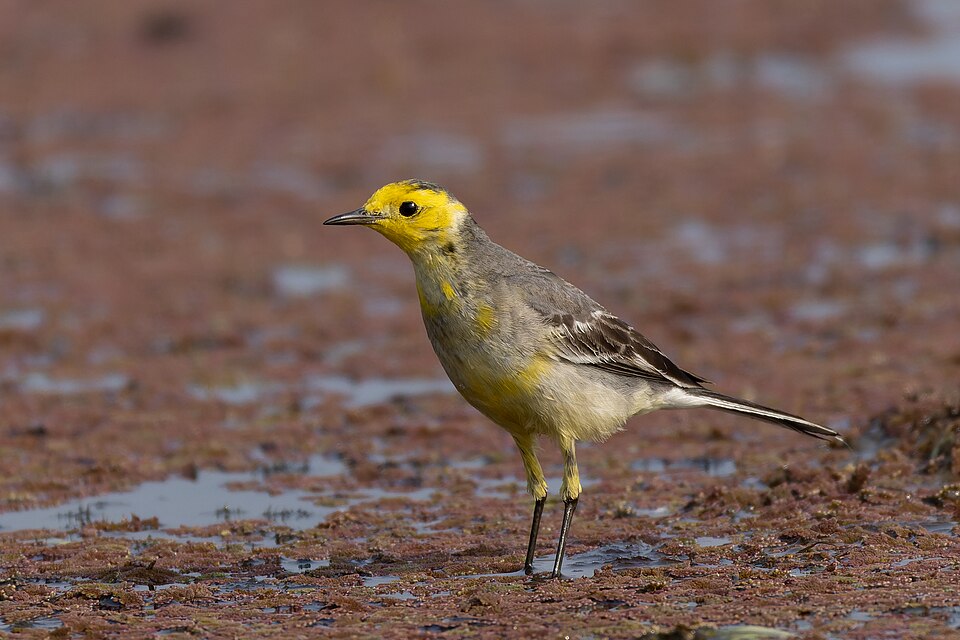 Citrine Wagtail
In short
The most reliable field mark between Western Yellow Wagtail and Citrine Wagtail is the head pattern in breeding plumage: Citrine Wagtail adult males show a bright yellow head with a contrasting black nape, while Western Yellow Wagtail males have variable head colors (often blue, grey, or olive) but never a fully yellow head with a black nape. In non-breeding and immature plumages, both species can appear washed out, but Citrine Wagtail tends to show a paler, more lemon-toned yellow and a stronger pale supercilium. Structure is similar, but Western Yellow Wagtail is slightly shorter-tailed and overall a bit smaller. Both species are slender, long-tailed birds of open wet habitats, but Citrine Wagtail is much rarer in western Europe.
Identification tips
- Breeding male head pattern: Citrine Wagtail adult males have a bright yellow head with a contrasting black nape, unique among wagtails. Western Yellow Wagtail males never show this combination; their head color varies by subspecies but is never entirely yellow with a black nape. This is the single most diagnostic mark in spring/summer.
- Non-breeding and juvenile head pattern: Citrine Wagtail (all ages outside breeding) usually shows a pale yellowish or whitish supercilium and a generally cleaner, colder facial pattern. Western Yellow Wagtail is more olive or brownish above with less contrast in the face, and the supercilium is less distinct.
- Underpart color: Both species are yellow below in breeding plumage, but Citrine Wagtail is a colder, lemon yellow, while Western Yellow Wagtail is warmer and can be more variable (sometimes almost whitish in juveniles).
- Upperpart color: Citrine Wagtail is grey or black above in breeding males, while Western Yellow Wagtail is olive or greenish above. This contrast is most apparent in adult males.
- Tail length: Western Yellow Wagtail has the shortest tail among European wagtails, but this is a subtle feature and only useful in direct comparison.
- Flight views: No distinctive upperwing or flight pattern differences are described for immatures or adults in the sources, so focus on head and body coloration.
- Sex and age pitfalls: Females and non-breeding birds of both species are duller and more similar, but Citrine Wagtail tends to retain a pale supercilium and a colder, cleaner look overall.
- Habitat and range: In western Europe, Western Yellow Wagtail is common in suitable habitat, while Citrine Wagtail is a rare vagrant. If you are in western Europe and see a wagtail in a wet meadow, it is far more likely to be Western Yellow Wagtail unless you have strong evidence otherwise.
- Subspecies confusion: Western Yellow Wagtail has many subspecies with variable head patterns (blue, grey, black, olive), but none match the bright yellow head with black nape of Citrine Wagtail.
- Voice: Western Yellow Wagtail gives a high-pitched 'jeet' call, but this is not a reliable separator from Citrine Wagtail based on the available information.
- Overall impression: Citrine Wagtail often looks cleaner, colder, and more sharply marked, especially in the head and underparts, while Western Yellow Wagtail is warmer and more variable.
- Mixed flocks: In migration, both species may occur together, but always check for the unique head pattern of breeding male Citrine Wagtail.
- Hybrid zones: Western Yellow Wagtail has hybrid zones with variable head patterns, but even these do not show the full yellow head with black nape of Citrine Wagtail.
- Juvenile confusion: Juvenile Western Yellow Wagtail can be very pale below and brownish above, but lacks the strong supercilium and cold tones of Citrine Wagtail.
- Use multiple features: When in doubt, combine head pattern, upperpart color, and context (range and habitat) for the most reliable identification.
Size
Both species are slender wagtails with long tails. Western Yellow Wagtail is slightly shorter overall (15–16 cm) compared to Citrine Wagtail (15.5–17 cm) [wikipedia]. The tail of Western Yellow Wagtail is the shortest among European wagtails, which can be a subtle but helpful distinction. In the field, this difference is minor and rarely diagnostic unless both species are side by side.
Plumage
-
Juvenile and non-breeding plumage: Both species become paler below and on the head outside the breeding season, with yellow replaced by whitish or pale tones. Juvenile Western Yellow Wagtail often appears whitish below with olive-brown above, while juvenile Citrine Wagtail is also pale but tends to have a cleaner, more lemon-washed appearance and a more distinct pale supercilium. Wing pattern is not described as a strong separator for either species at this age in the sources.
-
Adult breeding males: Western Yellow Wagtail males are olive above and yellow below, with head color varying by subspecies (blue, grey, olive, or black, but never entirely yellow with a black nape). Citrine Wagtail males are grey or black above, bright yellow below, and have a striking yellow head with a black nape, a unique feature among wagtails.
-
Females and non-breeding birds: Both are duller, but Citrine Wagtail females and non-breeding birds retain a pale yellowish supercilium and a generally cleaner, colder look compared to the warmer, olive tones of Western Yellow Wagtail.
Behaviour
Both species are active, ground-feeding insectivores in open wet habitats, constantly wagging their tails. Their behavior is very similar, and both can be seen running or making short flights over wet meadows or marshes. No distinctive behavioral differences are noted in the sources for field separation.
Habitat
Western Yellow Wagtail breeds widely in temperate Europe and Asia, favoring wet meadows and open country near water. Citrine Wagtail breeds in the central Palearctic (including wet meadows and tundra) and is a rare vagrant to western Europe, where it is much less likely to be encountered. In western Europe, Western Yellow Wagtail is the expected species; Citrine Wagtail is a notable rarity.
Voice
Western Yellow Wagtail gives a high-pitched 'jeet' call. The sources do not provide a contrasting call description for Citrine Wagtail, so vocalizations are not reliably diagnostic based on the provided information.