

Motmot

Tricoloured Blackbird vs Tawny-shouldered Blackbird

Agelaius tricolor versus Agelaius humeralis

Play a quiz with Tricoloured Blackbird and Tawny-shouldered Blackbird
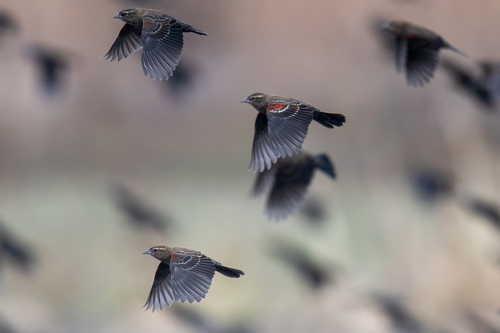
Tricoloured Blackbird (Agelaius tricolor) Tricoloured Blackbird
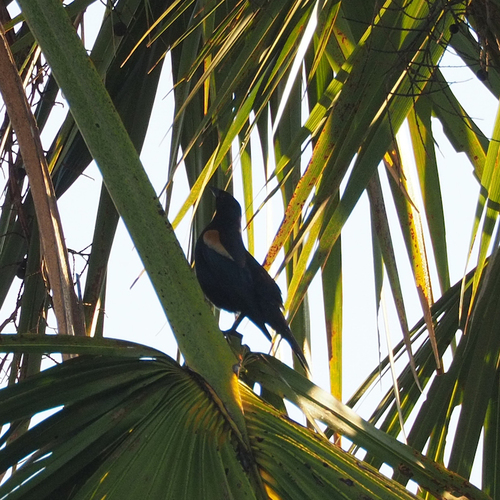
Tawny-shouldered Blackbird (Agelaius humeralis) Tawny-shouldered Blackbird

Media

Loading…

In short

The most reliable field mark to separate Tricolored Blackbird from Tawny-shouldered Blackbird is the color and extent of the shoulder patch: Tricolored Blackbird shows a bold red (with white below) shoulder patch in adult males, while Tawny-shouldered Blackbird has a smaller, tawny (orange-buff) shoulder patch. Juvenile Tawny-shouldered Blackbirds lack or show very little tawny on the wing, which can cause confusion with young Tricoloreds, but the overall gloss, body color, and range are strong clues. Tricolored Blackbird is limited to western North America (mainly California), while Tawny-shouldered is found in Cuba, Hispaniola, and rarely the Florida Keys. Both are medium-sized icterids, but Tawny-shouldered is slightly smaller and less robust. In the field, focus on the color and size of the shoulder patch, overall gloss, and geographic context for the surest separation.

Identification tips

  1. Shoulder patch color and size (adults): Tricolored Blackbird males have a bold red shoulder patch with a white lower border; Tawny-shouldered Blackbird has a smaller, orange-buff (tawny) patch, sometimes with yellowish-cream tips. This is the single most reliable mark for adult males.
  2. Juvenile/immature wing pattern: Juvenile Tawny-shouldered Blackbirds are dusky black with little or no tawny on the wing, which can cause confusion with young Tricoloreds. In these ages, look for overall gloss and body color, as well as range.
  3. Gloss: Adult male Tawny-shouldered Blackbirds have a slight bluish gloss to their black plumage, absent in Tricolored Blackbird. Females of both are duskier, but the gloss is a useful mark in good light for adult males.
  4. Female/immature shoulder patch: Female Tawny-shouldered Blackbirds have less tawny on the wing than males, and the median coverts are partly black. Female Tricoloreds are also duller but not described in detail here; expect less contrast and less vivid shoulder patches in both species' females.
  5. Bill and structure: Subspecies A. h. scopulus of Tawny-shouldered has a thinner bill and smaller tawny patch, but bill shape is not strongly diagnostic between typical individuals.
  6. Size and build: Tricolored Blackbird is slightly larger and bulkier than Tawny-shouldered, but this is subtle and best used in direct comparison or with experience.
  7. Range: Tricolored Blackbird is found in California and adjacent Pacific regions; Tawny-shouldered is Caribbean (Cuba, Hispaniola), rarely Florida Keys. Geographic context is often decisive.
  8. Habitat: Tricolored Blackbird prefers marshes, agricultural fields, and brambles in California; Tawny-shouldered is found in a variety of open habitats in the Caribbean. If you are in a wetland in California, Tricolored is vastly more likely.
  9. Flock size and behavior: Tricolored Blackbirds often form huge, dense colonies, especially in the Central Valley. Tawny-shouldered is not noted for such mega-flocks.
  10. Sex differences: Female Tawny-shouldered is duskier and less glossy than male, with a reduced tawny patch. Female Tricoloreds are also duller than males, but the difference is less well described.
  11. Subspecies variation: Be aware that A. h. scopulus (Tawny-shouldered) has a smaller patch and thinner bill, which may make the shoulder mark less obvious.
  12. Vagrancy: If you encounter a blackbird with a tawny or red shoulder patch outside the normal range of either species (e.g., Florida, Oregon), check all marks carefully and consider vagrancy.
  13. Plumage pitfalls: Immature and female birds of both species may lack the full, classic shoulder patch, so do not rely solely on this feature in young birds. Use gloss, size, and range as supporting marks.
  14. Iris, bill, and legs: Both species have dark eyes, black bills, and black legs/feet, so these features are not helpful for separation.
  15. Voice: No distinguishing vocalizations are provided in the notes; use visual marks for separation.

Size

Tawny-shouldered Blackbird is slightly smaller, measuring 19–22 cm in length and weighing 34.5–38.3 g (females to males) [wikipedia]. Tricolored Blackbird's measurements are not specified here, but it is generally similar to Red-winged Blackbird and thus a bit larger and heavier than Tawny-shouldered. In direct comparison, expect Tricolored to look longer and bulkier, especially in flocks. However, size alone is rarely diagnostic unless both species are side by side.

Plumage

Juvenile and immature Tawny-shouldered Blackbirds are dusky black with minimal or no tawny on the wing, so young birds may lack the classic shoulder patch; this can cause confusion with immature Tricoloreds, which also lack the full adult shoulder pattern. Adult male Tricolored Blackbirds have a striking red shoulder patch bordered below by white, while adult male Tawny-shouldered Blackbirds have a smaller, orange-buff (tawny) patch on the lesser and median coverts, with the median coverts tipped yellowish-cream. Female Tawny-shouldered are duskier overall, with less tawny and no blue gloss, while female Tricoloreds are also duller but not described in detail here. Both species are otherwise blackish, but Tricolored males lack the bluish gloss seen in male Tawny-shouldered. The tawny patch on Tawny-shouldered is always smaller and more limited than the bold, two-toned patch of Tricolored. Subspecies A. h. scopulus (Tawny-shouldered) has an even smaller patch and thinner bill.

Behaviour

Tricolored Blackbirds are highly colonial, often forming large, dense nesting colonies in marshes or agricultural fields. Tawny-shouldered Blackbirds are not described as colonial to the same degree. Both species forage in open areas, but Tricoloreds are more likely to be seen in very large flocks, especially in California's Central Valley. Behavior in flight and foraging is otherwise typical for icterids and not strongly diagnostic.

Habitat

Tricolored Blackbird is restricted to the Pacific coastal regions of North America, especially California, where it breeds in marshes, agricultural fields, and sometimes in brambles. Tawny-shouldered Blackbird is found in Cuba, Haiti, and possibly the Dominican Republic, with rare vagrancy to the Florida Keys. Habitat overlap is essentially impossible except for rare vagrants. If seen outside California or the Caribbean, check for vagrancy but expect Tricolored in the west and Tawny-shouldered in the Caribbean.

Submit a better description

Use the same sections as the comparison. Your text is published immediately.

The most reliable field mark to separate Tricolored Blackbird from Tawny-shouldered Blackbird is the color and extent of the shoulder patch: Tricolored Blackbird shows a bold red (with white below) shoulder patch in adult males, while Tawny-shouldered Blackbird has a smaller, tawny (orange-buff) shoulder patch. Juvenile Tawny-shouldered Blackbirds lack or show very little tawny on the wing, which can cause confusion with young Tricoloreds, but the overall gloss, body color, and range are strong clues. Tricolored Blackbird is limited to western North America (mainly California), while Tawny-shouldered is found in Cuba, Hispaniola, and rarely the Florida Keys. Both are medium-sized icterids, but Tawny-shouldered is slightly smaller and less robust. In the field, focus on the color and size of the shoulder patch, overall gloss, and geographic context for the surest separation.

  1. Shoulder patch color and size (adults): Tricolored Blackbird males have a bold red shoulder patch with a white lower border; Tawny-shouldered Blackbird has a smaller, orange-buff (tawny) patch, sometimes with yellowish-cream tips. This is the single most reliable mark for adult males.
  2. Juvenile/immature wing pattern: Juvenile Tawny-shouldered Blackbirds are dusky black with little or no tawny on the wing, which can cause confusion with young Tricoloreds. In these ages, look for overall gloss and body color, as well as range.
  3. Gloss: Adult male Tawny-shouldered Blackbirds have a slight bluish gloss to their black plumage, absent in Tricolored Blackbird. Females of both are duskier, but the gloss is a useful mark in good light for adult males.
  4. Female/immature shoulder patch: Female Tawny-shouldered Blackbirds have less tawny on the wing than males, and the median coverts are partly black. Female Tricoloreds are also duller but not described in detail here; expect less contrast and less vivid shoulder patches in both species' females.
  5. Bill and structure: Subspecies A. h. scopulus of Tawny-shouldered has a thinner bill and smaller tawny patch, but bill shape is not strongly diagnostic between typical individuals.
  6. Size and build: Tricolored Blackbird is slightly larger and bulkier than Tawny-shouldered, but this is subtle and best used in direct comparison or with experience.
  7. Range: Tricolored Blackbird is found in California and adjacent Pacific regions; Tawny-shouldered is Caribbean (Cuba, Hispaniola), rarely Florida Keys. Geographic context is often decisive.
  8. Habitat: Tricolored Blackbird prefers marshes, agricultural fields, and brambles in California; Tawny-shouldered is found in a variety of open habitats in the Caribbean. If you are in a wetland in California, Tricolored is vastly more likely.
  9. Flock size and behavior: Tricolored Blackbirds often form huge, dense colonies, especially in the Central Valley. Tawny-shouldered is not noted for such mega-flocks.
  10. Sex differences: Female Tawny-shouldered is duskier and less glossy than male, with a reduced tawny patch. Female Tricoloreds are also duller than males, but the difference is less well described.
  11. Subspecies variation: Be aware that A. h. scopulus (Tawny-shouldered) has a smaller patch and thinner bill, which may make the shoulder mark less obvious.
  12. Vagrancy: If you encounter a blackbird with a tawny or red shoulder patch outside the normal range of either species (e.g., Florida, Oregon), check all marks carefully and consider vagrancy.
  13. Plumage pitfalls: Immature and female birds of both species may lack the full, classic shoulder patch, so do not rely solely on this feature in young birds. Use gloss, size, and range as supporting marks.
  14. Iris, bill, and legs: Both species have dark eyes, black bills, and black legs/feet, so these features are not helpful for separation.
  15. Voice: No distinguishing vocalizations are provided in the notes; use visual marks for separation.

Tawny-shouldered Blackbird is slightly smaller, measuring 19–22 cm in length and weighing 34.5–38.3 g (females to males) [wikipedia]. Tricolored Blackbird's measurements are not specified here, but it is generally similar to Red-winged Blackbird and thus a bit larger and heavier than Tawny-shouldered. In direct comparison, expect Tricolored to look longer and bulkier, especially in flocks. However, size alone is rarely diagnostic unless both species are side by side.

Juvenile and immature Tawny-shouldered Blackbirds are dusky black with minimal or no tawny on the wing, so young birds may lack the classic shoulder patch; this can cause confusion with immature Tricoloreds, which also lack the full adult shoulder pattern. Adult male Tricolored Blackbirds have a striking red shoulder patch bordered below by white, while adult male Tawny-shouldered Blackbirds have a smaller, orange-buff (tawny) patch on the lesser and median coverts, with the median coverts tipped yellowish-cream. Female Tawny-shouldered are duskier overall, with less tawny and no blue gloss, while female Tricoloreds are also duller but not described in detail here. Both species are otherwise blackish, but Tricolored males lack the bluish gloss seen in male Tawny-shouldered. The tawny patch on Tawny-shouldered is always smaller and more limited than the bold, two-toned patch of Tricolored. Subspecies A. h. scopulus (Tawny-shouldered) has an even smaller patch and thinner bill.

Tricolored Blackbirds are highly colonial, often forming large, dense nesting colonies in marshes or agricultural fields. Tawny-shouldered Blackbirds are not described as colonial to the same degree. Both species forage in open areas, but Tricoloreds are more likely to be seen in very large flocks, especially in California's Central Valley. Behavior in flight and foraging is otherwise typical for icterids and not strongly diagnostic.

Tricolored Blackbird is restricted to the Pacific coastal regions of North America, especially California, where it breeds in marshes, agricultural fields, and sometimes in brambles. Tawny-shouldered Blackbird is found in Cuba, Haiti, and possibly the Dominican Republic, with rare vagrancy to the Florida Keys. Habitat overlap is essentially impossible except for rare vagrants. If seen outside California or the Caribbean, check for vagrancy but expect Tricolored in the west and Tawny-shouldered in the Caribbean.

Discard your changes?

You have unsaved edits. If you leave now, those changes will be lost.

Tricoloured Blackbird · Tawny-shouldered Blackbird · My Tricky Birds