

Southern Sooty-Woodpecker vs Black Paradise-Flycatcher
Mulleripicus fuliginosus versus Terpsiphone atrocaudata
Play a quiz with Southern Sooty-Woodpecker and Black Paradise-Flycatcher
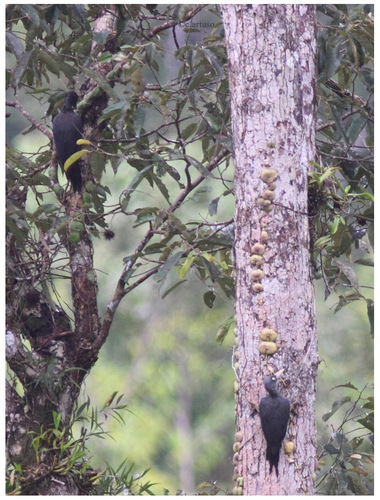 Southern Sooty-Woodpecker
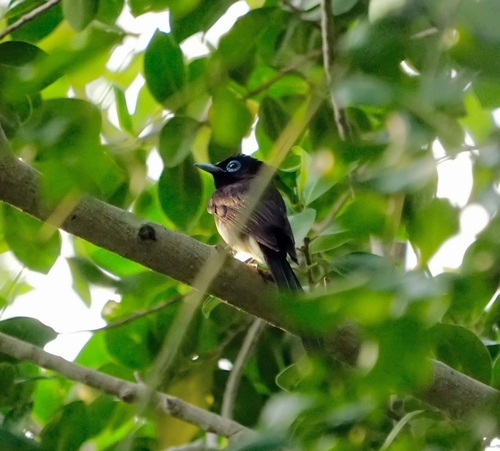 Black Paradise-Flycatcher
In short
The most reliable field mark to separate Southern Sooty-Woodpecker from Black Paradise-Flycatcher is overall structure: the woodpecker is a large, heavy-billed, sooty bird with pale eyes and a pale ivory bill, while the flycatcher is a much smaller, slender bird with a short blue bill and, in adult males, extremely long black tail streamers. Immature birds may cause confusion, but the woodpecker always shows a heavier, more robust jizz and lacks the flycatcher's chestnut back and long tail. Both can show dark plumage, but only the flycatcher ever has a glossy black hood and chestnut back. Bill color and shape, tail length, and head pattern are key in all ages.
Identification tips
- Size and structure: Southern Sooty-Woodpecker is much larger and bulkier than Black Paradise-Flycatcher. If the bird appears heavy, with a thick neck and large head, think woodpecker.
- Bill: The woodpecker has a long, thick, pale ivory bill, while the flycatcher has a short, slender blue bill. Bill color and shape are reliable at all ages.
- Tail: Adult male Black Paradise-Flycatchers have extremely long black central tail feathers, often trailing well past the rest of the tail. Females and immatures have shorter tails, but still longer and more slender than the woodpecker's. The woodpecker's tail is stiff, straight, and used for support against trunks.
- Plumage - overall color: The woodpecker is uniformly sooty or ashy gray, sometimes browner in juveniles, with fine head speckling. The flycatcher always shows a glossy black hood and chestnut back (adults and immatures), with white or off-white underparts.
- Head pattern: Male woodpeckers have a bright red cheek patch from the base of the bill to the cheek, absent in the flycatcher. The flycatcher has a blue eye-ring and a glossy black hood (male) or duller dark hood (female).
- Eye color: The woodpecker has pale eyes; the flycatcher has a large dark eye with a blue eye-ring.
- Bill color: The woodpecker's bill is pale ivory; the flycatcher's is blue-black.
- Flight style: Woodpecker flies with strong, undulating wingbeats; flycatcher is fluttery and agile, often sallying after insects.
- Perching behavior: Woodpecker climbs trunks and branches, often vertical; flycatcher perches upright on thin branches, rarely on trunks.
- Habitat: Woodpecker is restricted to lowland primary forest in Mindanao, Leyte, and Samar; flycatcher is more widespread and can be found in a variety of wooded habitats, especially during migration.
- Drumming: Only the woodpecker drums on wood; hearing this is diagnostic.
- Juvenile confusion: Juvenile woodpeckers are browner with more spotting but never show chestnut or white underparts. Immature flycatchers already show chestnut back and white belly.
- Sexual dimorphism: Male woodpeckers have a red cheek patch; male flycatchers have extremely long tails and a glossy black hood. Females of both species are duller, but the woodpecker's structure and bill remain distinctive.
- Spotting: Woodpecker shows larger white spots on neck and face than the northern sooty woodpecker; flycatcher lacks these spots entirely.
- Context: If seen in the Philippines outside Mindanao, Leyte, or Samar, woodpecker is unlikely. If seen in migration or in edge habitats, flycatcher is more probable.
Size
Southern Sooty-Woodpecker is much larger and bulkier than Black Paradise-Flycatcher. The flycatcher weighs about 18.7 g [wikidata], while the woodpecker is described as large for its family [wikipedia], and is visibly heavier and more robust in the field. The woodpecker also has a much thicker, longer bill and a more powerful build. In contrast, the flycatcher is a medium-sized passerine with a slender body and, in males, a dramatically long tail that can make it appear longer but never as massive as the woodpecker.
Plumage
Juvenile and immature Southern Sooty-Woodpeckers are slightly browner than adults, with more apparent spotting, but always retain a sooty overall tone and pale bill. They lack any chestnut or white underparts. In contrast, Black Paradise-Flycatcher immatures (especially males) have shorter tail streamers than adults but already show the distinctive chestnut mantle, back, wings, and rump, with a blackish hood and off-white to white underparts. Adult male flycatchers are glossy black with a purplish-blue sheen on the hood, chestnut upperparts, and extremely long black central tail feathers. Females are duller but still show the chestnut back and dark hood. The woodpecker never shows chestnut, white underparts, or a glossy black hood; instead, it is uniformly sooty with fine speckling on the head, pale eyes, and an ivory bill. Males have a bright red cheek patch, and both sexes show larger white spots on the neck and face compared to the northern sooty woodpecker. The flycatcher has a blue eye-ring and blue bill, while the woodpecker's bill is pale ivory and much more robust.
Behaviour
Southern Sooty-Woodpecker is typically seen climbing trunks and branches, hitching up trees in classic woodpecker fashion, and often drumming loudly on wood. It is rarely seen sallying or flycatching. Black Paradise-Flycatcher is much more active and acrobatic, often seen sallying from perches to catch insects in mid-air, and males display their long tails in flight. The flycatcher perches upright and is much more likely to be seen flitting through the midstory or canopy, rarely on trunks. Flight style is also different: the woodpecker has a strong, direct flight with undulating wingbeats, while the flycatcher is agile, fluttery, and often fans its tail.
Habitat
Southern Sooty-Woodpecker is endemic to lowland forests of Mindanao, Leyte, and Samar in the Philippines, and is strictly a forest bird, usually in mature or primary forest. Black Paradise-Flycatcher is a migrant or breeder in the northern Philippines and winters throughout Southeast Asia, including the Philippines, but is more often found in forest edges, secondary growth, and sometimes gardens or plantations during migration. The woodpecker is a habitat specialist, while the flycatcher is more flexible and can be seen in a wider range of wooded habitats, especially during migration.
Voice
Southern Sooty-Woodpecker gives high-pitched chips and squeaks, and produces a powerful, accelerating drumroll when pecking wood. Black Paradise-Flycatcher is not described in detail here, but does not drum and is generally more musical or whistled in its calls. The woodpecker's drumming is unique and diagnostic if heard.
Southern Sooty-Woodpecker · Black Paradise-Flycatcher · My Tricky Birds