

Grijze treurspecht vs Japanse paradijsmonarch
Mulleripicus fuliginosus versus Terpsiphone atrocaudata
Speel een quiz met Grijze treurspecht en Japanse paradijsmonarch
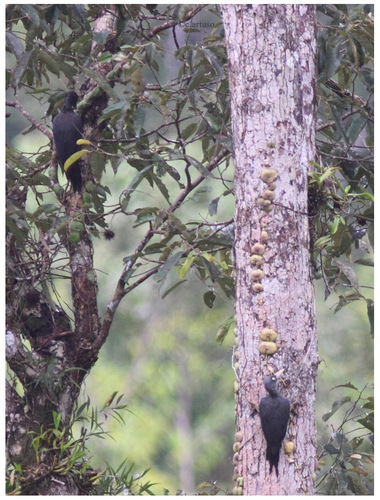 Grijze treurspecht
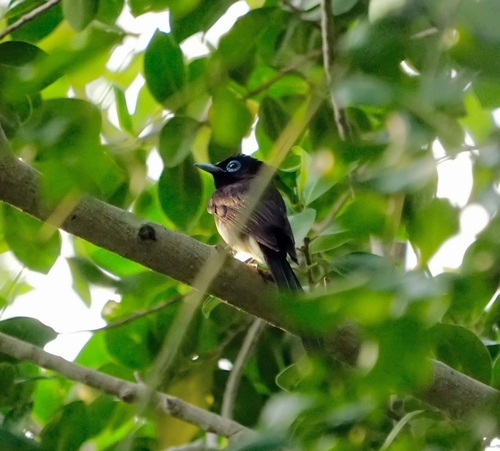 Japanse paradijsmonarch
Kort gezegd
De meest betrouwbare veldkenmerk om de Grijze treurspecht van de Japanse paradijsmonarch te scheiden is de algehele structuur: de specht is een grote, zwaargebekte, roetachtige vogel met bleke ogen en een bleke ivoorkleurige snavel, terwijl de monarch een veel kleinere, slanker vogel is met een korte blauwe snavel en, bij volwassen mannetjes, extreem lange zwarte staartstreamers. Onvolwassen vogels kunnen verwarring veroorzaken, maar de specht toont altijd een zwaardere, robuustere uitstraling en mist de kastanjebruine rug en lange staart van de monarch. Beide kunnen donkere verenkleed vertonen, maar alleen de monarch heeft ooit een glanzende zwarte kap en kastanjebruine rug. Snavelkleur en -vorm, staartlengte en koppatroon zijn essentieel in alle leeftijden.
Herkenningstips
- Grootte en structuur: De Grijze treurspecht is veel groter en robuuster dan de Japanse paradijsmonarch. Als de vogel zwaar lijkt, met een dikke nek en een groot hoofd, denk dan aan specht.
- Snavel: De specht heeft een lange, dikke, bleke ivoorkleurige snavel, terwijl de monarch een korte, slanke blauwe snavel heeft. Snavelkleur en -vorm zijn betrouwbaar in alle leeftijden.
- Staart: Volwassen mannelijke Japanse paradijsmonarchs hebben extreem lange zwarte centrale staartveren, vaak ver voorbij de rest van de staart. Vrouwtjes en onvolwassen vogels hebben kortere staarten, maar nog steeds langer en slanker dan die van de specht. De staart van de specht is stijf, recht en wordt gebruikt ter ondersteuning tegen stammen.
- Verenkleed - algehele kleur: De specht is uniform roetachtig of asgrijs, soms bruiner bij juvenielen, met fijne kopspikkeling. De monarch toont altijd een glanzende zwarte kap en kastanjebruine rug (volwassenen en onvolwassenen), met witte of gebroken witte onderdelen.
- Koppatroon: Mannelijke spechten hebben een helderrode wangvlek van de basis van de snavel tot de wang, afwezig bij de monarch. De monarch heeft een blauwe oogring en een glanzende zwarte kap (man) of doffere donkere kap (vrouw).
- Oogkleur: De specht heeft bleke ogen; de monarch heeft een groot donker oog met een blauwe oogring.
- Snavelkleur: De snavel van de specht is bleke ivoorkleur; die van de monarch is blauw-zwart.
- Vluchtstijl: De specht vliegt met sterke, golvende vleugelslagen; de monarch is fladderig en agile, vaak jagend op insecten.
- Zitgedrag: De specht klimt op stammen en takken, vaak verticaal; de monarch zit rechtop op dunne takken, zelden op stammen.
- Habitat: De specht is beperkt tot laagland primaire bossen in Mindanao, Leyte en Samar; de monarch is wijdverspreid en kan worden gevonden in verschillende bosachtige habitats, vooral tijdens migratie.
- Trommelen: Alleen de specht trommelt op hout; dit horen is diagnostisch.
- Jongere verwarring: Jongere spechten zijn bruiner met meer spikkeling, maar tonen nooit kastanjebruine of witte onderdelen. Onvolwassen monarchs tonen al kastanjebruine rug en witte buik.
- Seksueel dimorfisme: Mannelijke spechten hebben een rode wangvlek; mannelijke monarchs hebben extreem lange staarten en een glanzende zwarte kap. Vrouwtjes van beide soorten zijn doffer, maar de structuur en snavel van de specht blijven onderscheidend.
- Spikkeling: De specht toont grotere witte vlekken op de nek en het gezicht dan de noordelijke roetachtige specht; de monarch mist deze vlekken volledig.
- Context: Als gezien in de Filippijnen buiten Mindanao, Leyte of Samar, is de specht onwaarschijnlijk. Als gezien tijdens migratie of in randhabitats, is de monarch waarschijnlijker.
Grootte
Grijze treurspecht is much larger and bulkier than Japanse paradijsmonarch. The flycatcher weighs about 18.7 g [wikidata], while the woodpecker is described as large for its family [wikipedia], and is visibly heavier and more robust in the field. The woodpecker also has a much thicker, longer bill and a more powerful build. In contrast, the flycatcher is a medium-sized passerine with a slender body and, in males, a dramatically long tail that can make it appear longer but never as massive as the woodpecker.
Verenkleed
Juvenile and immature Southern Sooty-Woodpeckers are slightly browner than adults, with more apparent spotting, but always retain a sooty overall tone and pale bill. They lack any chestnut or white underparts. In contrast, Japanse paradijsmonarch immatures (especially males) have shorter tail streamers than adults but already show the distinctive chestnut mantle, back, wings, and rump, with a blackish hood and off-white to white underparts. Adult male flycatchers are glossy black with a purplish-blue sheen on the hood, chestnut upperparts, and extremely long black central tail feathers. Females are duller but still show the chestnut back and dark hood. The woodpecker never shows chestnut, white underparts, or a glossy black hood; instead, it is uniformly sooty with fine speckling on the head, pale eyes, and an ivory bill. Males have a bright red cheek patch, and both sexes show larger white spots on the neck and face compared to the northern sooty woodpecker. The flycatcher has a blue eye-ring and blue bill, while the woodpecker's bill is pale ivory and much more robust.
Gedrag
De Grijze treurspecht wordt typisch gezien terwijl hij op stammen en takken klimt, zich omhoog hijst in klassieke spechtstijl, en vaak luid trommelt op hout. Hij wordt zelden gezien terwijl hij jaagt of insecten vangt. De Japanse paradijsmonarch is veel actiever en acrobatisch, vaak gezien terwijl hij van zitplaatsen afvliegt om insecten in de lucht te vangen, en mannetjes tonen hun lange staarten tijdens de vlucht. De monarch zit rechtop en is veel waarschijnlijker te zien terwijl hij door het middenverhaal of het bladerdak flitst, zelden op stammen. De vluchtstijl is ook anders: de specht heeft een sterke, directe vlucht met golvende vleugelslagen, terwijl de monarch behendig, fladderig is en vaak zijn staart opent.
Habitat
De Grijze treurspecht is endemisch in laaglandbossen van Mindanao, Leyte en Samar in de Filippijnen, en is strikt een bosvogel, meestal in volwassen of primaire bossen. De Japanse paradijsmonarch is een migrant of broeder in de noordelijke Filippijnen en overwintert in heel Zuidoost-Azië, inclusief de Filippijnen, maar wordt vaker gevonden in bosranden, secundaire groei, en soms tuinen of plantages tijdens migratie. De specht is een habitat specialist, terwijl de monarch flexibeler is en in een breder scala van bosachtige habitats kan worden gezien, vooral tijdens migratie.
Geluid
De Grijze treurspecht geeft hoge, scherpe geluiden en piepjes, en produceert een krachtige, versnellende trommelrol wanneer hij op hout tikt. De Japanse paradijsmonarch wordt hier niet in detail beschreven, maar trommelt niet en is over het algemeen meer muzikaal of fluitend in zijn roep. Het trommelen van de specht is uniek en diagnostisch als het gehoord wordt.
Grijze treurspecht · Japanse paradijsmonarch · Mijn lastige vogels