

southern sooty-woodpecker vs black paradise-flycatcher
Mulleripicus fuliginosus versus Terpsiphone atrocaudata
Jogue um quiz com southern sooty-woodpecker e black paradise-flycatcher
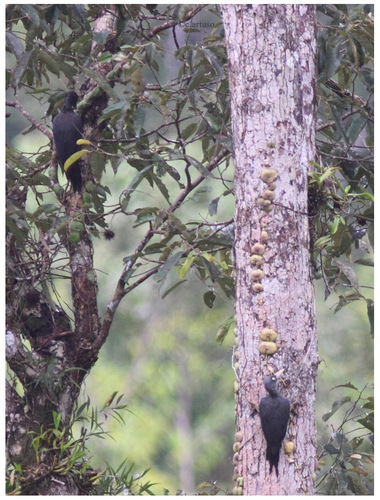 southern sooty-woodpecker
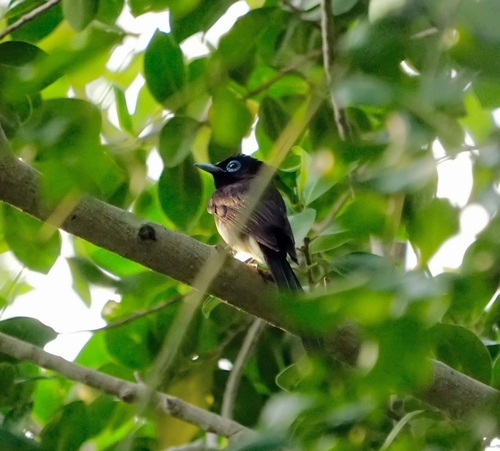 black paradise-flycatcher
Em resumo
A marca de campo mais confiável para separar o southern sooty-woodpecker do black paradise-flycatcher é a estrutura geral: o pica-pau é um pássaro grande, de bico pesado, com plumagem escura, olhos claros e um bico de marfim pálido, enquanto o pega-moscas é um pássaro muito menor e esguio, com um bico azul curto e, nos machos adultos, longas penas da cauda pretas. Pássaros imaturos podem causar confusão, mas o pica-pau sempre mostra uma aparência mais robusta e pesada e carece das costas castanhas e da longa cauda do pega-moscas. Ambos podem apresentar plumagem escura, mas apenas o pega-moscas tem um capuz preto brilhante e costas castanhas. A cor e a forma do bico, o comprimento da cauda e o padrão da cabeça são fundamentais em todas as idades.
Dicas de identificação
- Tamanho e estrutura: O southern sooty-woodpecker é muito maior e mais robusto que o black paradise-flycatcher. Se o pássaro parecer pesado, com um pescoço grosso e uma cabeça grande, pense em pica-pau.
- Bico: O pica-pau tem um bico longo, grosso e de marfim pálido, enquanto o pega-moscas tem um bico azul curto e esguio. A cor e a forma do bico são confiáveis em todas as idades.
- Cauda: Os machos adultos do black paradise-flycatcher têm penas centrais da cauda pretas extremamente longas, frequentemente se estendendo além do resto da cauda. Fêmeas e imaturos têm caudas mais curtas, mas ainda mais longas e esguias que a do pica-pau. A cauda do pica-pau é rígida, reta e usada para suporte contra troncos.
- Plumagem - cor geral: O pica-pau é uniformemente escuro ou cinza-acinzentado, às vezes mais marrom em juvenis, com pequenas manchas na cabeça. O pega-moscas sempre apresenta um capuz preto brilhante e costas castanhas (adultos e imaturos), com partes inferiores brancas ou off-white.
- Padrão da cabeça: Os machos pica-paus têm uma mancha vermelha brilhante na bochecha, da base do bico até a bochecha, ausente no pega-moscas. O pega-moscas tem um anel ocular azul e um capuz preto brilhante (macho) ou um capuz escuro mais opaco (fêmea).
- Cor dos olhos: O pica-pau tem olhos claros; o pega-moscas tem um olho grande e escuro com um anel ocular azul.
- Cor do bico: O bico do pica-pau é de marfim pálido; o do pega-moscas é azul-preto.
- Estilo de voo: O pica-pau voa com batidas de asas fortes e onduladas; o pega-moscas é ágil e leve, frequentemente atacando insetos.
- Comportamento de empoleiramento: O pica-pau sobe troncos e galhos, frequentemente de forma vertical; o pega-moscas empoleira-se ereto em galhos finos, raramente em troncos.
- Habitat: O pica-pau é restrito a florestas primárias de planície em Mindanao, Leyte e Samar; o pega-moscas é mais disseminado e pode ser encontrado em uma variedade de habitats arborizados, especialmente durante a migração.
- Bater: Apenas o pica-pau bate em madeira; ouvir isso é diagnóstico.
- Confusão juvenil: Pica-paus juvenis são mais marrons com mais manchas, mas nunca mostram partes inferiores castanhas ou brancas. Pega-moscas imaturos já mostram costas castanhas e barriga branca.
- Dimorfismo sexual: Machos pica-paus têm uma mancha vermelha na bochecha; machos pega-moscas têm caudas extremamente longas e um capuz preto brilhante. Fêmeas de ambas as espécies são mais opacas, mas a estrutura e o bico do pica-pau permanecem distintos.
- Manchas: O pica-pau mostra manchas brancas maiores no pescoço e no rosto do que o northern sooty woodpecker; o pega-moscas não possui essas manchas.
- Contexto: Se visto nas Filipinas fora de Mindanao, Leyte ou Samar, o pica-pau é improvável. Se visto em migração ou em habitats de borda, o pega-moscas é mais provável.
Tamanho
O southern sooty-woodpecker é muito maior e mais robusto que o black paradise-flycatcher. O pega-moscas pesa cerca de 18,7 g [wikidata], enquanto o pica-pau é descrito como grande para sua família [wikipedia], e é visivelmente mais pesado e robusto em campo. O pica-pau também tem um bico muito mais grosso e longo e uma construção mais poderosa. Em contraste, o pega-moscas é um passeriforme de tamanho médio com um corpo esguio e, nos machos, uma cauda dramaticamente longa que pode fazê-lo parecer mais longo, mas nunca tão massivo quanto o pica-pau.
Plumagem
Pica-paus juvenis e imaturos são ligeiramente mais marrons do que os adultos, com manchas mais aparentes, mas sempre mantêm um tom geral escuro e um bico pálido. Eles não apresentam partes inferiores castanhas ou brancas. Em contraste, imaturos do black paradise-flycatcher (especialmente machos) têm streamers de cauda mais curtos do que os adultos, mas já mostram o manto, costas, asas e rabo castanhos distintos, com um capuz escuro e partes inferiores brancas a off-white. Machos adultos do pega-moscas são pretos brilhantes com um brilho azul-púrpura no capuz, partes superiores castanhas e penas centrais da cauda pretas extremamente longas. Fêmeas são mais opacas, mas ainda mostram as costas castanhas e o capuz escuro. O pica-pau nunca mostra partes inferiores castanhas ou brancas, ou um capuz preto brilhante; em vez disso, é uniformemente escuro com pequenas manchas na cabeça, olhos claros e um bico de marfim. Machos têm uma mancha vermelha brilhante na bochecha, e ambos os sexos mostram manchas brancas maiores no pescoço e no rosto em comparação com o northern sooty woodpecker. O pega-moscas tem um anel ocular azul e um bico azul, enquanto o bico do pica-pau é de marfim pálido e muito mais robusto.
Comportamento
O southern sooty-woodpecker é tipicamente visto subindo troncos e galhos, subindo árvores de forma clássica de pica-pau, e frequentemente batendo em madeira de forma alta. Raramente é visto atacando ou pegando moscas. O black paradise-flycatcher é muito mais ativo e acrobático, frequentemente visto atacando de poleiros para pegar insetos no ar, e os machos exibem suas longas caudas em voo. O pega-moscas empoleira-se ereto e é muito mais provável de ser visto flutuando pelo sub-bosque ou dossel, raramente em troncos. O estilo de voo também é diferente: o pica-pau tem um voo forte e direto com batidas de asas onduladas, enquanto o pega-moscas é ágil, leve e frequentemente abre sua cauda.
Habitat
O southern sooty-woodpecker é endêmico das florestas de planície de Mindanao, Leyte e Samar nas Filipinas, e é estritamente um pássaro de floresta, geralmente em florestas maduras ou primárias. O black paradise-flycatcher é um migrante ou reprodutor no norte das Filipinas e inverna em todo o Sudeste Asiático, incluindo as Filipinas, mas é mais frequentemente encontrado em bordas de florestas, crescimento secundário e às vezes em jardins ou plantações durante a migração. O pica-pau é um especialista em habitat, enquanto o pega-moscas é mais flexível e pode ser visto em uma gama mais ampla de habitats arborizados, especialmente durante a migração.
Voz
O southern sooty-woodpecker emite chips e guinchos agudos, e produz um poderoso e acelerado tamborilar ao bicar madeira. O black paradise-flycatcher não é descrito em detalhes aqui, mas não bate e é geralmente mais musical ou assobiado em seus chamados. O tamborilar do pica-pau é único e diagnóstico se ouvido.
southern sooty-woodpecker · black paradise-flycatcher · Minhas aves difíceis