

Slender-billed Starling vs Chestnut-winged Starling
Onychognathus tenuirostris versus Onychognathus fulgidus
Play a quiz with Slender-billed Starling and Chestnut-winged Starling
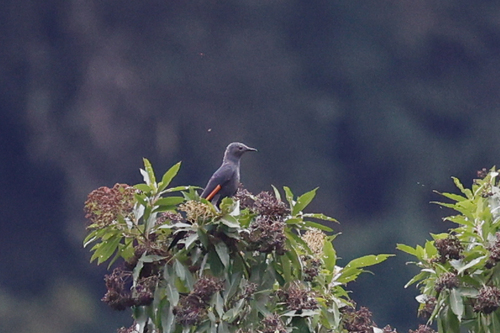 Slender-billed Starling
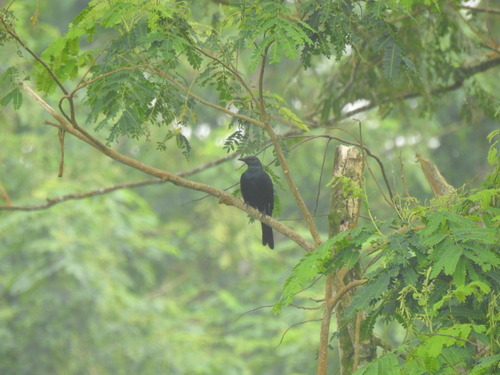 Chestnut-winged Starling
In short
The most reliable way to separate Slender-billed Starling from Chestnut-winged Starling is by focusing on their wing coloration in flight: Chestnut-winged Starling shows obvious chestnut panels on the wings, while Slender-billed Starling lacks this feature. If you see a starling with plain dark wings, it's likely Slender-billed; if the wings flash rufous or chestnut, it's Chestnut-winged. Structure and habitat also help: Slender-billed is slimmer with a longer, thinner bill and is found in East African highlands, while Chestnut-winged is chunkier and restricted to the West and Central African rainforest. Both species are Onychognathus starlings, so beware of similar overall shape and dark plumage at a distance.
Identification tips
- Chestnut wing panels: Chestnut-winged Starling always shows rich chestnut or rufous panels on the wings, most obvious in flight but also visible when perched with wings partially open. Slender-billed Starling never shows this; its wings are uniformly dark. This is the single most reliable field mark at all ages.
- Overall structure: Slender-billed Starling is notably slender with a long, thin bill, giving it a more elongated look. Chestnut-winged is chunkier with a proportionally shorter bill. Use this when you have good views of the bill and body shape.
- Bill shape: Slender-billed's bill is longer and finer, often appearing almost decurved. Chestnut-winged's bill is shorter and stouter. This can be hard to judge at a distance or in poor light.
- Plumage tone: Both are dark overall, but Chestnut-winged can appear slightly glossier or with a purplish sheen, especially in good light. Slender-billed is more uniformly dark or blackish.
- Flight views: In flight, Chestnut-winged's chestnut wing panels flash distinctly, while Slender-billed's wings remain plain and dark. This is especially helpful for flocks or birds flying overhead.
- Perched views: If wings are folded, the chestnut may be partly hidden in Chestnut-winged, but look for any hint of rufous at the wing edges. Slender-billed will not show this color.
- Habitat context: In East African highlands or montane regions, Slender-billed is expected. In lowland rainforest of West/Central Africa, Chestnut-winged is the default. If you are outside the rainforest zone, Chestnut-winged is very unlikely.
- Range: Check your location. Slender-billed does not occur in the West African rainforest, and Chestnut-winged is absent from East African highlands.
- Flock composition: Both species may flock with other Onychognathus starlings. If you see mixed flocks, look for the chestnut wing panels to pick out Chestnut-winged.
- Sex/age differences: No strong sexual dimorphism or age-specific marks are described in the sources for either species, so use the wing panel and structure as your main clues.
- Voice: Not described in the sources; do not rely on vocalizations for separation unless you have local experience.
- Lighting pitfalls: In poor light, Chestnut-winged's chestnut may look dull or be missed; always try to see birds in good light or in flight for confirmation.
- Confusion risk: At a distance, both can look like generic dark starlings. Only the chestnut wing panel is truly diagnostic.
- Season: No seasonal plumage changes are noted, so these marks work year-round.
- When in doubt: If you cannot see the wing color and are unsure of structure, use habitat and range as your backup clues.
Size
Direct size comparisons are not available in the provided sources, but both species are medium-sized starlings typical of the Onychognathus genus. Slender-billed Starling is described as slender and long-billed, suggesting a more elongated appearance, while Chestnut-winged Starling is likely more robust. In the field, size alone is not a reliable separator between these two unless seen side by side.
Plumage
- Juvenile/immature plumage: No specific details are given for age-specific wing or body patterns in either species, but the key difference at all ages is the wing coloration in flight. Chestnut-winged Starling of all ages shows prominent chestnut panels on the wings, visible both perched and especially in flight. Slender-billed Starling lacks any rufous or chestnut in the wings, appearing uniformly dark.
- Adult plumage: Both are overall dark starlings, but Chestnut-winged always shows chestnut in the wings, while Slender-billed is plainer. No further seasonal or sex-based differences are noted in the sources.
Behaviour
Behavioral differences are not detailed in the sources. Both species are likely to behave similarly to other Onychognathus starlings, often seen in flocks and flying with strong, direct wingbeats. Any behavioral separation should be considered unreliable without further information.
Habitat
Habitat is a strong supporting clue. Slender-billed Starling is found in highland and montane regions of East Africa (including Ethiopia, Kenya, Tanzania, Uganda, Rwanda, Burundi, Malawi, Zambia, and eastern DRC), often in open or lightly wooded areas. Chestnut-winged Starling is restricted to the African tropical rainforest belt (West and Central Africa), where it is widespread. If you are in dense rainforest west of the Rift Valley, Chestnut-winged is much more likely; in open highland country of East Africa, expect Slender-billed.
Slender-billed Starling · Chestnut-winged Starling · My Tricky Birds