

Motmot

Slate-headed Tody-Flycatcher vs Varzea Thrush

Poecilotriccus sylvia versus Turdus sanchezorum

Play a quiz with Slate-headed Tody-Flycatcher and Varzea Thrush
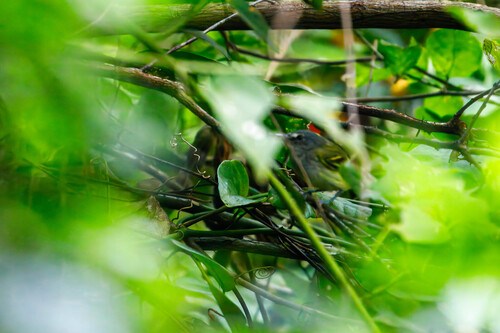
Slate-headed Tody-Flycatcher (Poecilotriccus sylvia) Slate-headed Tody-Flycatcher
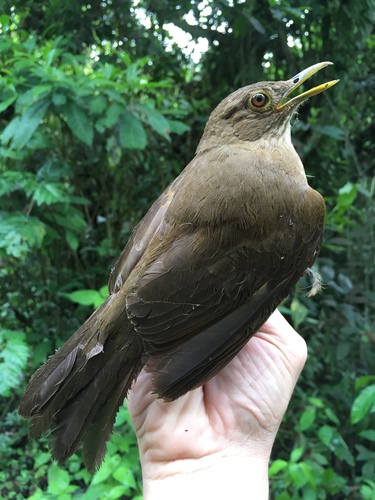
Varzea Thrush (Turdus sanchezorum) Varzea Thrush

Media

Loading…

In short

The most reliable field mark to separate Slate-headed Tody-Flycatcher from Varzea Thrush is overall size and structure: the tody-flycatcher is a tiny, compact bird with a short bill and bold wing bars, while the varzea thrush is much larger, with a thrush-like shape, plain wings, and a rich brown coloration. Juvenile tody-flycatchers show buffy wing bars and an olive crown, while all ages of varzea thrush lack wing bars and have a uniform sepia-brown head. Even at a distance, the difference in size and jizz is striking, but close views of the wing and head pattern are diagnostic. Vocalizations and habitat can help, but visual cues are usually sufficient.

Identification tips

  1. Size is the fastest check: If the bird is tiny and fits easily in your binocular field, it is the tody-flycatcher; if it is robin-sized or larger, it is the thrush. This works for all ages and sexes.
  2. Wing bars: Tody-flycatcher of all ages shows two bold wing bars (yellow in adults, buffy in juveniles); varzea thrush never has wing bars. Look for these when the bird is perched or in flight.
  3. Crown and head color: Adult tody-flycatchers have a gray crown and nape; juveniles have an olive crown. Varzea thrush always has a rich sepia-brown head with no gray or olive crown.
  4. Eye-ring: Tody-flycatcher has a broken white eye-ring and a white supercilium; varzea thrush has a dull orange eye-ring and no supercilium.
  5. Bill shape and color: Tody-flycatcher has a short, black bill; varzea thrush has a longer, dull yellow bill with a blackish base.
  6. Underparts: Tody-flycatcher has grayish white underparts with gray streaks on the throat and breast (adults) or paler, unstreaked underparts (juveniles). Varzea thrush has a warm buffy white throat with dusky brown streaks, caramel-brown upper breast, and white belly.
  7. Tail color: Tody-flycatcher’s tail is olive; varzea thrush’s tail is grayish brown with sepia edges.
  8. Underwing color: Only varzea thrush has orange-rufous underwing coverts, but this is rarely seen in the field.
  9. Leg color: Tody-flycatcher has light bluish gray legs; varzea thrush has olive-gray legs.
  10. Behavior: Tody-flycatcher is active, often sallying and flicking its tail; varzea thrush is more deliberate, often hopping or perching quietly.
  11. Habitat: If seen in flooded varzea forest, consider varzea thrush; in edge, second growth, or drier forest, tody-flycatcher is more likely.
  12. Voice: Tody-flycatcher gives short, insect-like calls; varzea thrush sings slow, slurred, musical phrases. If you hear a mellow carol, it is the thrush.
  13. Flight style: Tody-flycatcher’s flight is quick and direct; varzea thrush has a slower, more undulating flight typical of thrushes.
  14. Jizz: Tody-flycatcher appears compact, with a large head and short tail; varzea thrush is long-bodied, with a proportionally longer tail and more upright posture.
  15. Pitfalls: Immature tody-flycatchers can look drab, but always check for wing bars and small size. Varzea thrush never shows wing bars or a gray crown, regardless of age.

Size

Slate-headed Tody-Flycatcher is extremely small, weighing about 7.1 g and measuring 9–10 cm in length. In contrast, Varzea Thrush is much larger, weighing around 58 g and measuring 22–24 cm. This is a dramatic size difference—Varzea Thrush is nearly three times as long and over eight times heavier. Even without direct comparison, the tody-flycatcher appears tiny and delicate, while the thrush is robust and typical of the Turdus genus.

Plumage

Juvenile Slate-headed Tody-Flycatchers have an olive crown and back, buffy wing bars, and paler, unstreaked underparts—these wing bars are present in all ages but are buffier in juveniles and yellow in adults. Adults have a gray crown and nape, olive back, two bold yellow wing bars, and a broken white eye-ring. In contrast, Varzea Thrush of all ages has a rich sepia-brown head and upperparts, no wing bars, and a dull orange eye-ring. Its underparts are streaked on the throat and undertail coverts, with a caramel-brown breast and white belly. The thrush’s underwing coverts are orange-rufous, but this is rarely visible unless the bird is in flight or handled. The thrush never shows wing bars or the sharp gray/olive contrast of the tody-flycatcher.

Behaviour

Slate-headed Tody-Flycatcher is active, often flitting in the lower to mid-story, sallying for insects, and perching upright with a cocked tail. Its movements are quick and flycatcher-like. Varzea Thrush behaves like other Turdus thrushes, moving methodically through the understory or mid-levels, often hopping on the ground or perching quietly. It is less likely to sally or hover and appears bulkier and slower in its movements.

Habitat

Both species can occur in overlapping regions in Amazonian South America, but their preferred habitats differ. Slate-headed Tody-Flycatcher is found in a wide range of forest types, including edge, second growth, and sometimes more open woodland, from Central to northern South America. Varzea Thrush is restricted to seasonally flooded varzea forests in Brazil, Colombia, and Peru. If you are in true varzea (flooded) forest, the thrush is more likely, while the tody-flycatcher is more generalist and widespread.

Voice

Slate-headed Tody-Flycatcher gives short, insect-like or froglike calls, such as a soft, gravelly 'trup' or 'tik trrrrr', and sometimes a nasal 'grrrrrr'. Its calls are quick, high-pitched, and mechanical. Varzea Thrush sings a slow, mellow, slurred caroling song, with short phrases separated by pauses, and gives a rising, mewing call. The thrush’s vocalizations are musical and thrush-like, very different from the tody-flycatcher’s dry, mechanical sounds.

Submit a better description

Use the same sections as the comparison. Your text is published immediately.

The most reliable field mark to separate Slate-headed Tody-Flycatcher from Varzea Thrush is overall size and structure: the tody-flycatcher is a tiny, compact bird with a short bill and bold wing bars, while the varzea thrush is much larger, with a thrush-like shape, plain wings, and a rich brown coloration. Juvenile tody-flycatchers show buffy wing bars and an olive crown, while all ages of varzea thrush lack wing bars and have a uniform sepia-brown head. Even at a distance, the difference in size and jizz is striking, but close views of the wing and head pattern are diagnostic. Vocalizations and habitat can help, but visual cues are usually sufficient.

  1. Size is the fastest check: If the bird is tiny and fits easily in your binocular field, it is the tody-flycatcher; if it is robin-sized or larger, it is the thrush. This works for all ages and sexes.
  2. Wing bars: Tody-flycatcher of all ages shows two bold wing bars (yellow in adults, buffy in juveniles); varzea thrush never has wing bars. Look for these when the bird is perched or in flight.
  3. Crown and head color: Adult tody-flycatchers have a gray crown and nape; juveniles have an olive crown. Varzea thrush always has a rich sepia-brown head with no gray or olive crown.
  4. Eye-ring: Tody-flycatcher has a broken white eye-ring and a white supercilium; varzea thrush has a dull orange eye-ring and no supercilium.
  5. Bill shape and color: Tody-flycatcher has a short, black bill; varzea thrush has a longer, dull yellow bill with a blackish base.
  6. Underparts: Tody-flycatcher has grayish white underparts with gray streaks on the throat and breast (adults) or paler, unstreaked underparts (juveniles). Varzea thrush has a warm buffy white throat with dusky brown streaks, caramel-brown upper breast, and white belly.
  7. Tail color: Tody-flycatcher’s tail is olive; varzea thrush’s tail is grayish brown with sepia edges.
  8. Underwing color: Only varzea thrush has orange-rufous underwing coverts, but this is rarely seen in the field.
  9. Leg color: Tody-flycatcher has light bluish gray legs; varzea thrush has olive-gray legs.
  10. Behavior: Tody-flycatcher is active, often sallying and flicking its tail; varzea thrush is more deliberate, often hopping or perching quietly.
  11. Habitat: If seen in flooded varzea forest, consider varzea thrush; in edge, second growth, or drier forest, tody-flycatcher is more likely.
  12. Voice: Tody-flycatcher gives short, insect-like calls; varzea thrush sings slow, slurred, musical phrases. If you hear a mellow carol, it is the thrush.
  13. Flight style: Tody-flycatcher’s flight is quick and direct; varzea thrush has a slower, more undulating flight typical of thrushes.
  14. Jizz: Tody-flycatcher appears compact, with a large head and short tail; varzea thrush is long-bodied, with a proportionally longer tail and more upright posture.
  15. Pitfalls: Immature tody-flycatchers can look drab, but always check for wing bars and small size. Varzea thrush never shows wing bars or a gray crown, regardless of age.

Slate-headed Tody-Flycatcher is extremely small, weighing about 7.1 g and measuring 9–10 cm in length. In contrast, Varzea Thrush is much larger, weighing around 58 g and measuring 22–24 cm. This is a dramatic size difference—Varzea Thrush is nearly three times as long and over eight times heavier. Even without direct comparison, the tody-flycatcher appears tiny and delicate, while the thrush is robust and typical of the Turdus genus.

Juvenile Slate-headed Tody-Flycatchers have an olive crown and back, buffy wing bars, and paler, unstreaked underparts—these wing bars are present in all ages but are buffier in juveniles and yellow in adults. Adults have a gray crown and nape, olive back, two bold yellow wing bars, and a broken white eye-ring. In contrast, Varzea Thrush of all ages has a rich sepia-brown head and upperparts, no wing bars, and a dull orange eye-ring. Its underparts are streaked on the throat and undertail coverts, with a caramel-brown breast and white belly. The thrush’s underwing coverts are orange-rufous, but this is rarely visible unless the bird is in flight or handled. The thrush never shows wing bars or the sharp gray/olive contrast of the tody-flycatcher.

Slate-headed Tody-Flycatcher is active, often flitting in the lower to mid-story, sallying for insects, and perching upright with a cocked tail. Its movements are quick and flycatcher-like. Varzea Thrush behaves like other Turdus thrushes, moving methodically through the understory or mid-levels, often hopping on the ground or perching quietly. It is less likely to sally or hover and appears bulkier and slower in its movements.

Both species can occur in overlapping regions in Amazonian South America, but their preferred habitats differ. Slate-headed Tody-Flycatcher is found in a wide range of forest types, including edge, second growth, and sometimes more open woodland, from Central to northern South America. Varzea Thrush is restricted to seasonally flooded varzea forests in Brazil, Colombia, and Peru. If you are in true varzea (flooded) forest, the thrush is more likely, while the tody-flycatcher is more generalist and widespread.

Slate-headed Tody-Flycatcher gives short, insect-like or froglike calls, such as a soft, gravelly 'trup' or 'tik trrrrr', and sometimes a nasal 'grrrrrr'. Its calls are quick, high-pitched, and mechanical. Varzea Thrush sings a slow, mellow, slurred caroling song, with short phrases separated by pauses, and gives a rising, mewing call. The thrush’s vocalizations are musical and thrush-like, very different from the tody-flycatcher’s dry, mechanical sounds.

Discard your changes?

You have unsaved edits. If you leave now, those changes will be lost.

Slate-headed Tody-Flycatcher · Varzea Thrush · My Tricky Birds