

ferreirinho-da-capoeira vs sabiá-da-várzea
Poecilotriccus sylvia versus Turdus sanchezorum
Jogue um quiz com ferreirinho-da-capoeira e sabiá-da-várzea
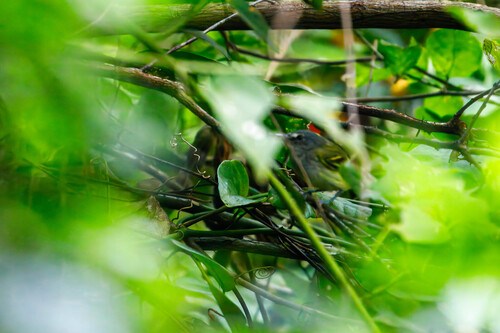 ferreirinho-da-capoeira
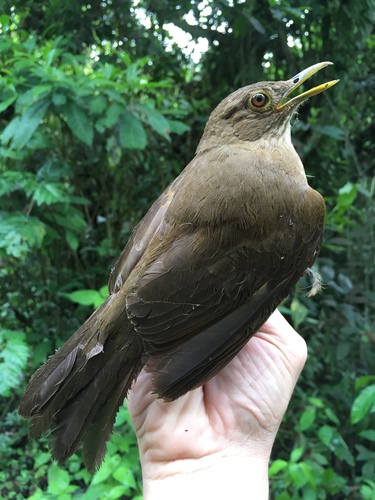 sabiá-da-várzea
Em resumo
A marca de campo mais confiável para separar o ferreirinho-da-capoeira do sabiá-da-várzea é o tamanho e a estrutura geral: o ferreirinho é um pássaro minúsculo e compacto, com um bico curto e barras de asas ousadas, enquanto o sabiá-da-várzea é muito maior, com uma forma semelhante a um sabiá, asas simples e uma coloração marrom rica. Os ferreirinhos juvenis apresentam barras de asas amareladas e uma coroa oliva, enquanto todas as idades do sabiá-da-várzea não têm barras de asas e possuem uma cabeça uniforme de cor sépia-marrom. Mesmo à distância, a diferença de tamanho e aparência é marcante, mas as vistas próximas do padrão das asas e da cabeça são diagnósticas. Vocalizações e habitat podem ajudar, mas pistas visuais geralmente são suficientes.
Dicas de identificação
- O tamanho é a verificação mais rápida: Se o pássaro é minúsculo e cabe facilmente no campo de visão do seu binóculo, é o ferreirinho; se é do tamanho de um sabiá ou maior, é o sabiá. Isso funciona para todas as idades e sexos.
- Barras de asas: O ferreirinho de todas as idades apresenta duas barras de asas ousadas (amarelas em adultos, amareladas em juvenis); o sabiá-da-várzea nunca tem barras de asas. Procure por essas quando o pássaro estiver empoleirado ou em voo.
- Cor da coroa e da cabeça: Os ferreirinhos adultos têm uma coroa e nuca cinzas; os juvenis têm uma coroa oliva. O sabiá-da-várzea sempre tem uma cabeça rica de cor sépia-marrom sem coroa cinza ou oliva.
- Anel ocular: O ferreirinho tem um anel ocular branco quebrado e um supercílio branco; o sabiá-da-várzea tem um anel ocular laranja opaco e sem supercílio.
- Forma e cor do bico: O ferreirinho tem um bico curto e preto; o sabiá-da-várzea tem um bico mais longo, amarelo opaco com uma base escura.
- Partes inferiores: O ferreirinho tem partes inferiores brancas acinzentadas com listras cinzas na garganta e no peito (adultos) ou partes inferiores mais claras e sem listras (juvenis). O sabiá-da-várzea tem uma garganta branca amarelada quente com listras marrons escuras, peito caramelo e barriga branca.
- Cor da cauda: A cauda do ferreirinho é oliva; a cauda do sabiá-da-várzea é marrom acinzentada com bordas sépia.
- Cor das coberturas das asas inferiores: Apenas o sabiá-da-várzea tem coberturas das asas inferiores laranja-rufas, mas isso raramente é visto em campo.
- Cor das pernas: O ferreirinho tem pernas cinza azulado claro; o sabiá-da-várzea tem pernas oliva-cinzentas.
- Comportamento: O ferreirinho é ativo, frequentemente saltando e balançando sua cauda; o sabiá-da-várzea é mais deliberado, frequentemente pulando ou empoleirando-se silenciosamente.
- Habitat: Se visto em floresta de várzea inundada, considere o sabiá-da-várzea; em bordas, crescimento secundário ou floresta mais seca, o ferreirinho é mais provável.
- Voz: O ferreirinho dá chamadas curtas, semelhantes a insetos; o sabiá-da-várzea canta frases musicais lentas e arrastadas. Se você ouvir um canto suave, é o sabiá.
- Estilo de voo: O voo do ferreirinho é rápido e direto; o voo do sabiá-da-várzea é mais lento e ondulante, típico dos sabiás.
- Aparência: O ferreirinho parece compacto, com uma cabeça grande e cauda curta; o sabiá-da-várzea é de corpo longo, com uma cauda proporcionalmente mais longa e postura mais ereta.
- Armadilhas: Ferreirinhos imaturos podem parecer sem graça, mas sempre verifique as barras de asas e o tamanho pequeno. O sabiá-da-várzea nunca apresenta barras de asas ou uma coroa cinza, independentemente da idade.
Tamanho
O ferreirinho-da-capoeira é extremamente pequeno, pesando cerca de 7,1 g e medindo 9–10 cm de comprimento. Em contraste, o sabiá-da-várzea é muito maior, pesando cerca de 58 g e medindo 22–24 cm. Esta é uma diferença de tamanho dramática—o sabiá-da-várzea é quase três vezes mais longo e mais de oito vezes mais pesado. Mesmo sem comparação direta, o ferreirinho parece minúsculo e delicado, enquanto o sabiá é robusto e típico do gênero Turdus.
Plumagem
Os ferreirinhos-da-capoeira juvenis têm uma coroa e costas oliva, barras de asas amareladas e partes inferiores mais claras e sem listras—essas barras de asas estão presentes em todas as idades, mas são mais amareladas em juvenis e amarelas em adultos. Os adultos têm uma coroa e nuca cinzas, costas oliva, duas barras de asas amarelas ousadas e um anel ocular branco quebrado. Em contraste, o sabiá-da-várzea de todas as idades tem uma cabeça e partes superiores ricas de cor sépia-marrom, sem barras de asas e um anel ocular laranja opaco. Suas partes inferiores são listradas na garganta e nas coberturas da cauda, com um peito caramelo e barriga branca. As coberturas das asas inferiores do sabiá são laranja-rufas, mas isso raramente é visível, a menos que o pássaro esteja em voo ou manuseado. O sabiá nunca apresenta barras de asas ou o contraste acentuado cinza/oliva do ferreirinho.
Comportamento
O ferreirinho-da-capoeira é ativo, frequentemente voando no sub-bosque inferior ao médio, caçando insetos e empoleirando-se ereto com a cauda levantada. Seus movimentos são rápidos e semelhantes aos dos pega-insetos. O sabiá-da-várzea se comporta como outros sabiás do gênero Turdus, movendo-se metódicamente pelo sub-bosque ou níveis médios, frequentemente pulando no chão ou empoleirando-se silenciosamente. É menos provável que salte ou paira e parece mais robusto e mais lento em seus movimentos.
Habitat
Ambas as espécies podem ocorrer em regiões sobrepostas na Amazônia Sul-Americana, mas seus habitats preferidos diferem. O ferreirinho-da-capoeira é encontrado em uma ampla gama de tipos de floresta, incluindo bordas, crescimento secundário e, às vezes, em matas mais abertas, do Centro ao norte da América do Sul. O sabiá-da-várzea é restrito a florestas de várzea sazonalmente inundadas no Brasil, Colômbia e Peru. Se você estiver em uma floresta de várzea verdadeira (inundada), o sabiá é mais provável, enquanto o ferreirinho é mais generalista e disseminado.
Voz
O ferreirinho-da-capoeira emite chamadas curtas, semelhantes a insetos ou rãs, como um suave e arenoso 'trup' ou 'tik trrrrr', e às vezes um nasal 'grrrrrr'. Suas chamadas são rápidas, agudas e mecânicas. O sabiá-da-várzea canta uma canção lenta, suave e arrastada, com frases curtas separadas por pausas, e emite uma chamada crescente e miada. As vocalizações do sabiá são musicais e semelhantes às dos sabiás, muito diferentes dos sons secos e mecânicos do ferreirinho.
ferreirinho-da-capoeira · sabiá-da-várzea · Minhas aves difíceis