

Slate-headed Tody-Flycatcher vs Varzea Thrush
Poecilotriccus sylvia contro Turdus sanchezorum
Fai un quiz con Slate-headed Tody-Flycatcher e Varzea Thrush
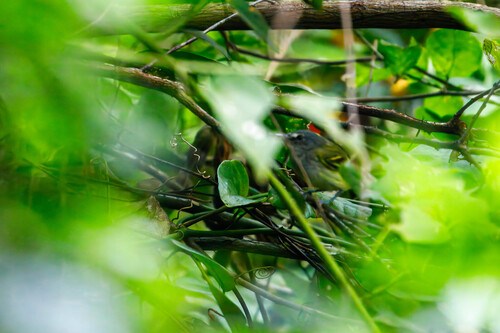 Slate-headed Tody-Flycatcher
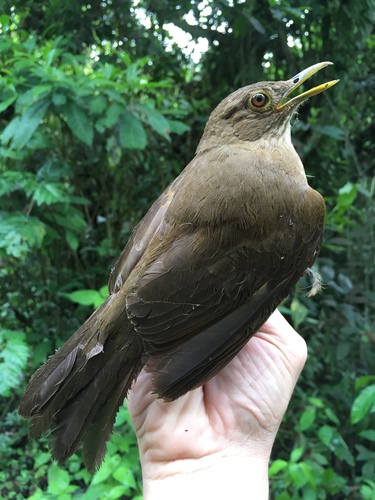 Varzea Thrush
In breve
Il segno distintivo più affidabile per separare Slate-headed Tody-Flycatcher da Varzea Thrush è la dimensione e la struttura complessiva: il tody-flycatcher è un uccello minuscolo e compatto con un becco corto e barre alari audaci, mentre il varzea thrush è molto più grande, con una forma simile a un tordo, ali semplici e una colorazione marrone ricca. I tody-flycatcher juvenili mostrano barre alari color crema e una corona oliva, mentre tutte le età di varzea thrush mancano di barre alari e hanno una testa uniforme color seppia-marrone. Anche a distanza, la differenza di dimensione e aspetto è sorprendente, ma le viste ravvicinate del modello delle ali e della testa sono diagnostiche. Le vocalizzazioni e l'habitat possono aiutare, ma gli indizi visivi sono solitamente sufficienti.
Consigli di identificazione
- La dimensione è il controllo più veloce: Se l'uccello è minuscolo e si adatta facilmente nel campo visivo dei tuoi binocoli, è il tody-flycatcher; se è delle dimensioni di un pettirosso o più grande, è il thrush. Questo funziona per tutte le età e sessi.
- Barre alari: Il tody-flycatcher di tutte le età mostra due barre alari audaci (gialle negli adulti, color crema nei juvenili); il varzea thrush non ha mai barre alari. Cerca questi segni quando l'uccello è posato o in volo.
- Colore della corona e della testa: Gli adulti di tody-flycatcher hanno una corona e un nape grigi; i juvenili hanno una corona oliva. Il varzea thrush ha sempre una testa color seppia-marrone ricca senza corona grigia o oliva.
- Anello oculare: Il tody-flycatcher ha un anello oculare bianco spezzato e un supercilio bianco; il varzea thrush ha un anello oculare arancione opaco e nessun supercilio.
- Forma e colore del becco: Il tody-flycatcher ha un becco corto e nero; il varzea thrush ha un becco più lungo, giallo opaco con una base nerastra.
- Parte inferiore: Il tody-flycatcher ha parti inferiori bianche grigiastre con striature grigie sulla gola e sul petto (adulti) o parti inferiori più chiare e senza striature (juvenili). Il varzea thrush ha una gola bianca color crema calda con striature marroni scure, un petto color caramello e una pancia bianca.
- Colore della coda: La coda del tody-flycatcher è oliva; la coda del varzea thrush è marrone grigiastro con bordi seppia.
- Colore della parte inferiore dell'ala: Solo il varzea thrush ha copritrici della parte inferiore dell'ala arancio-ruggine, ma questo è raramente visibile sul campo.
- Colore delle gambe: Il tody-flycatcher ha gambe grigio-bluastre; il varzea thrush ha gambe grigio-olive.
- Comportamento: Il tody-flycatcher è attivo, spesso si lancia e agita la coda; il varzea thrush è più deliberato, spesso salta o si posa silenziosamente.
- Habitat: Se visto in una foresta di varzea allagata, considera il varzea thrush; in un bordo, crescita secondaria o foresta più secca, il tody-flycatcher è più probabile.
- Voce: Il tody-flycatcher emette brevi richiami simili a insetti; il varzea thrush canta frasi musicali lente e slavate. Se senti un canto melodioso, è il thrush.
- Stile di volo: Il volo del tody-flycatcher è veloce e diretto; il varzea thrush ha un volo più lento e ondulato tipico dei tordi.
- Aspetto: Il tody-flycatcher appare compatto, con una grande testa e una coda corta; il varzea thrush ha un corpo lungo, con una coda proporzionalmente più lunga e una postura più eretta.
- Trappole: I tody-flycatcher immaturi possono sembrare opachi, ma controlla sempre per le barre alari e la piccola dimensione. Il varzea thrush non mostra mai barre alari o una corona grigia, indipendentemente dall'età.
Taglia
Slate-headed Tody-Flycatcher è estremamente piccolo, pesando circa 7,1 g e misurando 9–10 cm di lunghezza. Al contrario, Varzea Thrush è molto più grande, pesando circa 58 g e misurando 22–24 cm. Questa è una differenza di dimensione drammatica: Varzea Thrush è quasi tre volte più lungo e oltre otto volte più pesante. Anche senza un confronto diretto, il tody-flycatcher appare minuscolo e delicato, mentre il thrush è robusto e tipico del genere Turdus.
Piumaggio
I juvenili di Slate-headed Tody-Flycatcher hanno una corona e un dorso oliva, barre alari color crema e parti inferiori più chiare e senza striature: queste barre alari sono presenti in tutte le età ma sono più color crema nei juvenili e gialle negli adulti. Gli adulti hanno una corona e un nape grigi, un dorso oliva, due barre alari gialle audaci e un anello oculare bianco spezzato. Al contrario, il Varzea Thrush di tutte le età ha una testa e parti superiori color seppia-marrone ricco, senza barre alari e un anello oculare arancione opaco. Le sue parti inferiori sono striate sulla gola e sulle copritrici della coda, con un petto color caramello e una pancia bianca. Le copritrici della parte inferiore dell'ala del thrush sono arancio-ruggine, ma questo è raramente visibile a meno che l'uccello non sia in volo o maneggiato. Il thrush non mostra mai barre alari o il netto contrasto grigio/oliva del tody-flycatcher.
Comportamento
Slate-headed Tody-Flycatcher è attivo, spesso svolazzando nella parte bassa o media della vegetazione, lanciandosi per insetti e posandosi eretto con la coda alzata. I suoi movimenti sono rapidi e simili a quelli di un cattura-insetti. Il Varzea Thrush si comporta come altri tordi del genere Turdus, muovendosi in modo metodico attraverso il sottobosco o i livelli medi, spesso saltando a terra o posandosi silenziosamente. È meno probabile che si lanci o si fermi in volo e appare più massiccio e lento nei suoi movimenti.
Habitat
Entrambe le specie possono verificarsi in regioni sovrapposte nell'America del Sud amazzonica, ma i loro habitat preferiti differiscono. Slate-headed Tody-Flycatcher si trova in una vasta gamma di tipi di foresta, inclusi bordi, crescita secondaria e talvolta boschi più aperti, dal Centro all'America del Sud settentrionale. Varzea Thrush è ristretto alle foreste di varzea allagate stagionalmente in Brasile, Colombia e Perù. Se ti trovi in una vera foresta di varzea (allagata), è più probabile che tu veda il thrush, mentre il tody-flycatcher è più generalista e diffuso.
Voce
Slate-headed Tody-Flycatcher emette brevi richiami simili a insetti o rane, come un 'trup' o 'tik trrrrr' morbido e ghiaioso, e talvolta un 'grrrrrr' nasale. I suoi richiami sono rapidi, acuti e meccanici. Varzea Thrush canta una canzone di caroling lenta, melodiosa e slurata, con frasi brevi separate da pause, e emette un richiamo crescente e miagolante. Le vocalizzazioni del thrush sono musicali e simili a quelle dei tordi, molto diverse dai suoni secchi e meccanici del tody-flycatcher.
Slate-headed Tody-Flycatcher · Varzea Thrush · I miei uccelli difficili