

Sabine's Gull vs Bonaparte's Gull
Xema sabini versus Chroicocephalus philadelphia
Play a quiz with Sabine's Gull and Bonaparte's Gull
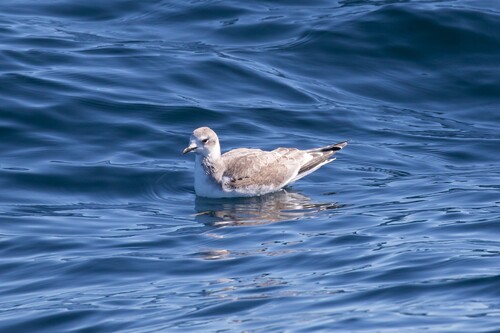 Sabine's Gull
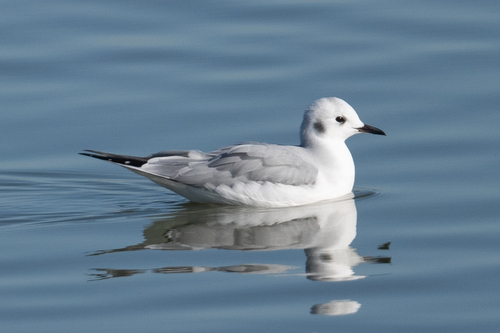 Bonaparte's Gull
In short
The most reliable field mark to separate Sabine's Gull from Bonaparte's Gull—especially in flight and among immatures—is Sabine's Gull's striking tricolored upperwing pattern, with a bold black, white, and gray triangle, which is unique among gulls of any age. Juvenile and first-winter Bonaparte's Gulls lack this pattern, instead showing a brown bar across the forewing and a black tail band. Structurally, Sabine's Gull is more slender, with longer, more pointed wings and a distinctly forked tail, while Bonaparte's Gull has a more typical gull shape and only a slightly notched tail. Bill color and pattern also differ: Sabine's has a black bill with a yellow tip, while Bonaparte's is all black and thinner. Both species are small, but Sabine's Gull is slightly lighter on average. Context and habitat can help, but vagrants and migration can bring either species to unexpected places.
Identification tips
- Tricolored Upperwing (Sabine's Gull, all ages): Look for the unique black, white, and gray triangle on the upperwing in flight—no Bonaparte's Gull of any age shows this pattern.
- Juvenile/First-winter Bonaparte's Gull: Shows a brown bar across the forewing and a black tail band, but lacks the tricolored wing. The back is scalloped brown, and the bill is all black.
- Tail Shape: Sabine's Gull has a distinctly forked tail (white with a black terminal band in juveniles), while Bonaparte's Gull's tail is only slightly notched, never deeply forked.
- Bill Pattern: Sabine's Gull has a black bill with a yellow tip (all ages), while Bonaparte's Gull's bill is all black and thinner.
- Head Pattern in Breeding Plumage: Sabine's Gull has a dark gray hood with a thin black collar; Bonaparte's Gull has a slaty black hood without a collar. Both lose the hood in nonbreeding plumage.
- Underwing in Flight: Bonaparte's Gull has a very pale underwing with no dark underside to the primaries; Sabine's Gull's underwing is not described as distinctive, but the upperwing pattern is diagnostic.
- Upperparts: Both have pale gray backs as adults, but Sabine's is slightly paler and cleaner; Bonaparte's gray extends up the rear neck.
- Leg Color: Bonaparte's Gull has pinkish-red legs in winter and orangish-red in summer; Sabine's Gull's leg color is not described as distinctive.
- Flight Style: Sabine's Gull is more buoyant and tern-like, with longer, thinner wings and a more graceful flight. Bonaparte's is more compact and typical of small gulls.
- Habitat Context: Sabine's is more likely far offshore or as a rare inland migrant; Bonaparte's is more likely on lakes, rivers, and sheltered coasts.
- Molt Timing: Sabine's juveniles retain juvenile plumage into autumn and only molt after migration; Bonaparte's molt before migration, so first-winter birds are more adult-like by fall.
- Voice: If heard, Sabine's high-pitched, squeaking call is distinctive.
- Size: Both are small, but Sabine's is slightly lighter and more slender; size alone is not reliable.
- Pitfalls: At long range, Sabine's Gull can be confused with immature Bonaparte's, but the tricolored upperwing is unique. Bonaparte's can be confused with other small gulls, but not with Sabine's if the wing pattern is seen.
- Seasonal Variation: Both species lose their hoods in nonbreeding plumage, so rely on wing and tail pattern, bill color, and structure outside the breeding season.
Size
Both species are among the smallest gulls, but Sabine's Gull averages about 185 g in body mass [wikidata], while Bonaparte's Gull ranges from 180–225 g [wikipedia]. Sabine's Gull is 27–33 cm in length with an 81–87 cm wingspan, while Bonaparte's Gull is slightly longer at 28–38 cm and has a 76–84 cm wingspan. In the field, size is very similar and not a reliable separator, though Sabine's Gull may appear more delicate and slender, especially in flight.
Plumage
- Juvenile/First-winter birds:
- Sabine's Gull (juvenile/first-winter): Shows a unique tricolored upperwing with a bold black, white, and gray triangle, and a white tail with a black terminal band. The back is brownish instead of gray, and the bill is black with a yellow tip. Juveniles retain this plumage through autumn and only molt after reaching wintering grounds.
- Bonaparte's Gull (juvenile/first-winter): Lacks the tricolored wing. Shows scalloped brown on the back, patchy brown on the head, a brown bar across the forewing, blackish tips to the secondaries, and a black tail band. Bill is all black. Most juveniles molt before migration, so first-winter birds are more adult-like but retain the brown forewing bar and black tail tip.
- Adults:
- Sabine's Gull: In breeding plumage, has a dark gray hood with a thin black collar, pale gray back, and the same striking tricolored upperwing. Nonbreeding adults lose the hood but retain the wing pattern. Tail is always distinctly forked.
- Bonaparte's Gull: In breeding plumage, has a slaty black hood, pale gray upperparts, and a white underwing with black-and-white striped wingtips. The gray of the back extends up the rear of the neck. Nonbreeding adults lose the hood. Tail is only slightly notched, not deeply forked. Underwing is very pale, lacking any dark underside to the primaries.
Behaviour
Sabine's Gull often appears more buoyant and tern-like in flight, with long, pointed wings and a more agile, graceful flight style. Its forked tail is often noticeable, especially when fanned. Bonaparte's Gull is also agile but tends to look more like a typical small gull, with a less deeply forked tail and a more compact, rounded appearance. Both species can be seen feeding over water, but Sabine's Gull is more likely to be seen far offshore during migration.
Habitat
Sabine's Gull breeds in high Arctic tundra and is most often seen at sea during migration, sometimes far offshore, but can appear inland as a rare migrant. Bonaparte's Gull breeds in boreal forests near lakes and rivers in North America and winters along coasts, lakes, and rivers, often in more sheltered or inland waters than Sabine's. In migration, Bonaparte's is much more likely on lakes, rivers, and coastal bays, while Sabine's is more pelagic.
Voice
Sabine's Gull has a very high-pitched, squeaking call, which is distinctive if heard. Bonaparte's Gull's calls are not described in the provided notes, so voice is only helpful if Sabine's is heard.