

Ryukyu Minivet vs Ashy Minivet
Pericrocotus tegimae versus Pericrocotus divaricatus
Play a quiz with Ryukyu Minivet and Ashy Minivet
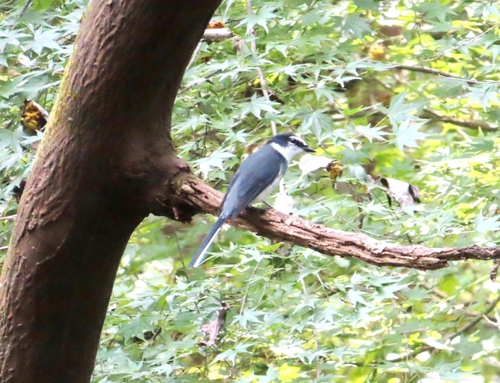 Ryukyu Minivet
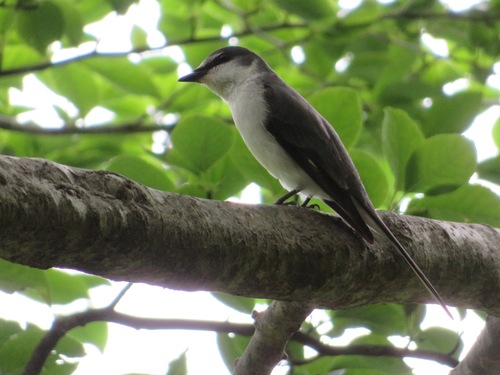 Ashy Minivet
In short
The most reliable way to separate Ryukyu Minivet from Ashy Minivet is by focusing on the male's head pattern and overall coloration: Ashy Minivet males show a striking white face with a black nape and cap, while Ryukyu Minivet lacks this bold contrast. Both species are similar in size and structure, but Ashy Minivet is slightly heavier and longer. Females are more challenging, but Ashy Minivet females have a distinctive black line between the bill and eye with a narrow white band above it, which Ryukyu lacks. Both species are closely related and can be confusing, especially in Japan where their ranges overlap, but careful attention to head pattern and subtle plumage differences will help clinch the ID.
Identification tips
- Male head pattern: Look for the Ashy Minivet male's bold white face, black nape, and black cap—this is the most distinctive difference. Ryukyu Minivet males lack this sharp contrast and have a plainer head.
- Female face pattern: Female Ashy Minivet shows a black band between the bill and eye, with a narrow white band above; Ryukyu Minivet females do not have this combination and appear plainer.
- Upperwing and tail in flight: Ashy Minivet shows a white band across the flight feathers and white outer tail feathers. Ryukyu Minivet likely shows some white, but not as sharply marked. This is subtle and best used in good light or photos.
- Overall coloration: Ashy Minivet is strictly grey, white, and black, with no yellow, orange, or red. Ryukyu Minivet is similar, but the head and face patterns are less contrasting.
- Size: Ashy Minivet is slightly larger and heavier, but this is not a reliable field mark unless both species are seen together.
- Behavior: Both species forage in the canopy and may join mixed flocks. Ashy Minivet is more likely to be seen in large migrant groups, especially outside the breeding season.
- Habitat and range: In the Ryukyu Islands, Ryukyu Minivet is the default resident. Ashy Minivet is a migrant and more likely outside the Ryukyus or during migration periods.
- Voice: If you hear a high-pitched, metallic trill, it points to Ashy Minivet. Ryukyu Minivet's call is not described, so absence of this trill is not diagnostic.
- Sex and age pitfalls: Females and immatures of both species are much harder to separate. Focus on subtle differences in face pattern and overall contrast, but expect some uncertainty.
- Plumage pitfalls: Beware of dull or worn males, which may lose some head contrast, and young birds, which may lack clear adult patterns. Use a combination of marks rather than relying on a single feature.
- Seasonal context: During migration, Ashy Minivet is more likely to be encountered in flocks, while Ryukyu Minivet is a resident and less likely to be seen in large groups.
- Mixed flocks: Both species may join mixed-species foraging flocks, so do not assume all minivets in a group are the same species—check each individual carefully.
- Geographical clues: If you are in mainland Japan outside the Ryukyus, Ashy Minivet is more likely, especially in migration. In the Ryukyus, Ryukyu Minivet dominates.
- Documentation: When in doubt, photograph the head and upperwing pattern for later review, as subtle differences may be more apparent on close inspection.
- Uncertainty: Some individuals, especially females and immatures, may not be safely identified in the field without excellent views or vocalizations. Accept that some birds will remain unidentified.
Size
Ashy Minivet is marginally larger and heavier, with an average body mass of 24.0 g compared to Ryukyu Minivet's 21.0 g. In the field, this difference is subtle and rarely diagnostic on its own, as both species are slim, medium-small minivets with similar proportions. Length data (18.5–20 cm for Ashy Minivet) suggests only a slight edge in size, not easily judged without direct comparison.
Plumage
- Adult males: Ashy Minivet males are grey above and whitish below, with a sharply defined black cap, white forehead, and a distinctive white face and black nape. Ryukyu Minivet males lack the bold white face and black nape contrast; their head pattern is generally less sharply marked.
- Adult females: Ashy Minivet females have a grey cap, a black band between the bill and eye, and a narrow white band above this. Ryukyu Minivet females do not show this combination; their facial pattern is plainer and less contrasting.
- Upperwing and tail: Ashy Minivet shows a white band across the flight feathers and white outer tail feathers. No specific contrasting upperwing or tail pattern is described for Ryukyu Minivet, but both are expected to show some white in the wings and tail typical of minivets.
- Juvenile/immature: No detailed age-specific upperwing or flight pattern differences are given in the sources, so separation of young birds relies on overall tone and head pattern, which are less distinct than in adults.
Behaviour
Both species forage actively in the canopy for insects and frequently join mixed-species flocks. Ashy Minivet is noted for forming large migrant flocks, especially during passage. Ryukyu Minivet, being endemic to Japan, is less likely to be seen in large migratory groups. In general, their foraging and flight behavior are similar and not reliably separable in the field.
Habitat
Ashy Minivet has a broad range, breeding in northeast Asia and wintering as far south as Southeast Asia and the Philippines. It uses forests and open areas with scattered trees, and is often seen as a migrant in a variety of wooded habitats. Ryukyu Minivet is endemic to Japan, especially the Ryukyu Islands, and is more restricted in range. Habitat overlap can occur in southern Japan, but Ryukyu Minivet is the expected resident in the Ryukyus, while Ashy Minivet is more likely a migrant or passage bird elsewhere.
Voice
Ashy Minivet gives a high-pitched, metallic trill. No distinctive vocalization is described for Ryukyu Minivet in the available sources, so voice is not a reliable separator unless Ashy Minivet's trill is heard clearly and Ryukyu is known to lack it.