

Pine Siskin vs American Goldfinch
Spinus pinus versus Spinus tristis
Play a quiz with Pine Siskin and American Goldfinch
 Pine Siskin
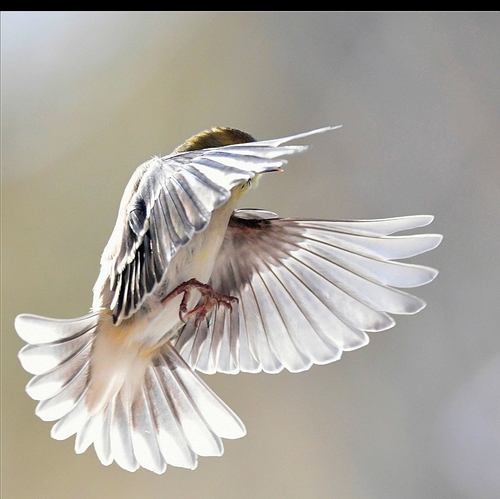 American Goldfinch
In short
The most reliable field mark to separate Pine Siskin from American Goldfinch is the heavy, all-over streaking on the siskin’s underparts, present in all ages and seasons, versus the goldfinch’s clean, unstreaked breast and belly. In flight or perched, Pine Siskin is a drab, streaky brown finch with variable yellow flashes in the wings and tail, while American Goldfinch—especially adult males in summer—is bright yellow with black wings and cap, or a duller olive-brown but still clean-bellied in winter and juveniles. Bill shape is also helpful: Pine Siskin has a longer, thinner, more pointed bill, while American Goldfinch’s is shorter and thicker. Both are similar in size, but their structure and plumage are distinct with careful observation.
Identification tips
- Underpart streaking: Pine Siskin is heavily streaked below in all ages and seasons; American Goldfinch is always clean-bellied and unstreaked, even in juveniles and winter birds.
- Bill shape: Pine Siskin has a longer, thinner, more pointed bill with a straight culmen; American Goldfinch’s bill is shorter, thicker, and conical, often with a pink or orange color depending on season.
- Wingbars: Pine Siskin shows narrow, buffish white wingbars; American Goldfinch has broader, bright white wing markings (especially in adults), and in juveniles, wing markings are buff but still bolder than siskin’s.
- Yellow in wings and tail: Both can show yellow flashes, but in Pine Siskin these are variable and often limited to the base of the primaries and tail; in American Goldfinch, yellow is extensive in adult males (body and face), but not in the wings (which are black with white markings).
- Overall color: Pine Siskin is always drab brown and streaky; American Goldfinch males in summer are bright yellow with black cap and wings, while females and nonbreeding birds are olive-brown above, pale below, and never streaked.
- Tail shape: Both have notched tails, but Pine Siskin’s is shorter and more deeply forked; goldfinch’s tail is short and less obviously forked.
- Head pattern: American Goldfinch male in summer has a solid black cap; Pine Siskin never shows a black cap.
- Face and supercilium: Pine Siskin lacks a strong face pattern; American Goldfinch (especially males) has a brighter yellow face and, in breeding males, a contrasting black cap.
- Flight style: Goldfinch has a distinctive undulating flight with frequent calls; siskin’s flight is more direct and less bouncy.
- Voice: Goldfinch gives sweet, rolling calls and songs; siskin calls are buzzy, rising, and less musical.
- Habitat context: Pine Siskin is more likely in coniferous forests or high in trees; goldfinch is more likely in open fields, weedy patches, or at feeders with thistle/nyjer seed.
- Seasonal appearance: Goldfinch males are unmistakable in summer; in winter, both sexes become duller, but goldfinch remains unstreaked below.
- Juvenile confusion: Juvenile goldfinches are pale and unstreaked below, with buffy wing markings; juvenile siskins are streaked below and have narrower, paler wingbars.
- Rare green siskin morph: If you encounter a greenish siskin, check for yellow undertail coverts (not white), absence of yellow supercilium, and some streaking below—still different from any goldfinch.
- Flock composition: Mixed flocks at feeders may contain both; use underpart streaking and bill shape to sort them quickly.
Size
Both species are very similar in size: 11–14 cm (4.3–5.5 in) in length and 18–22 cm (7.1–8.7 in) wingspan for Pine Siskin, and 11–14 cm (4.3–5.5 in) in length with a 19–22 cm (7.5–8.7 in) wingspan for American Goldfinch. Weight overlaps as well (Pine Siskin 12–18 g, Goldfinch 11–20 g) [wikipedia][avonet]. In the field, size is not a reliable separator. However, Pine Siskin often appears slimmer and more elongated due to its longer bill and more slender build, while American Goldfinch is more compact and round-headed.
Plumage
-
Juveniles/first-year birds: Pine Siskin juveniles are heavily streaked below, with a dirty or buffy ground color and narrow, pale (buffish white) wingbars; yellow flashes in the wings and tail are variable but usually present. American Goldfinch juveniles are unstreaked below, with a pale yellowish underside, dull brown back, and buff-colored wing markings; their wings and tail are dull black, not brown, with pale (not bright) markings. No goldfinch of any age shows extensive streaking on the underparts.
-
Adult males (breeding): American Goldfinch males are unmistakably bright lemon yellow with a black cap, black wings with bold white markings, and a white rump. Pine Siskin never shows this combination; it remains streaky brown with yellow flashes in the wings and tail, but never overall yellow.
-
Adult females and nonbreeding males: American Goldfinch females and winter males are olive-brown above, pale below, with a yellowish face and bib, but still lack streaking on the underparts. Pine Siskin remains heavily streaked throughout the year, with only a faint yellowish wash at best. The siskin’s wingbars are narrower and paler (buffish white) compared to the goldfinch’s bolder white wing markings.
-
Rare morphs: The green morph of Pine Siskin is extremely rare (<1%) and can show more yellow, but still differs from goldfinch by having yellow undertail coverts, no yellow supercilium, and some streaking below.
Behaviour
Both species forage in flocks, often together in winter. Pine Siskin is more likely to feed high in conifers and move restlessly through treetops, sometimes hanging upside down. American Goldfinch is more often seen feeding on seed heads of weeds and sunflowers, and is less likely to forage in dense coniferous foliage. In flight, goldfinch has a distinctive undulating (roller-coaster) flight with frequent call notes, while siskin’s flight is more direct and less bouncy.
Habitat
Both species are widespread and can be found together, especially in winter flocks at feeders or weedy fields. Pine Siskin is more closely tied to coniferous and mixed forests, especially in the breeding season, and is highly irruptive—sometimes absent, sometimes abundant. American Goldfinch prefers open fields, weedy areas, and woodland edges, and is less likely to be found deep in coniferous forests. Habitat alone is not diagnostic, but context can help.
Voice
American Goldfinch gives a distinctive, musical flight call often rendered as "per-chic-o-ree" or "tsee-tsi-tsi-tsit," and a sweet, warbling song. Pine Siskin’s calls are higher, sharper, and more buzzy or raspy, often described as a rising "zzzzzzreee" or "zzzzzzip." Siskins can sound more frenetic and less musical than goldfinches. If you hear a clear, sweet, rolling song or the classic "potato chip" flight call, think goldfinch; if the calls are buzzy or scratchy, think siskin.