

Pigeon Guillemot vs Laysan Albatross
Cepphus columba versus Phoebastria immutabilis
Play a quiz with Pigeon Guillemot and Laysan Albatross
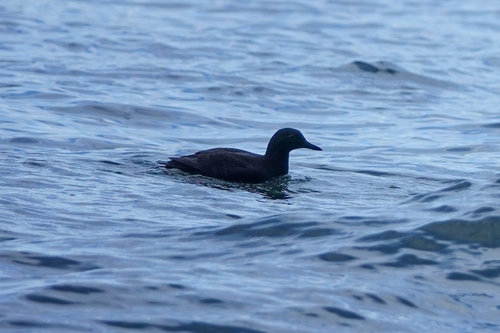 Pigeon Guillemot
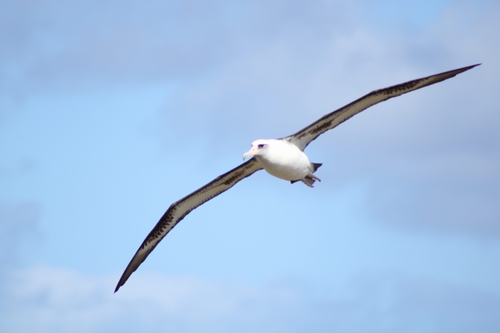 Laysan Albatross
In short
The most reliable field mark separating Pigeon Guillemot from Laysan Albatross is overall size and structure: the guillemot is a small, chunky auk with a short, dark bill and a distinctive white wing patch (broken by a dark wedge in adults), while the albatross is a huge, long-winged seabird with a pink bill and striking two-toned black-and-white plumage. Juvenile guillemots can be confused in flight due to their smaller wing patch and mottled appearance, but even then, the guillemot’s compact, fast-flapping flight and dark underwings are unlike the albatross’s languid, gliding style and white underparts. If you see a bird with a long, narrow wingspan soaring or gliding, it is certainly a Laysan Albatross; if it’s a small, low-flying, fast-flapping bird with a white wing patch, it’s a Pigeon Guillemot. Bill color and shape, leg color, and overall jizz are also decisive at any distance.
Identification tips
- Size and shape: Laysan Albatross is enormous, with a wingspan up to 2 meters, dwarfing the pigeon guillemot. Even distant birds can be separated by the albatross’s long, narrow wings and massive body compared to the guillemot’s compact, short-winged look. This is the single most reliable mark at any range or angle.
- Flight style: Guillemots fly low and fast with rapid wingbeats, rarely gliding. Albatrosses soar and glide effortlessly, rarely flapping except at takeoff or landing. If you see a bird gliding for long periods, it cannot be a guillemot.
- Bill color and shape: Pigeon Guillemot has a thin, long, all-black bill (except for some larger-billed females in California). Laysan Albatross has a thick, long, pink bill with a dark tip (gray in juveniles). Bill color is visible at moderate range and diagnostic.
- Leg color: Guillemots have bright red legs and feet (gray-brown in juveniles); albatrosses have pale legs, never red.
- Wing pattern in flight (all ages): Guillemots show a white wing patch broken by a dark wedge (smaller in juveniles), with plain dark underwings. Albatrosses have blackish upperwings with white underwings, often with black margins—never a solid dark underwing.
- Plumage contrast: Guillemots are mostly dark with a white wing patch and (in winter) white underparts, but never have a white head or underwing. Albatrosses are boldly two-toned, with a white head and underparts and dark upperwings and back.
- Head pattern: Guillemots have a dark head in all plumages; albatrosses have a white head with a dark eye smudge.
- Posture on land: Guillemots stand upright, often on tarsi, and walk well. Albatrosses are more awkward, with a waddling gait.
- Habitat: Guillemots are seen close to shore, often near rocks or cliffs; albatrosses are pelagic, rarely seen near land except at breeding colonies.
- Juvenile confusion: Young guillemots have a smaller, duller wing patch and barred underparts but still show plain dark underwings and a compact shape. Juvenile albatrosses have a gray bill and dark upper rump but otherwise look like adults—never showing the guillemot’s wing pattern or structure.
- Feet projection: In flight, guillemot’s red feet may be visible trailing behind the tail; albatrosses have pale feet, rarely visible in flight.
- Eye color and ring: Guillemots have a thin, unbroken white eye-ring; albatrosses have a dark eye with a black smudge.
- Seasonal plumage: Only guillemot changes appearance seasonally (breeding: glossy dark with white wing patch; non-breeding: mottled gray/black above, white below). Albatross is consistent year-round.
- Bill size relative to head: Albatross’s bill is massive and thick, dominating the face; guillemot’s is thin and proportionate.
- Context clues: If you’re on a rocky coast or harbor, expect guillemot; if you’re far offshore or on a remote island, expect albatross.
Size
Pigeon Guillemot is a medium-sized auk, 30–37 cm (12–15 in) long and 450–550 g (16–19 oz) in mass [wikipedia]. In stark contrast, Laysan Albatross is a very large seabird, 81 cm (32 in) long with a wingspan of 195–203 cm (77–80 in), and weighs 1.9–4.1 kg (4.2–9.0 lb) [wikipedia]. The albatross is more than twice as long and up to ten times heavier, with a wingspan nearly six times greater. Even at a distance, the albatross’s immense size and long, narrow wings are unmistakable compared to the guillemot’s compact, short-winged profile.
Plumage
-
Juvenile/immature birds: Juvenile Pigeon Guillemots resemble winter adults but have brown-tipped underparts (barring effect), more brown in the upperparts, and a smaller white wing patch. Their underwings are always plain and dark, regardless of age. Juvenile Laysan Albatrosses have a gray bill and a dark upper rump, but otherwise share the same two-toned black-and-white pattern as adults. The albatross’s underwing pattern is variable but always shows extensive white, sometimes with black margins or coverts, never the solid dark underwing of the guillemot.
-
Adult breeding plumage: Adult Pigeon Guillemots are dark brown with a black sheen and a white wing patch broken by a dark wedge. In flight, the underwing is plain and dark. Laysan Albatross adults have white heads and underparts, blackish-gray upperwings and back, and a pink bill with a dark tip. The underwing is mostly white with variable black margins—never solidly dark.
-
Adult non-breeding plumage: Pigeon Guillemots in winter have mottled gray and black upperparts and white underparts, but retain a dark head and plain dark underwings. Laysan Albatross does not have a distinct non-breeding plumage; its pattern remains consistent year-round.
Behaviour
Pigeon Guillemots are strong swimmers and divers, using both wings and feet for propulsion underwater. They fly with rapid, whirring wingbeats and have difficulty taking off without a running start, often hugging the water’s surface. On land, they walk well and sit upright, often resting on their tarsi. Laysan Albatrosses are masters of dynamic soaring, rarely flapping except when taking off or landing. Their flight is characterized by long, gliding arcs high above the water, using their immense wingspan to ride wind currents. On land, they are more awkward, walking with a waddling gait. The guillemot’s flight is direct and low, while the albatross’s is buoyant and soaring.
Habitat
Pigeon Guillemots are coastal birds, usually seen close to rocky shorelines, cliffs, and islands along the Pacific coast of North America. They rarely venture far from land, often foraging in shallow waters. Laysan Albatrosses are pelagic, spending most of their lives far out at sea and only coming to land to breed, mostly on remote islands in the North Pacific. Seeing a bird far offshore, especially soaring high above the waves, strongly favors albatross. Near rocky coasts or harbors, guillemot is far more likely.