

Marbled Murrelet vs Common Guillemot
Brachyramphus marmoratus versus Uria aalge
Play a quiz with Marbled Murrelet and Common Guillemot
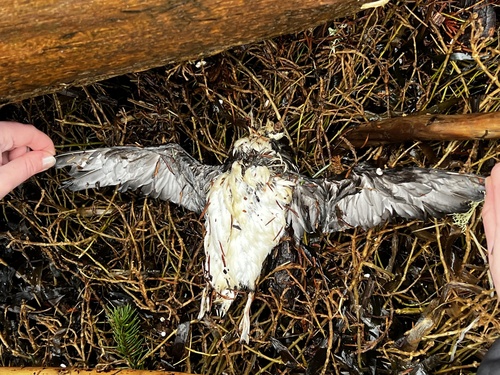 Marbled Murrelet
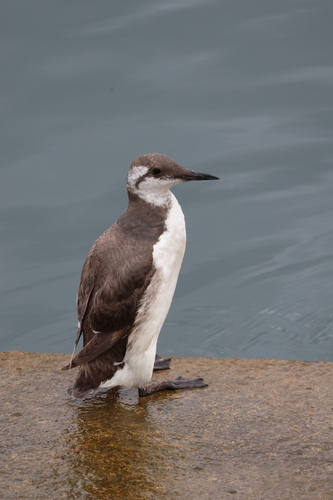 Common Guillemot
In short
The most reliable field mark to separate Marbled Murrelet from Common Guillemot is overall structure and size: Marbled Murrelet is much smaller, chunkier, and shorter-billed, while Common Guillemot is notably larger and longer-bodied. In flight or on the water, Marbled Murrelet shows a compact, stubby profile with a short, slender bill, whereas Common Guillemot is long-bodied and dagger-billed. In non-breeding plumage, Marbled Murrelet has a white collar and smaller, rounder head, while Common Guillemot is darker above with a white face and a dark spur behind the eye. Juvenile and immature upperwing patterns are not specifically described for either species in the sources, so focus on structure and seasonal plumage. Both species are alcids, but their jizz and context differ markedly: murrelets are solitary or in pairs, guillemots are often in dense colonies.
Identification tips
- Size is the first check: Marbled Murrelet is much smaller and chunkier than Common Guillemot. If the bird looks nearly half the length of a guillemot or other large auk, suspect murrelet.
- Bill shape: Marbled Murrelet has a short, slender, black bill; Common Guillemot's bill is long, thin, and dagger-like. This is obvious at close range or in profile.
- Body structure: Murrelet is compact with a short neck and rounded head; guillemot is long-bodied, with a more upright posture on land and a longer neck.
- Non-breeding plumage: Look for a white neck collar on Marbled Murrelet in winter—absent in Common Guillemot. Guillemot shows a white face with a dark spur behind the eye, which murrelet lacks.
- Breeding plumage: Marbled Murrelet is brown and mottled all over, including the face; Common Guillemot is blackish (or dark brown) above and white below, with a sharp division and no mottling.
- Bridled morph: Some Common Guillemots (especially in the north) show a white eye-ring and line ('bridled'), never seen in Marbled Murrelet.
- Habitat context: A small alcid flying inland or near old-growth forest is likely a murrelet. Large numbers on cliffs or rocky islands are always guillemots.
- Group size: Murrelets are solitary or in pairs; guillemots are often in dense flocks or colonies.
- On water: Marbled Murrelet sits lower and appears rounder; guillemot is longer, sits higher, and often in groups.
- Flight style: Murrelet's flight is rapid and direct, with quick wingbeats and a stubby appearance; guillemot is more powerful, with longer wings and a straighter body.
- Juvenile/immature confusion: No distinctive juvenile upperwing pattern is described for either species, so rely on size and structure.
- Voice: If heard, a loud growling 'murrrr' or colony cacophony points to guillemot; murrelets are usually silent.
- Bill color: Both have dark bills, but the guillemot's is much longer and more pointed.
- Tail: Both have short tails, but murrelet's is especially stubby and less noticeable.
- Plumage pitfalls: In poor light or at distance, guillemot's white face and dark spur can be mistaken for a collar; check for the collar's completeness and the bird's size.
Size
Marbled Murrelet is much smaller: about 25 cm in length [wikipedia], with a compact, chunky body and short bill. Common Guillemot is substantially larger, at 38–46 cm in length and with a wingspan of 61–73 cm [wikipedia]. Guillemots are also heavier, weighing 775–1,250 g, compared to the much lighter murrelet. In the field, this size gap is striking if both are seen together or with other alcids for scale.
Plumage
- Juvenile/Immature: No specific upperwing or flight pattern differences are described for juveniles or immatures in either species in the sources. Both have downy young, but these are not seen at sea.
- Non-breeding (winter) plumage: Marbled Murrelet is white below with a black crown, nape, wings, and back, and shows a white neck collar. Common Guillemot in winter is also white below, but has a white face with a dark spur behind the eye and lacks the murrelet's white collar. Some guillemots show a white eye-ring and line ('bridled' morph), never shown by murrelet.
- Breeding plumage: Both species darken above and have white underparts, but Marbled Murrelet becomes brown and mottled all over, lacking the pale throat of Long-billed Murrelet (not relevant here). Common Guillemot is blackish (or dark brown in some populations) above, white below, with a clean demarcation and no mottling. Bill and face remain dark in guillemot; murrelet's face is mottled brown.
- Bill: Marbled Murrelet's bill is short and slender; Common Guillemot's is long, thin, and dagger-like.
Behaviour
Marbled Murrelet is typically seen alone or in pairs, rarely in groups, and is often secretive and wary, especially near nesting areas. It commutes between ocean and forested nesting sites, sometimes flying inland at dusk or dawn. Common Guillemot is highly gregarious, forming dense colonies on cliffs or rocky islands, and is often seen in large rafts on the water. Guillemots stand upright on land, while murrelets rarely come ashore except to nest, and do not nest in colonies.
Habitat
Marbled Murrelet is strongly associated with old-growth coastal forests for nesting, sometimes far inland (up to 80 km), and forages at sea but is rarely seen near colonies. In northern areas, it may nest on the ground among rocks. Common Guillemot breeds exclusively on rocky sea cliffs or islands, never inland, and spends the rest of the year at sea in boreal or low-Arctic waters. Seeing a small alcid inland or near forested coasts suggests murrelet; large numbers on cliffs or open sea suggest guillemot.
Voice
Common Guillemot is very vocal at colonies, with a loud growling 'murrrr' and chicks giving high-pitched whistles. Marbled Murrelet is much quieter and more secretive, with no distinctive calls described in the sources for field separation. In most field situations, vocalization is not a reliable separator.