

Mérgulo Jaspeado Americano vs Arao Común
Brachyramphus marmoratus frente a Uria aalge
Juega un quiz con Mérgulo Jaspeado Americano y Arao Común
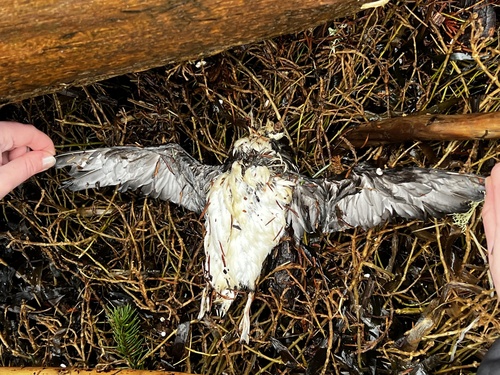 Mérgulo Jaspeado Americano
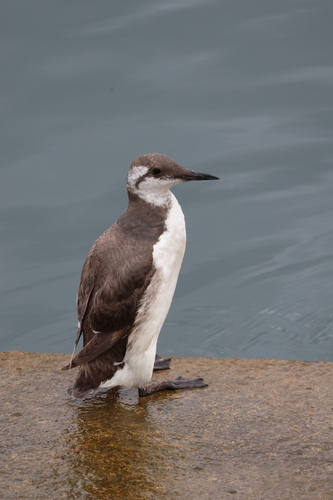 Arao Común
En breve
La marca de campo más confiable para separar el Mérgulo Jaspeado Americano del Arao Común es la estructura y el tamaño generales: el Mérgulo Jaspeado Americano es mucho más pequeño, más robusto y con un pico más corto, mientras que el Arao Común es notablemente más grande y de cuerpo más largo. En vuelo o en el agua, el Mérgulo Jaspeado Americano muestra un perfil compacto y rechoncho con un pico corto y delgado, mientras que el Arao Común es de cuerpo largo y con un pico en forma de daga. En plumaje no reproductivo, el Mérgulo Jaspeado Americano tiene un collar blanco y una cabeza más pequeña y redonda, mientras que el Arao Común es más oscuro por encima con una cara blanca y una espolón oscuro detrás del ojo. Los patrones de las alas superiores de juveniles e inmaduros no están específicamente descritos para ninguna de las especies en las fuentes, así que enfóquese en la estructura y el plumaje estacional. Ambas especies son alcidos, pero su jizz y contexto difieren marcadamente: los mérgulos son solitarios o en parejas, los araos a menudo están en colonias densas.
Consejos de identificación
- El tamaño es la primera verificación: el Mérgulo Jaspeado Americano es mucho más pequeño y robusto que el Arao Común. Si el ave parece casi la mitad de la longitud de un arao u otro gran alcido, sospeche del mérgulo.
- Forma del pico: el Mérgulo Jaspeado Americano tiene un pico corto, delgado y negro; el pico del Arao Común es largo, delgado y en forma de daga. Esto es obvio a corta distancia o de perfil.
- Estructura del cuerpo: el mérgulo es compacto con un cuello corto y una cabeza redondeada; el arao es de cuerpo largo, con una postura más erguida en tierra y un cuello más largo.
- Plumaje no reproductivo: busque un collar blanco en el cuello del Mérgulo Jaspeado Americano en invierno—ausente en el Arao Común. El arao muestra una cara blanca con un espolón oscuro detrás del ojo, que el mérgulo no tiene.
- Plumaje reproductivo: el Mérgulo Jaspeado Americano es marrón y moteado por todas partes, incluida la cara; el Arao Común es negruzco (o marrón oscuro) por encima y blanco por debajo, con una división nítida y sin moteado.
- Morfología con brida: algunos Araos Comunes (especialmente en el norte) muestran un anillo ocular blanco y una línea ('con brida'), nunca vistos en el Mérgulo Jaspeado Americano.
- Contexto del hábitat: un pequeño alcido volando hacia el interior o cerca de un bosque antiguo es probablemente un mérgulo. Grandes números en acantilados o islas rocosas son siempre araos.
- Tamaño del grupo: los mérgulos son solitarios o en parejas; los araos a menudo están en bandadas densas o colonias.
- En el agua: el Mérgulo Jaspeado Americano se sienta más bajo y parece más redondeado; el arao es más largo, se sienta más alto y a menudo en grupos.
- Estilo de vuelo: el vuelo del mérgulo es rápido y directo, con aleteos rápidos y una apariencia rechoncha; el arao es más potente, con alas más largas y un cuerpo más recto.
- Confusión juvenil/inmaduro: no se describe un patrón distintivo de alas superiores juveniles para ninguna de las especies, así que confíe en el tamaño y la estructura.
- Voz: si se escucha, un fuerte gruñido 'murrrr' o cacofonía de colonia apunta al arao; los mérgulos suelen ser silenciosos.
- Color del pico: ambos tienen picos oscuros, pero el del arao es mucho más largo y puntiagudo.
- Cola: ambos tienen colas cortas, pero la del mérgulo es especialmente rechoncha y menos notable.
- Trampas de plumaje: en mala luz o a distancia, la cara blanca del arao y el espolón oscuro pueden confundirse con un collar; verifique la integridad del collar y el tamaño del ave.
Tamaño
El Mérgulo Jaspeado Americano es mucho más pequeño: aproximadamente 25 cm de longitud [wikipedia], con un cuerpo compacto y robusto y un pico corto. El Arao Común es sustancialmente más grande, con 38–46 cm de longitud y una envergadura de 61–73 cm [wikipedia]. Los araos también son más pesados, pesando entre 775–1,250 g, en comparación con el mucho más ligero mérgulo. En el campo, esta diferencia de tamaño es sorprendente si ambos se ven juntos o con otros alcidos para escala.
Plumaje
- Juvenil/Inmaduro: No se describen diferencias específicas en los patrones de alas superiores o de vuelo para juveniles o inmaduros en ninguna de las especies en las fuentes. Ambos tienen jóvenes con plumón, pero estos no se ven en el mar.
- Plumaje no reproductivo (invierno): el Mérgulo Jaspeado Americano es blanco por debajo con una corona negra, nuca, alas y espalda, y muestra un collar blanco en el cuello. El Arao Común en invierno también es blanco por debajo, pero tiene una cara blanca con un espolón oscuro detrás del ojo y carece del collar blanco del mérgulo. Algunos araos muestran un anillo ocular blanco y una línea ('morfología con brida'), nunca mostrada por el mérgulo.
- Plumaje reproductivo: ambas especies se oscurecen por encima y tienen partes inferiores blancas, pero el Mérgulo Jaspeado Americano se vuelve marrón y moteado por todas partes, careciendo de la garganta pálida del Mérgulo Jaspeado Asiático (no relevante aquí). El Arao Común es negruzco (o marrón oscuro en algunas poblaciones) por encima, blanco por debajo, con una demarcación limpia y sin moteado. El pico y la cara permanecen oscuros en el arao; la cara del mérgulo es marrón moteada.
- Pico: el pico del Mérgulo Jaspeado Americano es corto y delgado; el del Arao Común es largo, delgado y en forma de daga.
Comportamiento
El Mérgulo Jaspeado Americano se ve típicamente solo o en parejas, rara vez en grupos, y a menudo es reservado y cauteloso, especialmente cerca de áreas de anidación. Se desplaza entre el océano y los sitios de anidación en bosques, a veces volando hacia el interior al atardecer o al amanecer. El Arao Común es altamente gregario, formando colonias densas en acantilados o islas rocosas, y a menudo se ve en grandes balsas en el agua. Los araos se mantienen erguidos en tierra, mientras que los mérgulos rara vez llegan a la costa excepto para anidar, y no anidan en colonias.
Hábitat
El Mérgulo Jaspeado Americano está fuertemente asociado con bosques costeros de viejo crecimiento para anidar, a veces muy hacia el interior (hasta 80 km), y forrajea en el mar pero rara vez se ve cerca de colonias. En áreas del norte, puede anidar en el suelo entre rocas. El Arao Común cría exclusivamente en acantilados marinos rocosos o islas, nunca en el interior, y pasa el resto del año en el mar en aguas boreales o de bajo Ártico. Ver un pequeño alcido en el interior o cerca de costas boscosas sugiere un mérgulo; grandes números en acantilados o mar abierto sugieren un arao.
Voz
El Arao Común es muy vocal en las colonias, con un fuerte gruñido 'murrrr' y los polluelos emitiendo silbidos agudos. El Mérgulo Jaspeado Americano es mucho más silencioso y reservado, sin llamadas distintivas descritas en las fuentes para la separación en el campo. En la mayoría de las situaciones de campo, la vocalización no es un separador confiable.
Mérgulo Jaspeado Americano · Arao Común · Mis aves difíciles