

Motmot

Grey-chinned Minivet vs Scarlet Minivet

Pericrocotus solaris versus Pericrocotus speciosus

Play a quiz with Grey-chinned Minivet and Scarlet Minivet
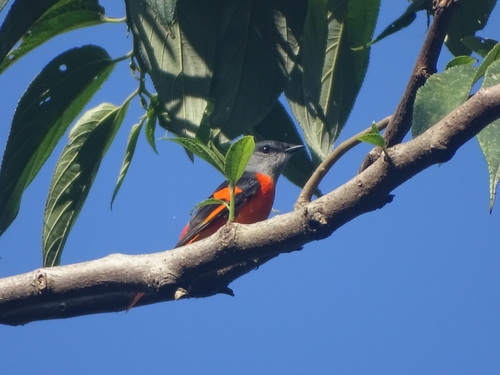
Grey-chinned Minivet (Pericrocotus solaris) Grey-chinned Minivet
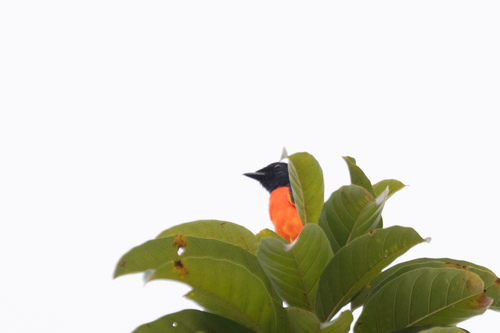
Scarlet Minivet (Pericrocotus speciosus) Scarlet Minivet

Media

Loading…

In short

The most reliable field mark between Grey-chinned Minivet and Scarlet Minivet is the color and distribution of the underparts and wing patches, especially in adult males: Grey-chinned males show orange underparts and orange-tipped greater coverts, while Scarlet Minivet males display vivid scarlet underparts and wing patches. Females of both species are yellow below, but Grey-chinned females are grey above and yellow below, whereas Scarlet Minivet females are also grey above but with yellow face and more extensive yellow on the wings and tail. Immatures of Grey-chinned Minivet show yellow-olive bars on the back, a feature not present in Scarlet Minivet. Structure and size also help: Scarlet Minivet is noticeably larger and longer-winged. Both species can overlap in forested hills, so careful attention to plumage and size is essential.

Identification tips

  1. Immature/juvenile upperparts: Look for yellow-olive bars on the back in immature Grey-chinned Minivet—this is absent in Scarlet Minivet of any age.
  2. Adult male underparts: Grey-chinned Minivet males have orange underparts and orange-tipped greater coverts; Scarlet Minivet males are scarlet below and have scarlet wing patches and tail edges.
  3. Adult female pattern: Both females are grey above and yellow below, but Scarlet Minivet females have yellow on the face, tail edges, rump, and wing patches, often more extensive and brighter than in Grey-chinned.
  4. Wing patch color: In flight, Scarlet Minivet shows larger, brighter scarlet (or yellow in some subspecies) wing patches and tail edges; Grey-chinned's orange/yellow is more restricted to greater covert tips.
  5. Chin color: Grey-chinned Minivet males have a pale grey chin, which can be a subtle but useful mark at close range; Scarlet Minivet males have a black head and chin.
  6. Head and mantle color: Grey-chinned Minivet males have a dark grey head and mantle, while Scarlet Minivet males are black above.
  7. Bill structure: Scarlet Minivet has a stronger, more robust dark bill, which may be noticeable in good views.
  8. Size and shape: Scarlet Minivet is larger and longer-tailed; Grey-chinned appears more compact and lighter.
  9. Tail color: Scarlet Minivet males have scarlet tail edges; females have yellow tail edges. Grey-chinned Minivet has less extensive orange/yellow on the tail.
  10. Subspecies caution: Some Scarlet Minivet subspecies (Philippines) are yellow instead of scarlet—do not rely solely on underpart color in these regions; use size and wing patch extent.
  11. Habitat overlap: Both species can occur in similar forested hills; do not use habitat alone for ID.
  12. Behavior: Both species are active in the canopy, but Scarlet Minivet may be more conspicuous and is more likely to be seen in gardens and lower elevations.
  13. Leg and eye color: Both have black legs and eyes—this is not a useful separator.
  14. Vocalizations: No diagnostic differences provided; do not use voice for separation based on current notes.
  15. Flock composition: If you see both scarlet/orange and yellow birds together, consider the possibility of mixed-sex or mixed-species flocks, but check for size and wing patch differences.

Size

Scarlet Minivet is distinctly larger, measuring 20–22 cm in length, compared to the Grey-chinned Minivet's 17–19 cm. The Grey-chinned Minivet is also lighter (body mass ~14g). Scarlet Minivet has a longer tail and more robust, strong dark beak, which can be apparent in side-by-side views or with experience. In the field, Scarlet Minivet often appears longer and bulkier, especially in flight or when perched upright.

Plumage

Immature Grey-chinned Minivets (similar to females) have yellow-olive bars on the back, a key mark not seen in Scarlet Minivet of any age. Adult male Grey-chinned Minivet has a dark grey head and mantle, pale grey chin, orange-yellow throat, blackish wings with orange tips to the greater coverts, and orange underparts. Adult male Scarlet Minivet is black above and on the head, with scarlet underparts, rump, tail edges, and wing patches—note that the exact shade and extent of scarlet can vary by subspecies, and some Philippine forms are yellow instead. Female Grey-chinned Minivet is grey above and bright yellow below, with yellow replacing the male's orange areas. Female Scarlet Minivet is also grey above but has yellow underparts, face, tail edges, rump, and wing patches, with the yellow often more extensive and brighter than in Grey-chinned. Both species have black eyes, beak, and legs. In flight, Scarlet Minivet's wing patches and tail edges are more strikingly colored (scarlet or yellow), while Grey-chinned's orange/yellow is more restricted and less vivid.

Behaviour

Both species are active, agile canopy feeders, often seen in small flocks. Scarlet Minivet sometimes forms larger flocks and is more likely to be seen flycatching actively or flushing insects by beating its wings. Both species forage in the mid to upper canopy, but Scarlet Minivet may be more conspicuous due to its size and brighter coloration. Nesting and social behaviors are broadly similar and not reliably diagnostic in the field.

Habitat

Both species inhabit well-wooded areas and forests in hilly or montane regions. Grey-chinned Minivet is typically found at elevations of 1,000–2,000 m, while Scarlet Minivet is more widespread and common in a range of forested habitats, including gardens and lower hills, from Northeast India to southern China, Indonesia, and the Philippines. Overlap is possible in some regions, so habitat alone is not diagnostic.

Submit a better description

Use the same sections as the comparison. Your text is published immediately.

The most reliable field mark between Grey-chinned Minivet and Scarlet Minivet is the color and distribution of the underparts and wing patches, especially in adult males: Grey-chinned males show orange underparts and orange-tipped greater coverts, while Scarlet Minivet males display vivid scarlet underparts and wing patches. Females of both species are yellow below, but Grey-chinned females are grey above and yellow below, whereas Scarlet Minivet females are also grey above but with yellow face and more extensive yellow on the wings and tail. Immatures of Grey-chinned Minivet show yellow-olive bars on the back, a feature not present in Scarlet Minivet. Structure and size also help: Scarlet Minivet is noticeably larger and longer-winged. Both species can overlap in forested hills, so careful attention to plumage and size is essential.

  1. Immature/juvenile upperparts: Look for yellow-olive bars on the back in immature Grey-chinned Minivet—this is absent in Scarlet Minivet of any age.
  2. Adult male underparts: Grey-chinned Minivet males have orange underparts and orange-tipped greater coverts; Scarlet Minivet males are scarlet below and have scarlet wing patches and tail edges.
  3. Adult female pattern: Both females are grey above and yellow below, but Scarlet Minivet females have yellow on the face, tail edges, rump, and wing patches, often more extensive and brighter than in Grey-chinned.
  4. Wing patch color: In flight, Scarlet Minivet shows larger, brighter scarlet (or yellow in some subspecies) wing patches and tail edges; Grey-chinned's orange/yellow is more restricted to greater covert tips.
  5. Chin color: Grey-chinned Minivet males have a pale grey chin, which can be a subtle but useful mark at close range; Scarlet Minivet males have a black head and chin.
  6. Head and mantle color: Grey-chinned Minivet males have a dark grey head and mantle, while Scarlet Minivet males are black above.
  7. Bill structure: Scarlet Minivet has a stronger, more robust dark bill, which may be noticeable in good views.
  8. Size and shape: Scarlet Minivet is larger and longer-tailed; Grey-chinned appears more compact and lighter.
  9. Tail color: Scarlet Minivet males have scarlet tail edges; females have yellow tail edges. Grey-chinned Minivet has less extensive orange/yellow on the tail.
  10. Subspecies caution: Some Scarlet Minivet subspecies (Philippines) are yellow instead of scarlet—do not rely solely on underpart color in these regions; use size and wing patch extent.
  11. Habitat overlap: Both species can occur in similar forested hills; do not use habitat alone for ID.
  12. Behavior: Both species are active in the canopy, but Scarlet Minivet may be more conspicuous and is more likely to be seen in gardens and lower elevations.
  13. Leg and eye color: Both have black legs and eyes—this is not a useful separator.
  14. Vocalizations: No diagnostic differences provided; do not use voice for separation based on current notes.
  15. Flock composition: If you see both scarlet/orange and yellow birds together, consider the possibility of mixed-sex or mixed-species flocks, but check for size and wing patch differences.

Scarlet Minivet is distinctly larger, measuring 20–22 cm in length, compared to the Grey-chinned Minivet's 17–19 cm. The Grey-chinned Minivet is also lighter (body mass ~14g). Scarlet Minivet has a longer tail and more robust, strong dark beak, which can be apparent in side-by-side views or with experience. In the field, Scarlet Minivet often appears longer and bulkier, especially in flight or when perched upright.

Immature Grey-chinned Minivets (similar to females) have yellow-olive bars on the back, a key mark not seen in Scarlet Minivet of any age. Adult male Grey-chinned Minivet has a dark grey head and mantle, pale grey chin, orange-yellow throat, blackish wings with orange tips to the greater coverts, and orange underparts. Adult male Scarlet Minivet is black above and on the head, with scarlet underparts, rump, tail edges, and wing patches—note that the exact shade and extent of scarlet can vary by subspecies, and some Philippine forms are yellow instead. Female Grey-chinned Minivet is grey above and bright yellow below, with yellow replacing the male's orange areas. Female Scarlet Minivet is also grey above but has yellow underparts, face, tail edges, rump, and wing patches, with the yellow often more extensive and brighter than in Grey-chinned. Both species have black eyes, beak, and legs. In flight, Scarlet Minivet's wing patches and tail edges are more strikingly colored (scarlet or yellow), while Grey-chinned's orange/yellow is more restricted and less vivid.

Both species are active, agile canopy feeders, often seen in small flocks. Scarlet Minivet sometimes forms larger flocks and is more likely to be seen flycatching actively or flushing insects by beating its wings. Both species forage in the mid to upper canopy, but Scarlet Minivet may be more conspicuous due to its size and brighter coloration. Nesting and social behaviors are broadly similar and not reliably diagnostic in the field.

Both species inhabit well-wooded areas and forests in hilly or montane regions. Grey-chinned Minivet is typically found at elevations of 1,000–2,000 m, while Scarlet Minivet is more widespread and common in a range of forested habitats, including gardens and lower hills, from Northeast India to southern China, Indonesia, and the Philippines. Overlap is possible in some regions, so habitat alone is not diagnostic.

Discard your changes?

You have unsaved edits. If you leave now, those changes will be lost.

Grey-chinned Minivet · Scarlet Minivet · My Tricky Birds