

Minivet Gorjigrís vs Minivet Escarlata
Pericrocotus solaris frente a Pericrocotus speciosus
Juega un quiz con Minivet Gorjigrís y Minivet Escarlata
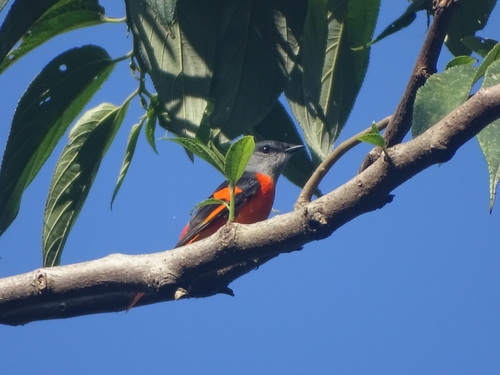 Minivet Gorjigrís
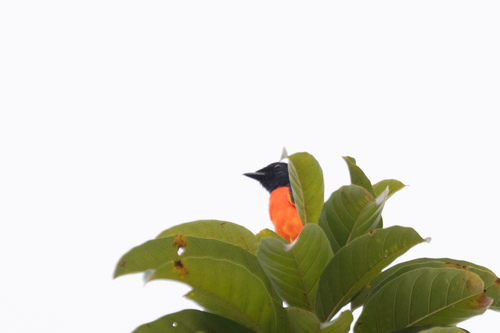 Minivet Escarlata
En breve
La marca de campo más confiable entre el Minivet Gorjigrís y el Minivet Escarlata es el color y la distribución de las partes inferiores y las manchas de las alas, especialmente en los machos adultos: los machos Gorjigrís muestran partes inferiores naranjas y cobertoras mayores con puntas naranjas, mientras que los machos del Minivet Escarlata exhiben partes inferiores escarlatas vívidas y manchas en las alas. Las hembras de ambas especies son amarillas por debajo, pero las hembras Gorjigrís son grises por encima y amarillas por debajo, mientras que las hembras del Minivet Escarlata también son grises por encima pero con cara amarilla y más amarillo extenso en las alas y la cola. Los inmaduros del Minivet Gorjigrís muestran barras amarillo-oliva en la espalda, una característica que no está presente en el Minivet Escarlata. La estructura y el tamaño también ayudan: el Minivet Escarlata es notablemente más grande y con alas más largas. Ambas especies pueden superponerse en colinas boscosas, por lo que es esencial prestar atención cuidadosa al plumaje y al tamaño.
Consejos de identificación
- Partes superiores inmaduras/juveniles: Busca barras amarillo-oliva en la espalda en el Minivet Gorjigrís inmaduro; esto está ausente en el Minivet Escarlata de cualquier edad.
- Partes inferiores de machos adultos: Los machos del Minivet Gorjigrís tienen partes inferiores naranjas y cobertoras mayores con puntas naranjas; los machos del Minivet Escarlata son escarlatas por debajo y tienen manchas escarlatas en las alas y bordes de la cola.
- Patrón de hembras adultas: Ambas hembras son grises por encima y amarillas por debajo, pero las hembras del Minivet Escarlata tienen amarillo en la cara, bordes de la cola, rabadilla y manchas en las alas, a menudo más extensas y brillantes que en el Gorjigrís.
- Color de la mancha en las alas: En vuelo, el Minivet Escarlata muestra manchas en las alas y bordes de la cola más grandes y brillantes (o amarillas en algunas subespecies); el naranja/amarillo del Gorjigrís está más restringido a las puntas de las cobertoras mayores.
- Color de la barbilla: Los machos del Minivet Gorjigrís tienen una barbilla gris pálido, que puede ser una marca sutil pero útil a corta distancia; los machos del Minivet Escarlata tienen cabeza y barbilla negras.
- Color de la cabeza y el manto: Los machos del Minivet Gorjigrís tienen cabeza y manto gris oscuro, mientras que los machos del Minivet Escarlata son negros por encima.
- Estructura del pico: El Minivet Escarlata tiene un pico oscuro más fuerte y robusto, que puede ser notable en buenas vistas.
- Tamaño y forma: El Minivet Escarlata es más grande y de cola más larga; el Gorjigrís aparece más compacto y ligero.
- Color de la cola: Los machos del Minivet Escarlata tienen bordes de cola escarlatas; las hembras tienen bordes de cola amarillos. El Minivet Gorjigrís tiene menos naranja/amarillo extenso en la cola.
- Precaución con las subespecies: Algunas subespecies del Minivet Escarlata (Filipinas) son amarillas en lugar de escarlatas; no confíes únicamente en el color de las partes inferiores en estas regiones; usa el tamaño y la extensión de la mancha en las alas.
- Superposición de hábitat: Ambas especies pueden ocurrir en colinas boscosas similares; no uses solo el hábitat para la identificación.
- Comportamiento: Ambas especies son activas en el dosel, pero el Minivet Escarlata puede ser más conspicuo y es más probable que se vea en jardines y elevaciones más bajas.
- Color de las patas y los ojos: Ambas tienen patas y ojos negros; esto no es un separador útil.
- Vocalizaciones: No se proporcionan diferencias diagnósticas; no uses la voz para la separación según las notas actuales.
- Composición de bandadas: Si ves tanto aves escarlatas/naranjas como amarillas juntas, considera la posibilidad de bandadas de sexos mixtos o especies mixtas, pero verifica las diferencias de tamaño y manchas en las alas.
Tamaño
El Minivet Escarlata es claramente más grande, midiendo de 20 a 22 cm de longitud, en comparación con los 17 a 19 cm del Minivet Gorjigrís. El Minivet Gorjigrís también es más ligero (masa corporal ~14g). El Minivet Escarlata tiene una cola más larga y un pico oscuro más robusto y fuerte, que puede ser evidente en vistas lado a lado o con experiencia. En el campo, el Minivet Escarlata a menudo parece más largo y voluminoso, especialmente en vuelo o cuando está posado erguido.
Plumaje
Los Minivets Gorjigrís inmaduros (similares a las hembras) tienen barras amarillo-oliva en la espalda, una marca clave no vista en el Minivet Escarlata de ninguna edad. El macho adulto del Minivet Gorjigrís tiene cabeza y manto gris oscuro, barbilla gris pálido, garganta naranja-amarilla, alas negruzcas con puntas naranjas en las cobertoras mayores, y partes inferiores naranjas. El macho adulto del Minivet Escarlata es negro por encima y en la cabeza, con partes inferiores escarlatas, rabadilla, bordes de la cola y manchas en las alas; ten en cuenta que el tono exacto y la extensión del escarlata pueden variar según la subespecie, y algunas formas filipinas son amarillas en su lugar. La hembra del Minivet Gorjigrís es gris por encima y brillante amarilla por debajo, con amarillo reemplazando las áreas naranjas del macho. La hembra del Minivet Escarlata también es gris por encima pero tiene partes inferiores amarillas, cara, bordes de la cola, rabadilla y manchas en las alas, con el amarillo a menudo más extenso y brillante que en el Gorjigrís. Ambas especies tienen ojos, pico y patas negros. En vuelo, las manchas en las alas y los bordes de la cola del Minivet Escarlata están coloreados de manera más llamativa (escarlata o amarilla), mientras que el naranja/amarillo del Gorjigrís está más restringido y menos vívido.
Comportamiento
Ambas especies son alimentadoras activas y ágiles en el dosel, a menudo vistas en pequeños grupos. El Minivet Escarlata a veces forma bandadas más grandes y es más probable que se vea cazando activamente o asustando insectos al batir sus alas. Ambas especies forrajean en el dosel medio a superior, pero el Minivet Escarlata puede ser más conspicuo debido a su tamaño y coloración más brillante. Los comportamientos de anidación y sociales son ampliamente similares y no son confiables para el diagnóstico en el campo.
Hábitat
Ambas especies habitan áreas bien boscosas y bosques en regiones montañosas o colinas. El Minivet Gorjigrís se encuentra típicamente a elevaciones de 1,000 a 2,000 m, mientras que el Minivet Escarlata es más generalizado y común en una variedad de hábitats forestales, incluidos jardines y colinas más bajas, desde el noreste de India hasta el sur de China, Indonesia y Filipinas. La superposición es posible en algunas regiones, por lo que el hábitat solo no es diagnóstico.