

gray-chinned minivet vs scarlet minivet
Pericrocotus solaris versus Pericrocotus speciosus
Jogue um quiz com gray-chinned minivet e scarlet minivet
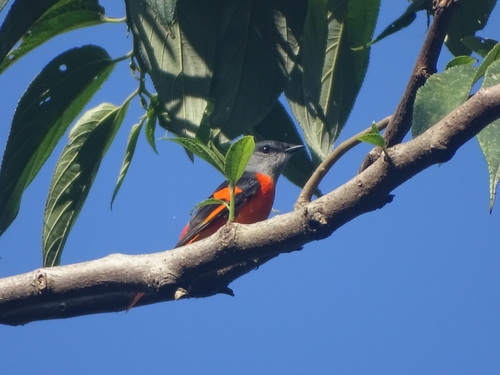 gray-chinned minivet
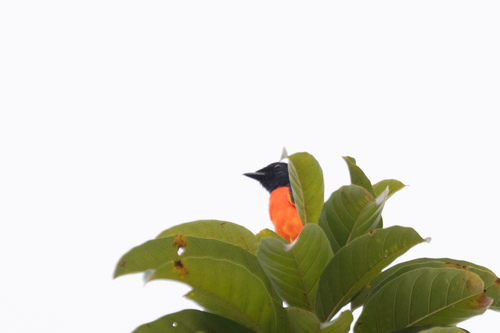 scarlet minivet
Em resumo
A marca de campo mais confiável entre gray-chinned minivet e scarlet minivet é a cor e a distribuição das partes inferiores e das manchas das asas, especialmente em machos adultos: machos gray-chinned mostram partes inferiores laranja e coberturas maiores com ponta laranja, enquanto machos scarlet minivet exibem partes inferiores e manchas de asas escarlate vívidas. Fêmeas de ambas as espécies são amarelas por baixo, mas fêmeas gray-chinned são cinzas por cima e amarelas por baixo, enquanto fêmeas scarlet minivet também são cinzas por cima, mas com rosto amarelo e mais amarelo extenso nas asas e cauda. Imaturos de gray-chinned minivet mostram barras amarelo-oliva nas costas, uma característica não presente em scarlet minivet. Estrutura e tamanho também ajudam: scarlet minivet é notavelmente maior e com asas mais longas. Ambas as espécies podem se sobrepor em colinas florestadas, então atenção cuidadosa à plumagem e ao tamanho é essencial.
Dicas de identificação
- Partes superiores imaturas/juvenis: Procure por barras amarelo-oliva nas costas em gray-chinned minivet imaturos—isso está ausente em scarlet minivet de qualquer idade.
- Partes inferiores de machos adultos: Machos gray-chinned minivet têm partes inferiores laranja e coberturas maiores com ponta laranja; machos scarlet minivet são escarlate por baixo e têm manchas de asas e bordas da cauda escarlate.
- Padrão de fêmeas adultas: Ambas as fêmeas são cinzas por cima e amarelas por baixo, mas fêmeas scarlet minivet têm amarelo no rosto, bordas da cauda, rabo e manchas das asas, muitas vezes mais extensas e brilhantes do que em gray-chinned.
- Cor das manchas das asas: Em voo, scarlet minivet mostra manchas de asas e bordas da cauda escarlate (ou amarelas em algumas subespécies) maiores e mais brilhantes; o laranja/amarelo de gray-chinned é mais restrito às pontas das coberturas maiores.
- Cor do queixo: Machos gray-chinned minivet têm um queixo cinza claro, que pode ser uma marca sutil, mas útil, a curta distância; machos scarlet minivet têm cabeça e queixo pretos.
- Cor da cabeça e manto: Machos gray-chinned minivet têm cabeça e manto cinza escuro, enquanto machos scarlet minivet são pretos por cima.
- Estrutura do bico: Scarlet minivet tem um bico escuro mais forte e robusto, que pode ser notável em boas vistas.
- Tamanho e forma: Scarlet minivet é maior e com cauda mais longa; gray-chinned parece mais compacto e leve.
- Cor da cauda: Machos scarlet minivet têm bordas da cauda escarlate; fêmeas têm bordas da cauda amarelas. Gray-chinned minivet tem menos laranja/amarelo extenso na cauda.
- Cuidado com subespécies: Algumas subespécies de scarlet minivet (Filipinas) são amarelas em vez de escarlate—não confie apenas na cor das partes inferiores nessas regiões; use tamanho e extensão das manchas das asas.
- Sobreposição de habitat: Ambas as espécies podem ocorrer em colinas florestadas semelhantes; não use habitat sozinho para identificação.
- Comportamento: Ambas as espécies são ativas na copa das árvores, mas scarlet minivet pode ser mais conspícua e é mais provável de ser vista em jardins e em altitudes mais baixas.
- Cor das pernas e olhos: Ambas têm pernas e olhos pretos—isso não é um separador útil.
- Vocalizações: Nenhuma diferença diagnóstica fornecida; não use a voz para separação com base nas notas atuais.
- Composição do bando: Se você ver tanto pássaros escarlate/laranja quanto amarelos juntos, considere a possibilidade de bandos de sexos mistos ou espécies misturadas, mas verifique as diferenças de tamanho e manchas das asas.
Tamanho
Scarlet minivet é distintamente maior, medindo 20–22 cm de comprimento, em comparação com os 17–19 cm do gray-chinned minivet. O gray-chinned minivet também é mais leve (massa corporal ~14g). Scarlet minivet tem uma cauda mais longa e um bico escuro mais robusto e forte, que pode ser aparente em vistas lado a lado ou com experiência. No campo, scarlet minivet frequentemente parece mais longa e volumosa, especialmente em voo ou quando empoleirada verticalmente.
Plumagem
Gray-chinned minivets imaturos (semelhantes às fêmeas) têm barras amarelo-oliva nas costas, uma marca chave não vista em scarlet minivet de qualquer idade. O macho adulto gray-chinned minivet tem cabeça e manto cinza escuro, queixo cinza claro, garganta laranja-amarelada, asas escuras com pontas laranja nas coberturas maiores e partes inferiores laranja. O macho adulto scarlet minivet é preto por cima e na cabeça, com partes inferiores escarlate, rabo, bordas da cauda e manchas das asas—note que o tom exato e a extensão do escarlate podem variar por subespécie, e algumas formas filipinas são amarelas em vez disso. A fêmea gray-chinned minivet é cinza por cima e amarelo brilhante por baixo, com amarelo substituindo as áreas laranja do macho. A fêmea scarlet minivet também é cinza por cima, mas tem partes inferiores, rosto, bordas da cauda, rabo e manchas das asas amarelas, com o amarelo muitas vezes mais extenso e brilhante do que em gray-chinned. Ambas as espécies têm olhos, bico e pernas pretos. Em voo, as manchas das asas e bordas da cauda de scarlet minivet são coloridas de forma mais marcante (escarlate ou amarela), enquanto o laranja/amarelo de gray-chinned é mais restrito e menos vívido.
Comportamento
Ambas as espécies são alimentadoras ativas e ágeis da copa, frequentemente vistas em pequenos bandos. Scarlet minivet às vezes forma bandos maiores e é mais provável de ser vista caçando ativamente ou espantando insetos batendo suas asas. Ambas as espécies forrageiam na copa média a alta, mas scarlet minivet pode ser mais conspícua devido ao seu tamanho e coloração mais brilhante. Comportamentos de nidificação e sociais são amplamente semelhantes e não são confiáveis para diagnóstico em campo.
Habitat
Ambas as espécies habitam áreas bem arborizadas e florestas em regiões montanhosas ou colinas. Gray-chinned minivet é tipicamente encontrado em altitudes de 1.000–2.000 m, enquanto scarlet minivet é mais difundido e comum em uma variedade de habitats florestais, incluindo jardins e colinas mais baixas, desde o nordeste da Índia até o sul da China, Indonésia e Filipinas. A sobreposição é possível em algumas regiões, então o habitat sozinho não é diagnóstico.
gray-chinned minivet · scarlet minivet · Minhas aves difíceis