

Gray-chinned Minivet vs Scarlet Minivet
Pericrocotus solaris contro Pericrocotus speciosus
Fai un quiz con Gray-chinned Minivet e Scarlet Minivet
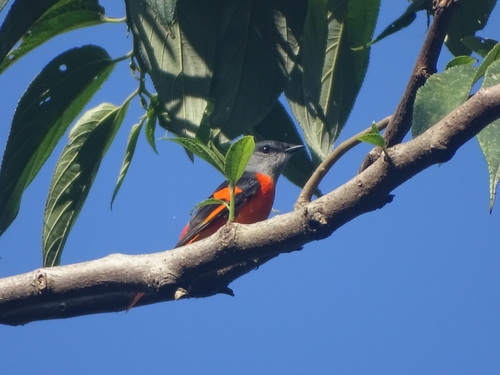 Gray-chinned Minivet
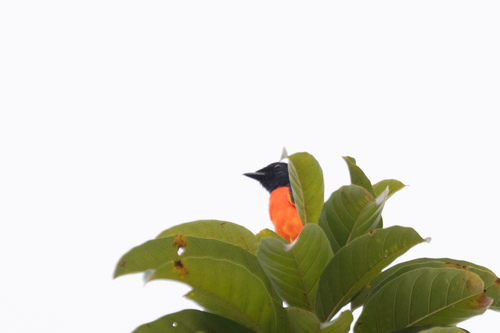 Scarlet Minivet
In breve
Il segno distintivo più affidabile tra Gray-chinned Minivet e Scarlet Minivet è il colore e la distribuzione delle parti inferiori e delle macchie sulle ali, specialmente nei maschi adulti: i maschi Gray-chinned mostrano parti inferiori arancioni e copritrici maggiori con punte arancioni, mentre i maschi Scarlet Minivet mostrano parti inferiori e macchie sulle ali di un vivido scarlatto. Le femmine di entrambe le specie sono gialle sotto, ma le femmine Gray-chinned sono grigie sopra e gialle sotto, mentre le femmine Scarlet Minivet sono anch'esse grigie sopra ma con il viso giallo e un giallo più esteso sulle ali e sulla coda. Gli immaturi di Gray-chinned Minivet mostrano barre giallo-oliva sulla schiena, una caratteristica assente in Scarlet Minivet. Anche la struttura e la dimensione aiutano: Scarlet Minivet è notevolmente più grande e con ali più lunghe. Entrambe le specie possono sovrapporsi nelle colline boscose, quindi è essenziale prestare attenzione al piumaggio e alla dimensione.
Consigli di identificazione
- Immature/juvenile upperparts: Cerca barre giallo-oliva sulla schiena negli immaturi Gray-chinned Minivet—questo è assente in Scarlet Minivet di qualsiasi età.
- Adult male underparts: I maschi Gray-chinned Minivet hanno parti inferiori arancioni e copritrici maggiori con punte arancioni; i maschi Scarlet Minivet sono scarlatti sotto e hanno macchie scarlatte sulle ali e bordi della coda.
- Adult female pattern: Entrambe le femmine sono grigie sopra e gialle sotto, ma le femmine Scarlet Minivet hanno giallo sul viso, bordi della coda, groppa e macchie sulle ali, spesso più estese e più luminose rispetto a Gray-chinned.
- Wing patch color: In volo, Scarlet Minivet mostra macchie sulle ali scarlatte (o gialle in alcune sottospecie) più grandi e luminose; l'arancione/giallo di Gray-chinned è più limitato alle punte delle copritrici maggiori.
- Chin color: I maschi Gray-chinned Minivet hanno un mento grigio chiaro, che può essere un segno sottile ma utile a distanza ravvicinata; i maschi Scarlet Minivet hanno una testa e un mento neri.
- Head and mantle color: I maschi Gray-chinned Minivet hanno una testa e un mantello grigio scuro, mentre i maschi Scarlet Minivet sono neri sopra.
- Bill structure: Scarlet Minivet ha un becco scuro più robusto, che può essere evidente in buone osservazioni.
- Size and shape: Scarlet Minivet è più grande e con una coda più lunga; Gray-chinned appare più compatto e leggero.
- Tail color: I maschi Scarlet Minivet hanno bordi della coda scarlatti; le femmine hanno bordi della coda gialli. Gray-chinned Minivet ha meno arancione/giallo esteso sulla coda.
- Subspecies caution: Alcune sottospecie di Scarlet Minivet (Filippine) sono gialle invece di scarlatte—non fare affidamento solo sul colore delle parti inferiori in queste regioni; usa dimensione e estensione delle macchie sulle ali.
- Habitat overlap: Entrambe le specie possono verificarsi in colline boscose simili; non usare solo l'habitat per l'identificazione.
- Behavior: Entrambe le specie sono attive nella chioma, ma Scarlet Minivet può essere più appariscente ed è più probabile che venga vista in giardini e a basse altitudini.
- Leg and eye color: Entrambe hanno gambe e occhi neri—questo non è un separatore utile.
- Vocalizations: Non sono fornite differenze diagnostiche; non usare la voce per la separazione basata sulle note attuali.
- Flock composition: Se vedi insieme uccelli scarlatti/arancioni e gialli, considera la possibilità di stormi di sesso misto o di specie miste, ma controlla le differenze di dimensione e macchie sulle ali.
Taglia
Scarlet Minivet è nettamente più grande, misurando 20–22 cm di lunghezza, rispetto ai 17–19 cm di Gray-chinned Minivet. Gray-chinned Minivet è anche più leggero (massa corporea ~14g). Scarlet Minivet ha una coda più lunga e un becco scuro più robusto e forte, che può essere evidente in osservazioni affiancate o con esperienza. Sul campo, Scarlet Minivet appare spesso più lungo e massiccio, specialmente in volo o quando è appollaiato in posizione eretta.
Piumaggio
Gli immaturi Gray-chinned Minivet (simili alle femmine) hanno barre giallo-oliva sulla schiena, un segno chiave non visto in Scarlet Minivet di qualsiasi età. Il maschio adulto di Gray-chinned Minivet ha una testa e un mantello grigio scuro, un mento grigio chiaro, una gola arancio-gialla, ali nerastre con punte arancioni sulle copritrici maggiori e parti inferiori arancioni. Il maschio adulto di Scarlet Minivet è nero sopra e sulla testa, con parti inferiori scarlatte, groppa, bordi della coda e macchie sulle ali—nota che la tonalità esatta e l'estensione del scarlatto possono variare per sottospecie, e alcune forme filippine sono gialle invece. La femmina di Gray-chinned Minivet è grigia sopra e gialla brillante sotto, con il giallo che sostituisce le aree arancioni del maschio. La femmina di Scarlet Minivet è anch'essa grigia sopra ma ha parti inferiori gialle, viso, bordi della coda, groppa e macchie sulle ali, con il giallo spesso più esteso e più luminoso rispetto a Gray-chinned. Entrambe le specie hanno occhi, becco e gambe neri. In volo, le macchie sulle ali e i bordi della coda di Scarlet Minivet sono colorati in modo più sorprendente (scarlatto o giallo), mentre l'arancione/giallo di Gray-chinned è più limitato e meno vivido.
Comportamento
Entrambe le specie sono attive, agili alimentatori della chioma, spesso viste in piccoli stormi. Scarlet Minivet a volte forma stormi più grandi ed è più probabile che venga vista mentre cattura insetti attivamente o li spaventa battendo le ali. Entrambe le specie si nutrono nella parte centrale e superiore della chioma, ma Scarlet Minivet può essere più appariscente a causa della sua dimensione e colorazione più brillante. I comportamenti di nidificazione e sociali sono ampiamente simili e non sono affidabilmente diagnostici sul campo.
Habitat
Entrambe le specie abitano aree ben alberate e foreste in regioni collinari o montane. Gray-chinned Minivet si trova tipicamente a elevazioni di 1.000–2.000 m, mentre Scarlet Minivet è più diffuso e comune in una gamma di habitat forestali, inclusi giardini e colline più basse, dal Nord-est dell'India alla Cina meridionale, Indonesia e Filippine. È possibile una sovrapposizione in alcune regioni, quindi l'habitat da solo non è diagnostico.
Gray-chinned Minivet · Scarlet Minivet · I miei uccelli difficili