

European Serin vs Yellowhammer
Serinus serinus versus Emberiza citrinella
Play a quiz with European Serin and Yellowhammer
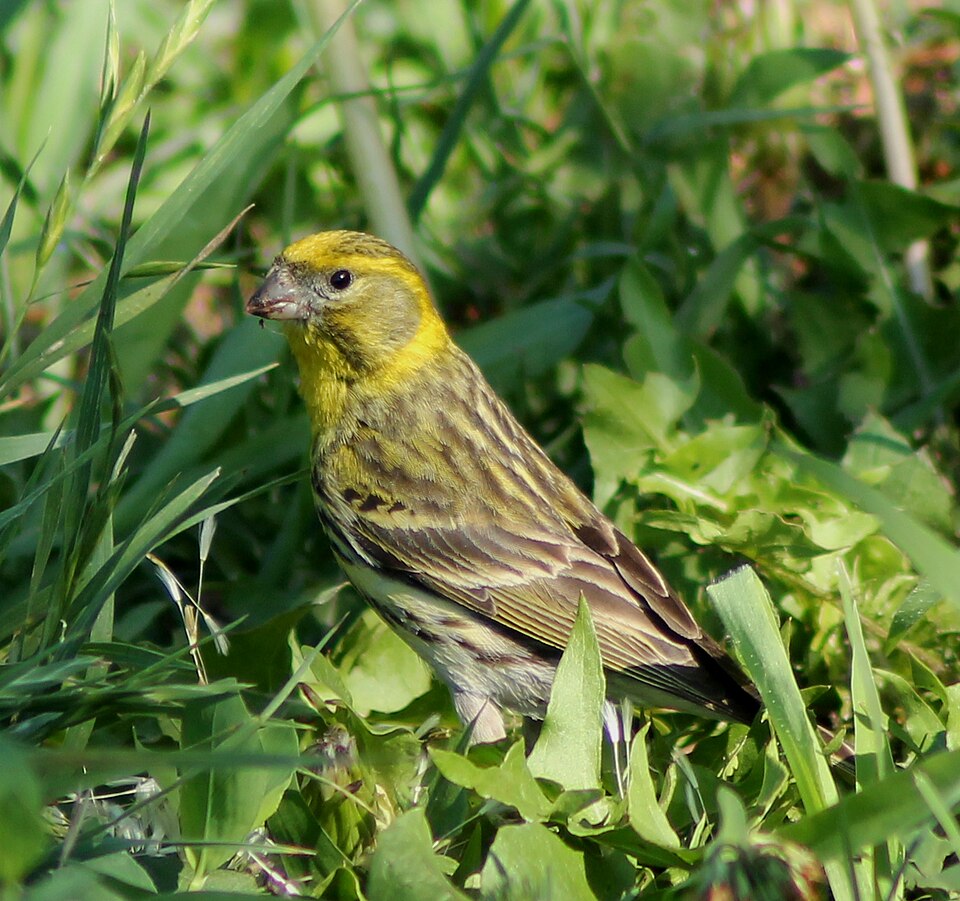 European Serin
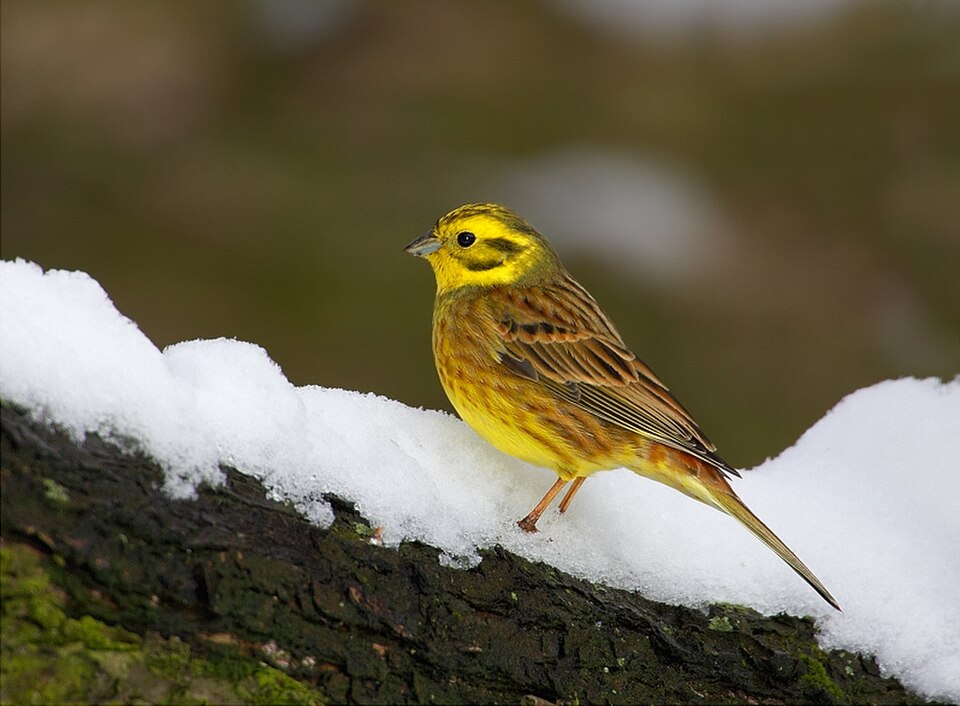 Yellowhammer
In short
The most reliable field mark between European Serin and Yellowhammer is overall size and structure: Serin is a tiny, compact finch with a short, stubby bill and tail, while Yellowhammer is a much larger, longer-tailed bunting with a more elongated body and a distinctly yellow head in adult males. In flight or at a distance, the Serin’s small, streaky, greenish-yellow appearance with a yellow rump contrasts sharply with the Yellowhammer’s larger size, rufous rump, and (in males) bright yellow head. Juveniles and females of both species can be confusing, but the Serin always appears more compact and lacks the Yellowhammer’s chestnut rump and white outer tail feathers. If you see a bird with a strong yellow face and breast, check for size and tail length: Serin is much smaller and shorter-tailed. When in doubt, structural differences and rump color are key.
Identification tips
- Size is the first check: Serin is tiny and compact, Yellowhammer is large and elongated. If the bird looks sparrow-sized or bigger, rule out Serin.
- Tail length and shape: Serin has a short, stubby tail; Yellowhammer has a long, straight tail, often with white outer feathers visible in flight or when fanned.
- Rump color: Serin shows a yellow rump (all ages), while Yellowhammer has a rufous rump (adults) or paler rump (juveniles/females).
- White in tail: Yellowhammer of all ages shows white outer tail feathers in flight; Serin never does.
- Head and face color (males): Serin male has a yellow face and breast, but the yellow is patchy and surrounded by streaks; Yellowhammer male has a clean, bright yellow head and underparts.
- Streaking: Both can be streaky, but Serin is streaked all over, including yellow breast and white belly. Yellowhammer is streaked on the back and flanks, but the yellow head and underparts are usually less streaked (especially in males).
- Bill shape: Serin has a small, stubby, finch-like bill; Yellowhammer’s bill is conical but longer and more bunting-like.
- Flight pattern: Serin’s flight is bounding and agile, often in tight flocks; Yellowhammer’s flight is more direct, with the long tail and white outer feathers obvious.
- Juvenile confusion: Juvenile Serin is still tiny and shows a yellowish rump; juvenile Yellowhammer is much larger, duller, and lacks the yellow face, but has a pale or rufous rump and white in the tail.
- Female confusion: Female Serin is compact and streaky with a yellowish rump; female Yellowhammer is larger, more streaked on the crown and flanks, and has a rufous rump and white in the tail.
- Habitat context: Serin is more likely in open woodland with conifers or cultivated areas with trees; Yellowhammer favors farmland, hedgerows, and grassy banks.
- Song: Serin’s song is a rapid, buzzing trill; Yellowhammer’s is a slow, repetitive phrase with a drawn-out ending.
- Seasonal changes: Both species are duller outside the breeding season, but size, tail, and rump color remain reliable.
- Mixed flocks: Serin may join finch flocks in winter; Yellowhammer is less likely to mix with finches, more often in loose bunting groups.
- When in doubt: If you see a streaky yellowish bird, check for white in the tail (Yellowhammer), overall size (Serin is much smaller), and rump color (yellow in Serin, rufous or pale in Yellowhammer).
Size
European Serin is much smaller, measuring 11–12 cm in length, and is the smallest European finch. It has a compact, stubby build. Yellowhammer is a large bunting, 16–16.5 cm long with a 23–29.5 cm wingspan, and weighs 20–36.5 g—almost double the mass of a Serin. Yellowhammer looks noticeably longer-bodied and longer-tailed, and its larger size is obvious when both species are seen in the same area. Even a lone bird should look either tiny and compact (Serin) or robust and elongated (Yellowhammer). [wikipedia][avonet]
Plumage
- Juvenile/immature birds: Both species can look streaky and dull, but Serin juveniles are always small, with a yellowish rump and heavily streaked underparts. Juvenile Yellowhammers are much larger, duller, and less yellow overall, with a paler rump and more uniform upperparts. The Yellowhammer’s white outer tail feathers are visible in flight at all ages, while Serin lacks this feature.
- Adult males: Serin males are bright yellow on the face and breast, with yellow wing bars and tail sides, but remain heavily streaked and small. Yellowhammer males have a bright yellow head and underparts, rufous rump, and white outer tail feathers, with a streaked brown back. The yellow of the Yellowhammer is more extensive and cleaner on the head, while Serin’s yellow is patchier and more confined to the face, breast, and rump.
- Females: Female Serin is duller but still compact and streaky with a yellowish rump. Female Yellowhammer is larger, more streaked on crown, breast, and flanks, and has a rufous rump and white outer tail feathers. Both are less bright than males, but the Yellowhammer’s larger size and longer tail remain obvious.
- Flight views: Serin shows a short tail and yellow rump, with no white in the tail. Yellowhammer shows a long tail with white outer feathers and a rufous rump; the white in the tail is a good flight mark for Yellowhammer of any age.
Behaviour
Serin is active, often conspicuous, and forms flocks outside the breeding season, sometimes mixing with other finches. It is agile, frequently perching high and making short, bounding flights. Yellowhammer is more likely to be seen singing from a bush or tree, or feeding on the ground or low vegetation. It is less likely to flock with finches and tends to be more solitary or in loose groups. Yellowhammer males are territorial singers, often visible on exposed perches for long periods.
Habitat
Serin prefers open woodland and cultivated areas, often with some conifers, and is common in Mediterranean regions and southern/central Europe. It is more likely to be found in areas with scattered trees or shrubs. Yellowhammer favors farmland, hedgerows, and woodland edges, often nesting on or near the ground in grassy or bushy areas. While both can use semi-open country, Serin is more associated with trees and conifers, Yellowhammer with open fields, hedges, and grassy banks.
Voice
Serin’s song is a rapid, buzzing trill, very familiar in Mediterranean countries and quite different from the Yellowhammer’s song. Yellowhammer’s song is a simple, repetitive phrase often described as ‘a little bit of bread and no cheese’, with a clear, drawn-out ending. Calls also differ: Serin’s calls are higher-pitched and more finch-like, while Yellowhammer’s are softer and more bunting-like.