

Eastern Yellow Wagtail vs Citrine Wagtail
Motacilla tschutschensis versus Motacilla citreola
Play a quiz with Eastern Yellow Wagtail and Citrine Wagtail
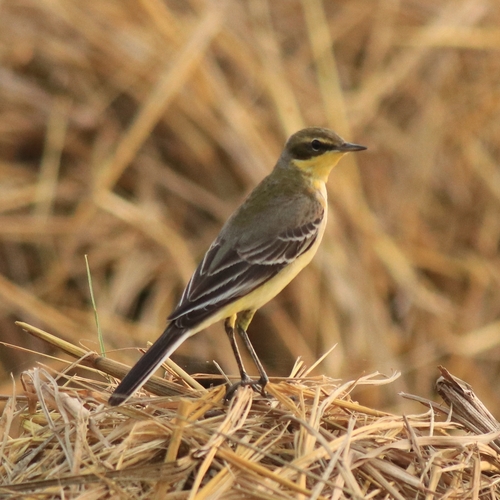 Eastern Yellow Wagtail
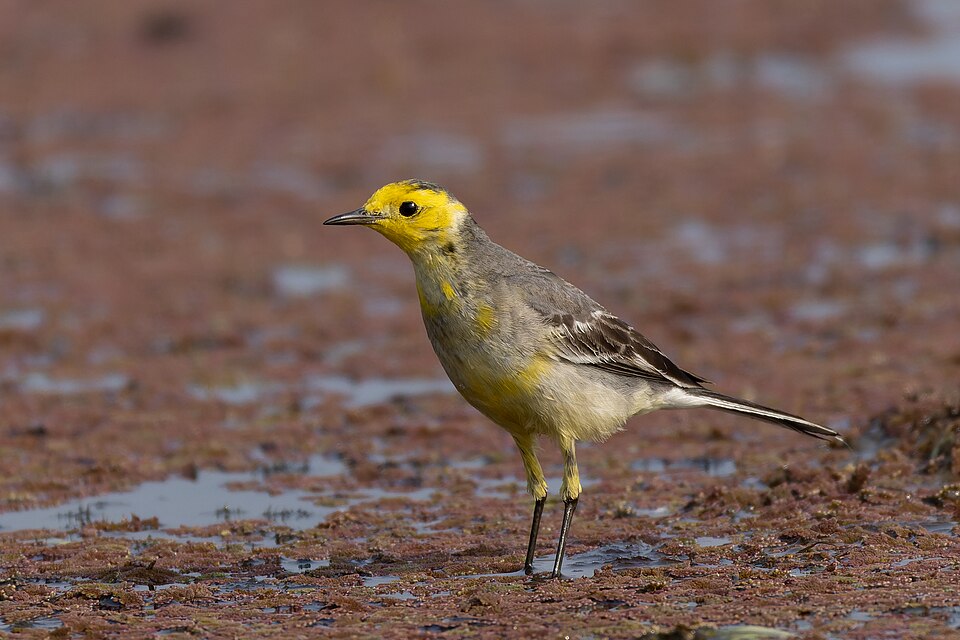 Citrine Wagtail
In short
The most reliable field mark for separating Eastern Yellow Wagtail from Citrine Wagtail is the head and upperpart pattern of breeding adults: Eastern Yellow Wagtail males show olive-green upperparts and variable head patterns, while Citrine Wagtail males have a strikingly bright yellow head (except for a black nape) and contrasting grey or black upperparts. In non-breeding and immature plumages, both species can show diluted yellow below and paler heads, but Citrine Wagtail often retains a yellowish supercilium on a brownish head, while Eastern Yellow Wagtail is generally duller and lacks the strong facial contrast. Structure and size are very similar, but subtle differences in head pattern and upperpart coloration are key, especially in spring and summer. Juvenile and winter birds are trickier, but careful attention to head pattern and upperpart tone can help.
Identification tips
- Breeding male head pattern: In spring and early summer, Citrine Wagtail males have a bright yellow head (except for a black nape), while Eastern Yellow Wagtail males show variable head patterns (grey, white, or yellow) but never the full yellow head with black nape. This is the single most reliable field mark for adult males.
- Upperpart color in adults: Eastern Yellow Wagtail is olive-green above, while Citrine Wagtail is grey or black above in breeding plumage. This contrast is most obvious in good light.
- Wing pattern in adults: Citrine Wagtail shows white in the remiges (flight feathers), which can appear as a pale wing panel in flight or when perched. Eastern Yellow Wagtail lacks this strong white contrast in the wing.
- Non-breeding and female head pattern: In autumn and winter, Citrine Wagtail often shows a yellowish supercilium on a brownish head, while Eastern Yellow Wagtail is generally more uniform and lacks a strong supercilium. Look for a pale eyebrow and facial contrast in Citrine.
- Underpart color: Both species can show yellow underparts, but in non-breeding plumage this is often diluted by white in both. Citrine Wagtail may retain more yellow on the face and supercilium.
- Juvenile/immature birds: Both are dull and brownish, but Citrine Wagtail juveniles often show a yellowish wash to the face and supercilium, while Eastern Yellow Wagtail juveniles are plainer and browner. This is subtle and not always reliable.
- Bill and leg color: Both species have dark bills and legs; this is not helpful for separation.
- Tail and hind claw: Eastern Yellow Wagtail has a long, not strongly curved hind claw (diagnostic from Western Yellow Wagtail, but not from Citrine). Not useful for separating these two in the field.
- Size and structure: Both are slender, long-tailed birds of similar size; structure is not diagnostic.
- Habitat and range: Both use wet meadows and open country, and both can occur as vagrants in western Europe in autumn and winter. Do not rely on habitat or range alone where both are possible.
- Vocalizations: Eastern Yellow Wagtail has a shriller, more rasping call than Western Yellow Wagtail, but no distinctive difference from Citrine Wagtail is noted in the sources. Use with caution.
- Pitfalls: Females and immatures of both species are very similar and can be extremely difficult to separate in the field. Head pattern (supercilium, facial contrast) and upperpart tone are the best clues, but beware of overlap and individual variation.
- Seasonal effects: Breeding males are easiest to separate; non-breeding and immature birds are much more challenging. Always consider the time of year and the likelihood of encountering each plumage.
- Subspecies variation: Eastern Yellow Wagtail shows considerable variation in head pattern by subspecies, which can occasionally approach Citrine Wagtail in brightness, but never matches the full yellow head with black nape.
- Inconclusive birds: If you have a drab, brownish wagtail with limited facial pattern and no clear upperpart contrast, it may not be possible to identify to species with confidence in the field. Photograph and document such birds for expert review.
Size
Both species are slender wagtails with long, constantly wagging tails and very similar proportions. Eastern Yellow Wagtail is 15–16 cm in length, while Citrine Wagtail is slightly longer at 15.5–17 cm. This size overlap means that length and bulk are not reliable for separation in the field. Bill and leg color are both dark in adults, and overall jizz is similar.
Plumage
-
Breeding adult males: Eastern Yellow Wagtail is olive-green above with yellow below, and head pattern varies by subspecies (sometimes with grey, white, or yellow on the head). Citrine Wagtail breeding males are much more striking: bright yellow on the entire head (except for a black nape), with grey or black upperparts, white in the wings, and vivid yellow below. This head and upperpart contrast is diagnostic in spring and early summer.
-
Females and non-breeding birds: Both species become duller, with yellow underparts diluted by white. Eastern Yellow Wagtail females and first-winters are generally olive-brown above with paler heads, while Citrine Wagtail shows a brownish head with a yellowish supercilium and more contrasting pale underparts. Females of both species can be very similar, but Citrine Wagtail tends to show a more distinct pale supercilium and less olive above.
-
Juveniles/immatures: Both are duller and less patterned, but Citrine Wagtail juveniles often show a yellowish wash to the face and supercilium, while Eastern Yellow Wagtail juveniles are plainer and browner overall. Upperwing pattern is not described as distinctively different for these ages in the available notes.
Behaviour
Both species share the typical wagtail behavior: active, ground-feeding, and constantly wagging their long tails. Flight is undulating and direct, and both species are usually seen in open, wet habitats. No major behavioral differences are noted in the sources for field separation.
Habitat
Both species breed in the Palearctic and migrate to South Asia for the winter, often using similar wet meadows, tundra, and open country. Eastern Yellow Wagtail breeds further east (including Alaska), while Citrine Wagtail is more central in the Palearctic but is expanding westward. Both can occur as vagrants in western Europe, especially in autumn and winter, so habitat alone is not a reliable separator where ranges overlap.
Voice
Eastern Yellow Wagtail gives a high-pitched 'zrri' or 'jeet' call, described as shriller and more rasping than Western Yellow Wagtail. No distinctive vocalization is described for Citrine Wagtail in the provided notes, so voice is not a reliable separator between these two based on current information.