

Black Tern vs Louisiana Waterthrush
Chlidonias niger versus Parkesia motacilla
Play a quiz with Black Tern and Louisiana Waterthrush
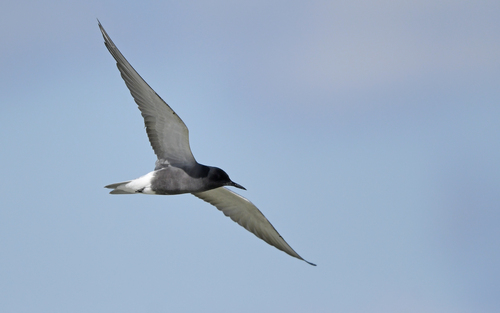 Black Tern
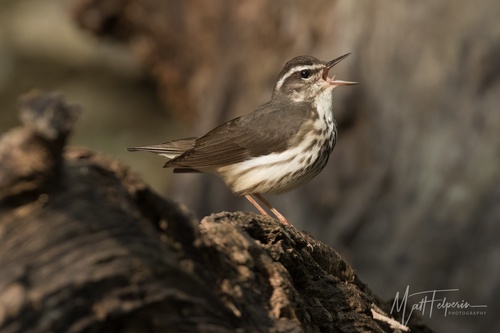 Louisiana Waterthrush
In short
The most reliable way to separate Black Tern from Louisiana Waterthrush is by overall structure and habitat: Black Tern is a slim, buoyant, aerial waterbird with long, pointed wings and a short, dark bill, usually seen flying over open water, while Louisiana Waterthrush is a chunky, ground-dwelling songbird with a strong pinkish bill and legs, walking along wooded streams. In flight, Black Tern shows a slim, agile profile with pale forewings and a square tail, whereas Louisiana Waterthrush is rarely seen in sustained flight and never exhibits the tern’s wing pattern. Juvenile and non-breeding Black Terns may show some white on the face and collar, but never the strong supercilium and streaked underparts of the waterthrush. If you see a bird foraging on the wing over water, it is almost certainly a Black Tern; if it is bobbing along a shaded streambank, it is a waterthrush.
Identification tips
- Habitat is key: Black Tern is almost never found away from open water or marshes; Louisiana Waterthrush is tied to wooded streams and never seen foraging over open water.
- Flight style: Black Tern is buoyant, agile, and often erratic in flight, foraging on the wing. Louisiana Waterthrush flies only short distances, mostly walks or bobs along the ground.
- Wing pattern (all ages): Black Tern shows pale forewings and a darker back in flight, with a slim, pointed-winged profile. Waterthrush has no contrasting wing pattern—wings are plain brown above.
- Bill structure: Black Tern has a long, slender, slightly decurved black bill, almost as long as its head. Louisiana Waterthrush has a shorter, straight, strong bill, pinkish in color, never as long as the head.
- Leg color: Black Tern’s legs are short and dark. Louisiana Waterthrush has long, bright pink legs—very obvious when perched or walking.
- Head pattern: Black Tern (especially juveniles and non-breeding) may show a white face with a dark triangular patch, but never a strong white supercilium. Louisiana Waterthrush always shows a bold white supercilium from bill to nape.
- Underparts: Black Tern (all ages) never shows bold black streaks on the underparts. Louisiana Waterthrush has white underparts with strong black streaks and buff flanks/undertail.
- Tail shape: Black Tern has a square, pale brownish-grey tail. Louisiana Waterthrush has a short, rounded tail, often flicked up and down.
- Cap/hood: Breeding Black Tern has a black or blackish-brown hood that merges with ear coverts. Waterthrush never shows a hooded appearance—crown is plain brown.
- Size and jizz: Black Tern is much larger, longer-winged, and more slender than the chunky, short-tailed waterthrush.
- Vocalizations: Black Tern’s call is a high “kik”; Louisiana Waterthrush sings a musical, descending song and gives a hard “chink” call.
- Seasonal context: Black Tern is present in North America during spring and summer (breeding), then migrates to South America. Louisiana Waterthrush breeds in eastern North America and winters in the tropics, but never overlaps in habitat with terns.
- Perching behavior: Black Tern rarely perches except on floating debris or posts; waterthrush is almost always seen perched or walking on the ground.
- Juvenile confusion: Juvenile Black Tern may show a white collar and face, but never the streaked underparts or supercilium of the waterthrush. Juvenile waterthrushes are buffier below, but still show streaks and supercilium.
- Foraging style: Black Tern catches prey on the wing or from the water surface; Louisiana Waterthrush picks prey from the ground or water’s edge, never aerially.
Size
Black Tern is substantially larger and more slender, weighing around 60 g [wikidata], with a length of about 25 cm and a wingspan of 61 cm [wikipedia]. Louisiana Waterthrush is much smaller and chunkier, averaging 20.6 g, with a length of 14–17 cm and a wingspan of 21–25.4 cm [wikipedia]. The tern’s long, pointed wings and slim body contrast with the waterthrush’s short wings, plump body, and relatively long legs.
Plumage
- Juvenile/immature Black Tern: Shows a broadish white collar, white face, and dark triangular patch in front of the eye. The upperparts are drab with pale feather-edgings, and the rump is brownish-grey. There may be greyish-brown smudges on the sides of the white breast, but these are not bold or streaked. In flight, the pale forewing contrasts with the darker mantle and back. No waterthrush age ever shows this pattern.
- Louisiana Waterthrush (all ages): Always has a strong white supercilium (eyebrow), plain brown upperparts, and white underparts with bold black streaks. The flanks and undertail are buff, and the legs are bright pink. Juveniles are similar but have buffier underparts. Never shows a hooded or capped appearance, nor the pale forewing of the tern.
- Adult Black Tern (breeding): Black head, neck, and belly, with a dark grey back and white forewing. The black cap forms an almost complete hood. Non-breeding adults lose most of the black except for the cap, replaced by grey. The tail is square and pale brownish-grey. Never shows streaked underparts or a supercilium.
- Flight: Black Tern’s upperwing is pale on the forewing and darker on the back, with a slim, pointed-winged profile. Louisiana Waterthrush in flight looks like a typical warbler: rounded wings, short tail, no pale panels or contrasting wing pattern.
Behaviour
Black Tern is almost always seen flying over open water, foraging by picking insects or small fish from the surface or catching insects in flight. Its flight is agile, erratic, and buoyant, with dynamic wingbeats. It rarely perches except on floating vegetation or posts near water. Louisiana Waterthrush is a terrestrial forager, walking or bobbing along the edges of fast-flowing streams, often flicking its tail. It rarely flies for long distances and is usually seen on the ground or low vegetation. The waterthrush does not forage on the wing like a tern.
Habitat
Black Tern breeds in freshwater marshes and is almost always found over or near open water, especially during migration and in winter. It is never found in wooded streams or dense undergrowth. Louisiana Waterthrush breeds along shaded, fast-flowing streams in eastern North America, always in wooded or semi-wooded areas. It avoids open water and is never seen over lakes or marshes like a tern. If the bird is in a marsh or flying over a lake, it is a tern; if it is walking along a forested stream, it is a waterthrush.
Voice
Black Tern gives a high-pitched "kik" call, and flocks can be very noisy and harsh-sounding. Louisiana Waterthrush has a distinctive, musical song of descending notes followed by a warble, and its call is a hard "chink." The waterthrush’s song is far more complex and melodious than any tern vocalization.