
Motmot

Band-rumped Swift vs Semipalmated Plover

Chaetura spinicaudus versus Charadrius semipalmatus

Play a quiz with Band-rumped Swift and Semipalmated Plover
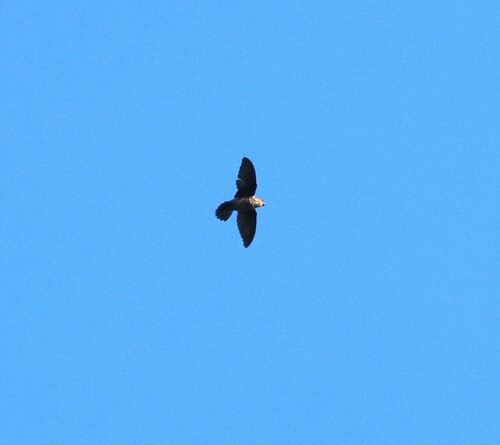
Band-rumped Swift (Chaetura spinicaudus) Band-rumped Swift
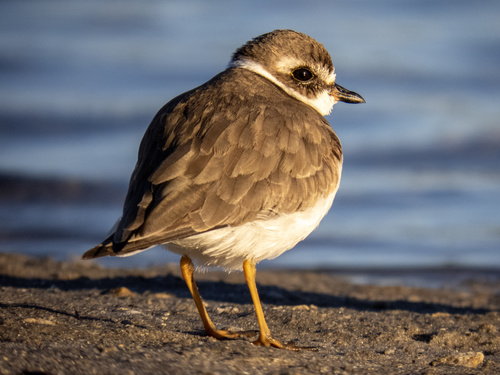
Semipalmated Plover (Charadrius semipalmatus) Semipalmated Plover

Media

Loading…

In short

The most reliable way to separate Band-rumped Swift from Semipalmated Plover is by overall structure and flight style: swifts are fast-flying, sickle-winged aerialists with a short square tail, while plovers are compact, short-legged shorebirds with a rounded head and a single bold breast band. Juvenile Band-rumped Swifts show white tips on some wing feathers, but even then, their long, hooked wings and constant flight set them apart from the plover's broad, rounded wings and terrestrial habits. Adult Semipalmated Plovers are easily recognized by their striking black neckband, white underparts, and orange-black bill, which are never matched by the swift. If seen in flight, focus on wing shape and flight behavior; if perched, bill and leg structure are instantly diagnostic.

Identification tips

  1. Flight style: Band-rumped Swift is almost always seen in fast, direct flight with rapid wingbeats and gliding, never walking or standing on the ground. Semipalmated Plover is usually seen foraging on the ground, running or standing still, rarely in prolonged flight.
  2. Wing shape: Swifts have long, narrow, sickle-shaped wings that bulge in the middle and hook at the end, especially obvious in flight. Plovers have broad, rounded wings with no hooks or bulges.
  3. Tail shape: Band-rumped Swift has a short, square tail; Semipalmated Plover has a short, rounded tail, but this is less distinctive than the swift's tail in flight.
  4. Rump pattern: Swifts show a white band across the rump, visible in flight from above or behind; plovers have no such band, their rump is brownish like the back.
  5. Underparts: Swifts are uniformly dark below with only a slightly paler throat; plovers have a white belly and breast with a single bold black neckband.
  6. Head pattern: Plovers have a brown cap, white forehead, black mask, and orange-black bill; swifts have a plain dark head with no contrasting facial marks or bright bill.
  7. Bill structure: Swifts have a tiny, wide-mouthed bill adapted for catching insects in flight; plovers have a short, thick, orange and black bill suited for picking food from the ground.
  8. Legs: Swifts' legs are extremely short and rarely visible; plovers have short but visible legs, often pale or orange, and are seen walking or running.
  9. Juvenile marks: Juvenile Band-rumped Swifts have white tips on some wing feathers, but even then, their structure and flight style are unmistakable. Juvenile plovers look like adults but may have less crisp markings; they never show white-tipped wing feathers.
  10. Size: Swifts are much smaller and lighter than plovers, but this is most obvious only with direct comparison or in the hand.
  11. Vocalizations: If heard, the swift's bisyllabic or burry calls are unique and given in flight; plovers are generally quieter and call from the ground.
  12. Habitat: Swifts are aerial, rarely seen perched; plovers are terrestrial, almost never seen in the air for long.
  13. Group behavior: Swifts often feed in flocks at altitude; plovers are usually in small groups or singles on the ground.
  14. Context: If you see a bird over water at dawn or dusk, especially in a flock, consider swift; if on a beach, mudflat, or field, especially alone or in a small group, consider plover.
  15. Pitfalls: At a distance, a swift's white rump band might be mistaken for a plover's white underparts, but the swift's flight style and lack of bold breast band are key. Conversely, a plover in fast, low flight might seem swift-like, but its rounded wings and patterned plumage will separate it.

Size

Band-rumped Swift is significantly smaller and lighter than Semipalmated Plover. The swift measures 10.5–12.6 cm in length and weighs 13.8–18.5 g, while the plover is larger at 17–19 cm long and weighs 37.6–54.7 g. This size difference is obvious if both are seen together, but less so at a distance or in flight. The swift is more slender and elongated, while the plover is stockier and rounder.

Plumage

Juvenile Band-rumped Swifts have white tips on some wing feathers, but otherwise both adults and immatures are dark above with a contrasting white rump band and a slightly paler throat. The swift's underparts are uniformly dark, lacking any bold pattern. In contrast, adult Semipalmated Plovers have a gray-brown back and wings, a white belly, and a single bold black neckband across the white breast. Their face shows a brown cap, white forehead, and a black mask around the eyes, plus a short orange and black bill. The plover's plumage is much more patterned and contrasting, especially on the head and breast, while the swift is more uniform except for the rump band. No age or seasonal plumage of the plover ever resembles the swift's all-dark look.

Behaviour

Band-rumped Swifts are almost always seen in rapid, continuous flight, often high above ground or water, feeding on insects. They rarely perch in the open. Semipalmated Plovers are ground-foragers, walking or running on beaches, mudflats, or fields, picking at food. Their movement is more deliberate, and they are often seen standing or running rather than flying. Swifts feed in flocks, often at altitude, while plovers are usually in small groups or alone, always on the ground or at water's edge.

Habitat

Band-rumped Swifts are aerial insectivores found from Panama through northern South America and Trinidad, often over forests, rivers, or open water, rarely landing in view. Semipalmated Plovers breed on open ground in northern North America and migrate to coastal beaches, tidal flats, and fields throughout the Americas. If the bird is on the ground, especially near water or mud, it is almost certainly a plover; if seen only in the air, especially high up, it is likely a swift.

Voice

Band-rumped Swift gives a diagnostic bisyllabic 'pseee-trr' or a burry 'prrrree-trtr', sometimes with repeated 'tsee-tsee-tsee' notes. Semipalmated Plover's calls are not described in the provided notes, but the swift's vocalizations are distinctive and useful if heard. The swift's calls are given in flight, while the plover is generally quieter and calls on the ground or in low flight.

Submit a better description

Use the same sections as the comparison. Your text is published immediately.

The most reliable way to separate Band-rumped Swift from Semipalmated Plover is by overall structure and flight style: swifts are fast-flying, sickle-winged aerialists with a short square tail, while plovers are compact, short-legged shorebirds with a rounded head and a single bold breast band. Juvenile Band-rumped Swifts show white tips on some wing feathers, but even then, their long, hooked wings and constant flight set them apart from the plover's broad, rounded wings and terrestrial habits. Adult Semipalmated Plovers are easily recognized by their striking black neckband, white underparts, and orange-black bill, which are never matched by the swift. If seen in flight, focus on wing shape and flight behavior; if perched, bill and leg structure are instantly diagnostic.

  1. Flight style: Band-rumped Swift is almost always seen in fast, direct flight with rapid wingbeats and gliding, never walking or standing on the ground. Semipalmated Plover is usually seen foraging on the ground, running or standing still, rarely in prolonged flight.
  2. Wing shape: Swifts have long, narrow, sickle-shaped wings that bulge in the middle and hook at the end, especially obvious in flight. Plovers have broad, rounded wings with no hooks or bulges.
  3. Tail shape: Band-rumped Swift has a short, square tail; Semipalmated Plover has a short, rounded tail, but this is less distinctive than the swift's tail in flight.
  4. Rump pattern: Swifts show a white band across the rump, visible in flight from above or behind; plovers have no such band, their rump is brownish like the back.
  5. Underparts: Swifts are uniformly dark below with only a slightly paler throat; plovers have a white belly and breast with a single bold black neckband.
  6. Head pattern: Plovers have a brown cap, white forehead, black mask, and orange-black bill; swifts have a plain dark head with no contrasting facial marks or bright bill.
  7. Bill structure: Swifts have a tiny, wide-mouthed bill adapted for catching insects in flight; plovers have a short, thick, orange and black bill suited for picking food from the ground.
  8. Legs: Swifts' legs are extremely short and rarely visible; plovers have short but visible legs, often pale or orange, and are seen walking or running.
  9. Juvenile marks: Juvenile Band-rumped Swifts have white tips on some wing feathers, but even then, their structure and flight style are unmistakable. Juvenile plovers look like adults but may have less crisp markings; they never show white-tipped wing feathers.
  10. Size: Swifts are much smaller and lighter than plovers, but this is most obvious only with direct comparison or in the hand.
  11. Vocalizations: If heard, the swift's bisyllabic or burry calls are unique and given in flight; plovers are generally quieter and call from the ground.
  12. Habitat: Swifts are aerial, rarely seen perched; plovers are terrestrial, almost never seen in the air for long.
  13. Group behavior: Swifts often feed in flocks at altitude; plovers are usually in small groups or singles on the ground.
  14. Context: If you see a bird over water at dawn or dusk, especially in a flock, consider swift; if on a beach, mudflat, or field, especially alone or in a small group, consider plover.
  15. Pitfalls: At a distance, a swift's white rump band might be mistaken for a plover's white underparts, but the swift's flight style and lack of bold breast band are key. Conversely, a plover in fast, low flight might seem swift-like, but its rounded wings and patterned plumage will separate it.

Band-rumped Swift is significantly smaller and lighter than Semipalmated Plover. The swift measures 10.5–12.6 cm in length and weighs 13.8–18.5 g, while the plover is larger at 17–19 cm long and weighs 37.6–54.7 g. This size difference is obvious if both are seen together, but less so at a distance or in flight. The swift is more slender and elongated, while the plover is stockier and rounder.

Juvenile Band-rumped Swifts have white tips on some wing feathers, but otherwise both adults and immatures are dark above with a contrasting white rump band and a slightly paler throat. The swift's underparts are uniformly dark, lacking any bold pattern. In contrast, adult Semipalmated Plovers have a gray-brown back and wings, a white belly, and a single bold black neckband across the white breast. Their face shows a brown cap, white forehead, and a black mask around the eyes, plus a short orange and black bill. The plover's plumage is much more patterned and contrasting, especially on the head and breast, while the swift is more uniform except for the rump band. No age or seasonal plumage of the plover ever resembles the swift's all-dark look.

Band-rumped Swifts are almost always seen in rapid, continuous flight, often high above ground or water, feeding on insects. They rarely perch in the open. Semipalmated Plovers are ground-foragers, walking or running on beaches, mudflats, or fields, picking at food. Their movement is more deliberate, and they are often seen standing or running rather than flying. Swifts feed in flocks, often at altitude, while plovers are usually in small groups or alone, always on the ground or at water's edge.

Band-rumped Swifts are aerial insectivores found from Panama through northern South America and Trinidad, often over forests, rivers, or open water, rarely landing in view. Semipalmated Plovers breed on open ground in northern North America and migrate to coastal beaches, tidal flats, and fields throughout the Americas. If the bird is on the ground, especially near water or mud, it is almost certainly a plover; if seen only in the air, especially high up, it is likely a swift.

Band-rumped Swift gives a diagnostic bisyllabic 'pseee-trr' or a burry 'prrrree-trtr', sometimes with repeated 'tsee-tsee-tsee' notes. Semipalmated Plover's calls are not described in the provided notes, but the swift's vocalizations are distinctive and useful if heard. The swift's calls are given in flight, while the plover is generally quieter and calls on the ground or in low flight.

Discard your changes?

You have unsaved edits. If you leave now, those changes will be lost.

Band-rumped Swift · Semipalmated Plover · My Tricky Birds