
Vencejo Lomiblanco vs Chorlitejo Semipalmeado
Chaetura spinicaudus frente a Charadrius semipalmatus
Juega un quiz con Vencejo Lomiblanco y Chorlitejo Semipalmeado
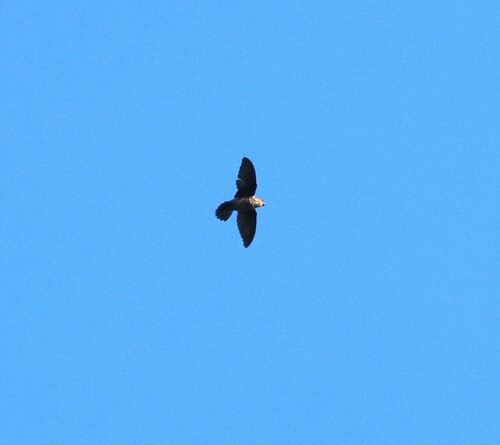 Vencejo Lomiblanco
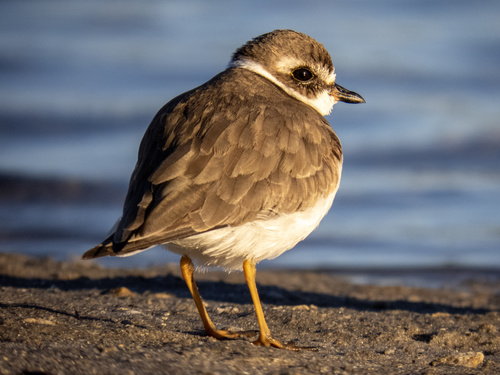 Chorlitejo Semipalmeado
En breve
La forma más confiable de separar el Vencejo Lomiblanco del Chorlitejo Semipalmeado es por su estructura general y estilo de vuelo: los vencejos son voladores rápidos, con alas en forma de hoz y una cola corta y cuadrada, mientras que los chorlitejos son aves costeras compactas y de patas cortas con una cabeza redondeada y una sola banda pectoral prominente. Los Vencejos Lomiblancos juveniles muestran puntas blancas en algunas plumas de las alas, pero incluso entonces, sus alas largas y ganchudas y su vuelo constante los distinguen de las alas amplias y redondeadas del chorlitejo y sus hábitos terrestres. Los Chorlitejos Semipalmeados adultos son fácilmente reconocibles por su llamativa banda negra en el cuello, partes inferiores blancas y un pico naranja-negro, que nunca son igualados por el vencejo. Si se ven en vuelo, enfóquese en la forma de las alas y el comportamiento de vuelo; si están posados, la estructura del pico y las patas son instantáneamente diagnósticas.
Consejos de identificación
- Estilo de vuelo: El Vencejo Lomiblanco se ve casi siempre en vuelo rápido y directo con batidos de alas rápidos y planeando, nunca caminando o parado en el suelo. El Chorlitejo Semipalmeado se ve generalmente forrajeando en el suelo, corriendo o parado, rara vez en vuelo prolongado.
- Forma de las alas: Los vencejos tienen alas largas, estrechas y en forma de hoz que se abultan en el medio y se curvan al final, especialmente obvio en vuelo. Los chorlitejos tienen alas amplias y redondeadas sin ganchos ni abultamientos.
- Forma de la cola: El Vencejo Lomiblanco tiene una cola corta y cuadrada; el Chorlitejo Semipalmeado tiene una cola corta y redondeada, pero esta es menos distintiva que la cola del vencejo en vuelo.
- Patrón del dorso: Los vencejos muestran una banda blanca a través del dorso, visible en vuelo desde arriba o detrás; los chorlitejos no tienen tal banda, su dorso es marrón como la espalda.
- Partes inferiores: Los vencejos son uniformemente oscuros por debajo con solo una garganta ligeramente más clara; los chorlitejos tienen un vientre y pecho blancos con una sola banda negra prominente en el cuello.
- Patrón de la cabeza: Los chorlitejos tienen una gorra marrón, frente blanca, máscara negra y pico naranja-negro; los vencejos tienen una cabeza oscura simple sin marcas faciales contrastantes o pico brillante.
- Estructura del pico: Los vencejos tienen un pico pequeño y de boca ancha adaptado para atrapar insectos en vuelo; los chorlitejos tienen un pico corto, grueso, naranja y negro adecuado para recoger comida del suelo.
- Patas: Las patas de los vencejos son extremadamente cortas y rara vez visibles; los chorlitejos tienen patas cortas pero visibles, a menudo pálidas o naranjas, y se ven caminando o corriendo.
- Marcas juveniles: Los Vencejos Lomiblancos juveniles tienen puntas blancas en algunas plumas de las alas, pero incluso entonces, su estructura y estilo de vuelo son inconfundibles. Los chorlitejos juveniles se parecen a los adultos pero pueden tener marcas menos nítidas; nunca muestran plumas de alas con puntas blancas.
- Tamaño: Los vencejos son mucho más pequeños y ligeros que los chorlitejos, pero esto es más obvio solo con comparación directa o en la mano.
- Vocalizaciones: Si se oyen, los llamados bisílabos o borrosos del vencejo son únicos y se dan en vuelo; los chorlitejos son generalmente más silenciosos y llaman desde el suelo.
- Hábitat: Los vencejos son aéreos, rara vez se ven posados; los chorlitejos son terrestres, casi nunca se ven en el aire por mucho tiempo.
- Comportamiento en grupo: Los vencejos a menudo se alimentan en bandadas a gran altura; los chorlitejos suelen estar en pequeños grupos o solos en el suelo.
- Contexto: Si ves un ave sobre el agua al amanecer o al atardecer, especialmente en una bandada, considera el vencejo; si está en una playa, un lodo o un campo, especialmente solo o en un pequeño grupo, considera el chorlitejo.
- Trampas: A distancia, la banda blanca del dorso de un vencejo podría confundirse con las partes inferiores blancas de un chorlitejo, pero el estilo de vuelo del vencejo y la falta de una banda pectoral prominente son clave. Por el contrario, un chorlitejo en vuelo rápido y bajo podría parecerse a un vencejo, pero sus alas redondeadas y plumaje patrón lo separarán.
Tamaño
El Vencejo Lomiblanco es significativamente más pequeño y ligero que el Chorlitejo Semipalmeado. El vencejo mide de 10.5 a 12.6 cm de longitud y pesa de 13.8 a 18.5 g, mientras que el chorlitejo es más grande, midiendo de 17 a 19 cm de largo y pesando de 37.6 a 54.7 g. Esta diferencia de tamaño es obvia si ambos se ven juntos, pero menos evidente a distancia o en vuelo. El vencejo es más esbelto y alargado, mientras que el chorlitejo es más robusto y redondeado.
Plumaje
Los Vencejos Lomiblancos juveniles tienen puntas blancas en algunas plumas de las alas, pero por lo demás tanto los adultos como los inmaduros son oscuros por encima con una banda blanca contrastante en el dorso y una garganta ligeramente más clara. Las partes inferiores del vencejo son uniformemente oscuras, careciendo de cualquier patrón prominente. En contraste, los Chorlitejos Semipalmeados adultos tienen un dorso y alas marrón grisáceo, un vientre blanco y una sola banda negra prominente en el cuello a través del pecho blanco. Su cara muestra una gorra marrón, frente blanca y una máscara negra alrededor de los ojos, además de un pico corto naranja y negro. El plumaje del chorlitejo es mucho más patrón y contrastante, especialmente en la cabeza y el pecho, mientras que el vencejo es más uniforme excepto por la banda del dorso. Ninguna plumaje de edad o estacional del chorlitejo se asemeja al aspecto completamente oscuro del vencejo.
Comportamiento
Los Vencejos Lomiblancos se ven casi siempre en vuelo rápido y continuo, a menudo a gran altura sobre el suelo o el agua, alimentándose de insectos. Rara vez se posan en lugares abiertos. Los Chorlitejos Semipalmeados son forrajeadores terrestres, caminando o corriendo en playas, llanuras de barro o campos, picoteando comida. Su movimiento es más deliberado, y a menudo se les ve parados o corriendo en lugar de volar. Los vencejos se alimentan en bandadas, a menudo a gran altura, mientras que los chorlitejos suelen estar en pequeños grupos o solos, siempre en el suelo o al borde del agua.
Hábitat
Los Vencejos Lomiblancos son insectívoros aéreos que se encuentran desde Panamá hasta el norte de Sudamérica y Trinidad, a menudo sobre bosques, ríos o aguas abiertas, rara vez aterrizando a la vista. Los Chorlitejos Semipalmeados crían en terrenos abiertos en el norte de América del Norte y migran a playas costeras, llanuras intermareales y campos en toda América. Si el ave está en el suelo, especialmente cerca del agua o del barro, es casi seguro que es un chorlitejo; si se ve solo en el aire, especialmente alto, es probable que sea un vencejo.
Voz
El Vencejo Lomiblanco emite un 'pseee-trr' bisílabo diagnóstico o un 'prrrree-trtr' borroso, a veces con notas repetidas de 'tsee-tsee-tsee'. Los llamados del Chorlitejo Semipalmeado no están descritos en las notas proporcionadas, pero las vocalizaciones del vencejo son distintivas y útiles si se oyen. Los llamados del vencejo se dan en vuelo, mientras que el chorlitejo es generalmente más silencioso y llama desde el suelo o en vuelo bajo.
Vencejo Lomiblanco · Chorlitejo Semipalmeado · Mis aves difíciles