

Amazonian Antshrike vs Yungas Tody-Tyrant
Thamnophilus amazonicus versus Hemitriccus spodiops
Play a quiz with Amazonian Antshrike and Yungas Tody-Tyrant
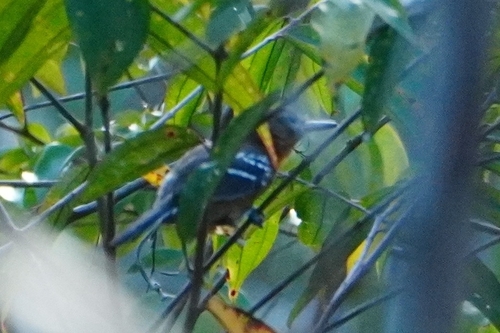 Amazonian Antshrike
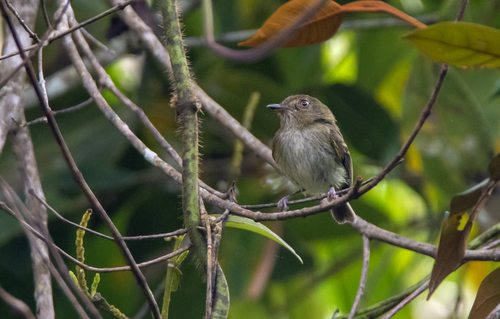 Yungas Tody-Tyrant
In short
The most reliable field mark to separate Amazonian Antshrike from Yungas Tody-Tyrant is overall structure: the antshrike is much larger and heavier-bodied, with a thick, hooked bill and strong, contrasting sexual dimorphism, while the tody-tyrant is tiny, compact, and has a flat, broad-based bill. In all plumages, the antshrike shows bold white spots and edges on the wings and tail (especially in males), while the tody-tyrant's wings are dark olive with only faint, indistinct yellowish wing bars. Females and immature antshrikes are rich rufous or olive below, never grayish-olive like the tody-tyrant. If you see a small, bushy-crested, olive bird with a pale belly and subtle wing bars, it's the tody-tyrant; a larger, heavy-billed, boldly patterned bird is the antshrike.
Identification tips
- Size and structure: The antshrike is nearly twice as heavy as the tody-tyrant, with a robust, broad-chested body and a thick, hooked bill. The tody-tyrant is tiny, compact, and has a flat, wide-based bill. If the bird looks small and delicate, it's likely the tody-tyrant.
- Bill shape: Amazonian Antshrike's bill is stout, deep, and hooked at the tip (shrike-like), ideal for tearing insects. Yungas Tody-Tyrant's bill is flat and broad at the base, more suited to flycatching.
- Sexual dimorphism: Only the antshrike shows strong differences between sexes: males are black/gray with bold white markings, females are rufous/olive. Tody-tyrant sexes look alike.
- Crown and crest: Tody-tyrant has a dark olive-green crown with a short, bushy crest (often raised). Antshrike males have a black or gray crown, females a bright rufous crown, but no bushy crest.
- Wing pattern: Antshrike (especially males) has bold white spots and edges on the wings and tail, visible both perched and in flight. Tody-tyrant has only faint, yellowish-olive wing bars—never any white.
- Tail pattern: Antshrike's tail is black with white tips and spots (males) or browner with pale edges (females). Tody-tyrant's tail is plain dark olive with no pale tips or spots.
- Underparts: Antshrike males are gray below; females are bright yellowish red-brown to buff. Tody-tyrant is grayish olive with faint whitish streaks and a clear yellowish-white belly—never rufous or buff like female antshrike.
- Face pattern: Tody-tyrant has grayish buff lores on an olive face; antshrike males have a black/gray face, females a rufous/olive face.
- Eye color: Tody-tyrant has a pale yellow iris; antshrike's eye color is not specified but is not a known field mark.
- Leg color: Tody-tyrant has pinkish gray to pinkish legs and feet; antshrike's leg color is not specified.
- Habitat and range: If in the Amazonian lowlands, expect antshrike; if in the Yungas of Bolivia/Peru, expect tody-tyrant.
- Behavior: Antshrike is methodical, often in pairs or mixed flocks, sometimes following ants. Tody-tyrant is likely more active and flycatcher-like.
- No white in wings/tail: If you see any white in the wings or tail, it's not the tody-tyrant.
- No sexual dimorphism: If both sexes look alike, it's the tody-tyrant; if male/female look very different, it's the antshrike.
- Plumage pitfalls: Female antshrikes can be confused with tody-tyrant due to olive/rufous tones, but always check for size, bill shape, and presence/absence of bold white in wings/tail.
Size
Amazonian Antshrike is significantly larger and heavier, measuring 14–15 cm in length and weighing 17–21 g. In contrast, Yungas Tody-Tyrant is much smaller at about 11 cm and only 7 g. The antshrike appears robust and broad-chested, while the tody-tyrant is petite, compact, and almost half the antshrike's mass. This size gap is obvious in the field, especially when seen side by side or compared to known reference species.
Plumage
- Juvenile/immature plumage: No specific notes on immature wing patterns for either species, but adult plumage is strongly diagnostic.
- Amazonian Antshrike: Adult males are black and gray above with bold white spots and edges on the wings and tail; females are bright rufous on the crown and underparts, with deep olive backs and browner wings/tail edged pale olive. Subspecies vary, but all show some combination of dark upperparts and contrasting pale or rufous underparts, with white in the wings/tail.
- Yungas Tody-Tyrant: Both sexes are similar. The crown is dark olive-green with a short, bushy crest; face is olive-green with grayish buff lores. Wings and tail are dark olive with two faint yellowish-olive wing bars. Underparts are grayish olive with faint whitish streaks and a clear yellowish-white belly. No bold white in wings or tail, and no sexual dimorphism.
- Key contrast: Antshrike (especially males) always shows bold white spots/edges on wings and tail, and strong sexual dimorphism; tody-tyrant is uniformly olive and grayish, with only subtle wing bars and no white in the wings/tail.
Behaviour
Amazonian Antshrike typically forages singly or in pairs, moving methodically through thickets and vine tangles, often joining mixed-species flocks or occasionally following army ants. It hops and lunges from perches, gleaning insects from foliage. Yungas Tody-Tyrant's behavior is not detailed here, but as a small tyrant flycatcher, it is likely to make quick sallies from low perches and show more flycatcher-like, agile movements. The antshrike's heavier build and slower, deliberate movements contrast with the likely more active, flitty behavior of the tody-tyrant.
Habitat
Amazonian Antshrike is widespread in lowland Amazonian forests across most of South America (except the southern cone), favoring dense thickets, vine tangles, and forest understory. Yungas Tody-Tyrant is restricted to the Yungas region of Bolivia and Peru, a montane forest habitat. Thus, range and habitat can be a strong clue: if you are in the Amazonian lowlands, expect antshrike; in humid Andean foothills (Yungas), expect tody-tyrant.