

Motmot

アマゾンアリモズ 対 ボリビアコビトドリモドキ

Thamnophilus amazonicus 対 Hemitriccus spodiops

アマゾンアリモズとボリビアコビトドリモドキのクイズ
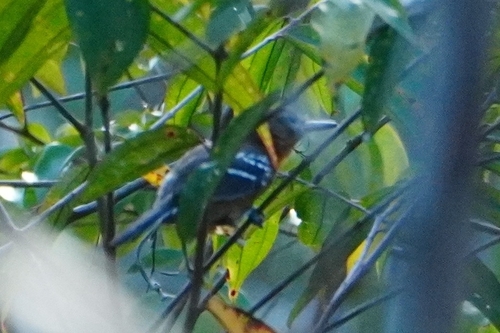
アマゾンアリモズ (Thamnophilus amazonicus) アマゾンアリモズ
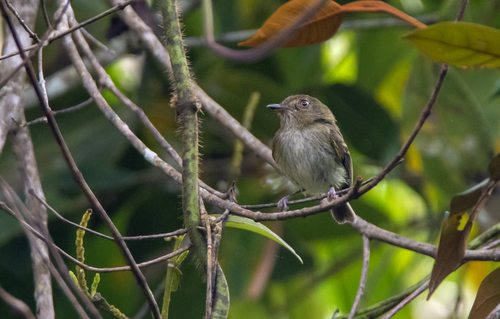
ボリビアコビトドリモドキ (Hemitriccus spodiops) ボリビアコビトドリモドキ

メディア

読み込み中…

要点

アマゾンアリモズとボリビアコビトドリモドキを区別する最も信頼できるフィールドマークは全体の構造です:アリモズははるかに大きく、体重も重く、太くてフック状のクチバシと強い対照的な性的二形性を持っています。一方、コビトドリモドキは小さく、コンパクトで、平らで広い基部のクチバシを持っています。すべての羽色において、アリモズは翼と尾に大胆な白い斑点と縁を示します(特にオスの場合)、一方コビトドリモドキの翼は暗いオリーブ色で、わずかに不明瞭な黄色い翼帯しかありません。雌や未熟なアリモズは豊かなルフスまたはオリーブ色の下部を持ち、決してコビトドリモドキのような灰色がかったオリーブ色ではありません。小さく、ふさふさした冠を持つオリーブ色の鳥で、淡い腹部と微妙な翼帯が見られた場合、それはコビトドリモドキです;より大きく、重いクチバシを持ち、はっきりとした模様の鳥はアリモズです。

識別のコツ

  1. Size and structure: アリモズはコビトドリモドキのほぼ2倍の重さで、頑丈で広い胸を持つ体と太くフック状のクチバシを持っています。コビトドリモドキは小さく、コンパクトで、平らで広い基部のクチバシを持っています。もしその鳥が小さくて繊細に見えるなら、それはおそらくコビトドリモドキです。
  2. Bill shape: アマゾンアリモズのクチバシは頑丈で深く、先端がフック状(モズのよう)で、昆虫を引き裂くのに理想的です。ボリビアコビトドリモドキのクチバシは平らで基部が広く、虫捕りにより適しています。
  3. Sexual dimorphism: アリモズだけが性別間に強い違いを示します:オスは黒/灰色で大胆な白い模様があり、雌はルフス/オリーブ色です。コビトドリモドキの性別は似ています。
  4. Crown and crest: コビトドリモドキは短くふさふさした冠を持つ暗いオリーブ緑の冠があります(しばしば立っています)。アリモズのオスは黒または灰色の冠を持ち、雌は明るいルフスの冠を持っていますが、ふさふさした冠はありません。
  5. Wing pattern: アリモズ(特にオス)は翼と尾に大胆な白い斑点と縁を持ち、止まっている時も飛んでいる時も見えます。コビトドリモドキはわずかに黄色がかったオリーブの翼帯しか持っておらず、白は決してありません。
  6. Tail pattern: アリモズの尾は黒で白い先端と斑点(オス)または淡い縁のある茶色(雌)です。コビトドリモドキの尾は平坦な暗いオリーブ色で、淡い先端や斑点はありません。
  7. Underparts: アリモズのオスは下部が灰色で、雌は明るい黄色がかった赤褐色からバフ色です。コビトドリモドキは灰色がかったオリーブ色で、わずかに白っぽい筋があり、明確な黄色がかった白い腹部を持っています—決してアリモズの雌のようなルフスやバフ色ではありません。
  8. Face pattern: コビトドリモドキはオリーブ色の顔に灰色がかったバフ色のロアがあります;アリモズのオスは黒/灰色の顔を持ち、雌はルフス/オリーブ色の顔を持っています。
  9. Eye color: コビトドリモドキは淡い黄色の虹彩を持っています;アリモズの目の色は指定されていませんが、知られているフィールドマークではありません。
  10. Leg color: コビトドリモドキはピンクがかった灰色からピンクがかった足を持っています;アリモズの足の色は指定されていません。
  11. Habitat and range: アマゾンの低地にいる場合はアリモズを期待してください;ボリビア/ペルーのユンガスにいる場合はコビトドリモドキを期待してください。
  12. Behavior: アリモズは体系的で、しばしばペアまたは混合群れで、時にはアリを追いかけます。コビトドリモドキはおそらくより活発で、虫捕りのような行動を示します。
  13. No white in wings/tail: 翼や尾に白が見られた場合、それはコビトドリモドキではありません。
  14. No sexual dimorphism: 両性が似ている場合、それはコビトドリモドキです;オスと雌が非常に異なる場合、それはアリモズです。
  15. Plumage pitfalls: 雌のアリモズはオリーブ/ルフスの色合いのためにコビトドリモドキと混同されることがありますが、常にサイズ、クチバシの形、翼/尾の大胆な白の有無を確認してください。

大きさ

アマゾンアリモズは明らかに大きく、重く、全長14〜15 cm、体重17〜21 gです。それに対して、ボリビアコビトドリモドキは約11 cmで、わずか7 gと非常に小さいです。アリモズは頑丈で広い胸を持っているように見えますが、コビトドリモドキは小柄でコンパクトで、アリモズの質量のほぼ半分です。このサイズの差はフィールドで明らかで、特に並んで見たり、既知の参照種と比較したりするときに顕著です。

羽色

行動

アマゾンアリモズは通常、単独またはペアで採餌し、茂みやつるの絡まりを体系的に移動し、しばしば混合種の群れに参加したり、時にはアリを追いかけたりします。止まっている場所から跳ねたり、突進したりして、葉から昆虫を集めます。ボリビアコビトドリモドキの行動はここでは詳しく述べられていませんが、小さなタイランチョウとして、低い止まり木から素早く飛び出し、より虫捕りのような敏捷な動きを示す可能性があります。アリモズの重い体型と遅くて慎重な動きは、おそらくより活発でひらひらしたコビトドリモドキの行動と対照的です。

生息環境

アマゾンアリモズは南アメリカのほとんどの低地アマゾンの森林に広く分布しており(南部のコーンを除く)、密な茂み、つるの絡まり、森林の下層を好みます。ボリビアコビトドリモドキはボリビアとペルーのユンガス地域に限定されており、山地の森林生息地です。したがって、分布と生息地は強い手がかりとなります:アマゾンの低地にいる場合はアリモズを期待してください;湿ったアンデスの山麓(ユンガス)にいる場合はコビトドリモドキを期待してください。

より良い説明を送る

比較と同じ項目を使ってください。文章はすぐに公開されます。

The most reliable field mark to separate Amazonian Antshrike from Yungas Tody-Tyrant is overall structure: the antshrike is much larger and heavier-bodied, with a thick, hooked bill and strong, contrasting sexual dimorphism, while the tody-tyrant is tiny, compact, and has a flat, broad-based bill. In all plumages, the antshrike shows bold white spots and edges on the wings and tail (especially in males), while the tody-tyrant's wings are dark olive with only faint, indistinct yellowish wing bars. Females and immature antshrikes are rich rufous or olive below, never grayish-olive like the tody-tyrant. If you see a small, bushy-crested, olive bird with a pale belly and subtle wing bars, it's the tody-tyrant; a larger, heavy-billed, boldly patterned bird is the antshrike.

  1. Size and structure: The antshrike is nearly twice as heavy as the tody-tyrant, with a robust, broad-chested body and a thick, hooked bill. The tody-tyrant is tiny, compact, and has a flat, wide-based bill. If the bird looks small and delicate, it's likely the tody-tyrant.
  2. Bill shape: Amazonian Antshrike's bill is stout, deep, and hooked at the tip (shrike-like), ideal for tearing insects. Yungas Tody-Tyrant's bill is flat and broad at the base, more suited to flycatching.
  3. Sexual dimorphism: Only the antshrike shows strong differences between sexes: males are black/gray with bold white markings, females are rufous/olive. Tody-tyrant sexes look alike.
  4. Crown and crest: Tody-tyrant has a dark olive-green crown with a short, bushy crest (often raised). Antshrike males have a black or gray crown, females a bright rufous crown, but no bushy crest.
  5. Wing pattern: Antshrike (especially males) has bold white spots and edges on the wings and tail, visible both perched and in flight. Tody-tyrant has only faint, yellowish-olive wing bars—never any white.
  6. Tail pattern: Antshrike's tail is black with white tips and spots (males) or browner with pale edges (females). Tody-tyrant's tail is plain dark olive with no pale tips or spots.
  7. Underparts: Antshrike males are gray below; females are bright yellowish red-brown to buff. Tody-tyrant is grayish olive with faint whitish streaks and a clear yellowish-white belly—never rufous or buff like female antshrike.
  8. Face pattern: Tody-tyrant has grayish buff lores on an olive face; antshrike males have a black/gray face, females a rufous/olive face.
  9. Eye color: Tody-tyrant has a pale yellow iris; antshrike's eye color is not specified but is not a known field mark.
  10. Leg color: Tody-tyrant has pinkish gray to pinkish legs and feet; antshrike's leg color is not specified.
  11. Habitat and range: If in the Amazonian lowlands, expect antshrike; if in the Yungas of Bolivia/Peru, expect tody-tyrant.
  12. Behavior: Antshrike is methodical, often in pairs or mixed flocks, sometimes following ants. Tody-tyrant is likely more active and flycatcher-like.
  13. No white in wings/tail: If you see any white in the wings or tail, it's not the tody-tyrant.
  14. No sexual dimorphism: If both sexes look alike, it's the tody-tyrant; if male/female look very different, it's the antshrike.
  15. Plumage pitfalls: Female antshrikes can be confused with tody-tyrant due to olive/rufous tones, but always check for size, bill shape, and presence/absence of bold white in wings/tail.

Amazonian Antshrike is significantly larger and heavier, measuring 14–15 cm in length and weighing 17–21 g. In contrast, Yungas Tody-Tyrant is much smaller at about 11 cm and only 7 g. The antshrike appears robust and broad-chested, while the tody-tyrant is petite, compact, and almost half the antshrike's mass. This size gap is obvious in the field, especially when seen side by side or compared to known reference species.

  • Juvenile/immature plumage: No specific notes on immature wing patterns for either species, but adult plumage is strongly diagnostic.
  • Amazonian Antshrike: Adult males are black and gray above with bold white spots and edges on the wings and tail; females are bright rufous on the crown and underparts, with deep olive backs and browner wings/tail edged pale olive. Subspecies vary, but all show some combination of dark upperparts and contrasting pale or rufous underparts, with white in the wings/tail.
  • Yungas Tody-Tyrant: Both sexes are similar. The crown is dark olive-green with a short, bushy crest; face is olive-green with grayish buff lores. Wings and tail are dark olive with two faint yellowish-olive wing bars. Underparts are grayish olive with faint whitish streaks and a clear yellowish-white belly. No bold white in wings or tail, and no sexual dimorphism.
  • Key contrast: Antshrike (especially males) always shows bold white spots/edges on wings and tail, and strong sexual dimorphism; tody-tyrant is uniformly olive and grayish, with only subtle wing bars and no white in the wings/tail.

Amazonian Antshrike typically forages singly or in pairs, moving methodically through thickets and vine tangles, often joining mixed-species flocks or occasionally following army ants. It hops and lunges from perches, gleaning insects from foliage. Yungas Tody-Tyrant's behavior is not detailed here, but as a small tyrant flycatcher, it is likely to make quick sallies from low perches and show more flycatcher-like, agile movements. The antshrike's heavier build and slower, deliberate movements contrast with the likely more active, flitty behavior of the tody-tyrant.

Amazonian Antshrike is widespread in lowland Amazonian forests across most of South America (except the southern cone), favoring dense thickets, vine tangles, and forest understory. Yungas Tody-Tyrant is restricted to the Yungas region of Bolivia and Peru, a montane forest habitat. Thus, range and habitat can be a strong clue: if you are in the Amazonian lowlands, expect antshrike; in humid Andean foothills (Yungas), expect tody-tyrant.

変更を破棄しますか?

保存していない編集があります。今離れると失われます。

アマゾンアリモズ · ボリビアコビトドリモドキ · 苦手な鳥