

Amazonian Antshrike vs Yungas Tody-Tyrant
Thamnophilus amazonicus contro Hemitriccus spodiops
Fai un quiz con Amazonian Antshrike e Yungas Tody-Tyrant
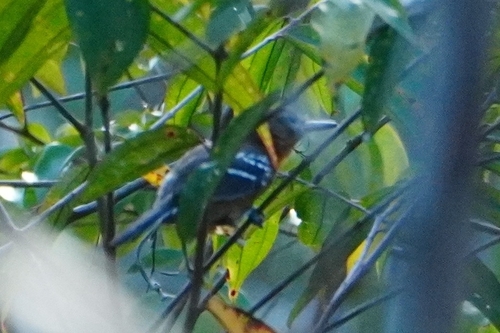 Amazonian Antshrike
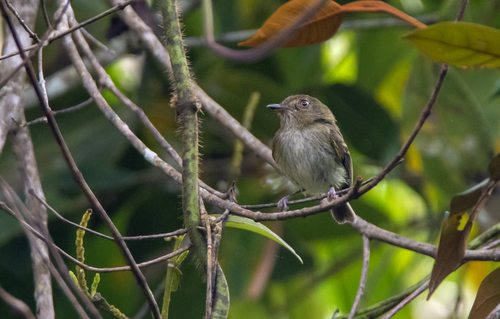 Yungas Tody-Tyrant
In breve
Il segno distintivo più affidabile per separare l'Amazonian Antshrike dallo Yungas Tody-Tyrant è la struttura complessiva: l'antshrike è molto più grande e pesante, con un becco spesso e ricurvo e un forte dimorfismo sessuale contrastante, mentre il tody-tyrant è piccolo, compatto e ha un becco piatto e a base larga. In tutte le livree, l'antshrike mostra macchie e bordi bianchi audaci sulle ali e sulla coda (soprattutto nei maschi), mentre le ali dello tody-tyrant sono di un verde oliva scuro con solo deboli e indistinte barre alari giallastre. Le femmine e gli antshrike immaturi sono di un ricco color ruggine o oliva sotto, mai grigio-oliva come lo tody-tyrant. Se vedi un piccolo uccello con cresta cespugliosa, oliva, con un ventre chiaro e barre alari sottili, è lo tody-tyrant; un uccello più grande, con un becco pesante e un motivo audace è l'antshrike.
Consigli di identificazione
- Dimensioni e struttura: L'antshrike è quasi due volte più pesante dello tody-tyrant, con un corpo robusto e torace largo e un becco spesso e ricurvo. Lo tody-tyrant è piccolo, compatto e ha un becco piatto e a base larga. Se l'uccello sembra piccolo e delicato, è probabile che sia lo tody-tyrant.
- Forma del becco: Il becco dell'Amazonian Antshrike è robusto, profondo e ricurvo all'estremità (simile a un'averla), ideale per strappare insetti. Il becco dello Yungas Tody-Tyrant è piatto e largo alla base, più adatto per catturare insetti in volo.
- Dimorfismo sessuale: Solo l'antshrike mostra forti differenze tra i sessi: i maschi sono neri/grigi con marcature bianche audaci, le femmine sono ruggine/olive. I sessi dello tody-tyrant si somigliano.
- Corona e cresta: Lo tody-tyrant ha una corona verde oliva scuro con una breve cresta cespugliosa (spesso sollevata). I maschi dell'antshrike hanno una corona nera o grigia, le femmine una corona ruggine brillante, ma senza cresta cespugliosa.
- Motivo delle ali: L'antshrike (soprattutto i maschi) ha macchie e bordi bianchi audaci sulle ali e sulla coda, visibili sia in posizione perpendicolare che in volo. Lo tody-tyrant ha solo deboli barre alari giallastre-olive—mai bianco.
- Motivo della coda: La coda dell'antshrike è nera con punte e macchie bianche (maschi) o più marrone con bordi chiari (femmine). La coda dello tody-tyrant è di un semplice verde oliva scuro senza punte o macchie chiare.
- Parte inferiore: I maschi dell'antshrike sono grigi sotto; le femmine sono di un brillante rosso-marrone giallastro a buff. Lo tody-tyrant è grigio-oliva con deboli striature bianche e un chiaro ventre giallo-bianco—mai ruggine o buff come la femmina dell'antshrike.
- Motivo del viso: Lo tody-tyrant ha lore grigio-buff su un viso oliva; i maschi dell'antshrike hanno un viso nero/grigio, le femmine un viso ruggine/oliva.
- Colore degli occhi: Lo tody-tyrant ha un'iride giallo pallido; il colore degli occhi dell'antshrike non è specificato ma non è un segno distintivo noto.
- Colore delle zampe: Lo tody-tyrant ha zampe e piedi grigio-rosati a rosa; il colore delle zampe dell'antshrike non è specificato.
- Habitat e distribuzione: Se sei nelle pianure amazzoniche, aspettati l'antshrike; se sei nelle Yungas della Bolivia/Perù, aspettati lo tody-tyrant.
- Comportamento: L'antshrike è metodico, spesso in coppie o stormi misti, a volte seguendo le formiche. Lo tody-tyrant è probabilmente più attivo e simile a un catturatore di insetti.
- Nessun bianco nelle ali/nella coda: Se vedi del bianco nelle ali o nella coda, non è lo tody-tyrant.
- Nessun dimorfismo sessuale: Se entrambi i sessi si somigliano, è lo tody-tyrant; se maschio/femmina sembrano molto diversi, è l'antshrike.
- Trappole della livrea: Le femmine dell'antshrike possono essere confuse con lo tody-tyrant a causa delle tonalità olive/ruggine, ma controlla sempre le dimensioni, la forma del becco e la presenza/assenza di bianco audace nelle ali/nella coda.
Taglia
L'Amazonian Antshrike è significativamente più grande e pesante, misurando 14–15 cm di lunghezza e pesando 17–21 g. Al contrario, lo Yungas Tody-Tyrant è molto più piccolo, circa 11 cm e solo 7 g. L'antshrike appare robusto e con un torace largo, mentre lo tody-tyrant è minuto, compatto e quasi la metà della massa dell'antshrike. Questa differenza di dimensioni è evidente sul campo, soprattutto quando visti fianco a fianco o confrontati con specie di riferimento conosciute.
Piumaggio
- Livrea giovanile/immatura: Nessuna nota specifica sui motivi delle ali immaturi per entrambe le specie, ma la livrea adulta è fortemente diagnostica.
- Amazonian Antshrike: I maschi adulti sono neri e grigi sopra con macchie e bordi bianchi audaci sulle ali e sulla coda; le femmine sono di un brillante ruggine sulla corona e sulle parti inferiori, con schiene di un profondo oliva e ali/coda marroni bordate di oliva chiaro. Le sottospecie variano, ma tutte mostrano una combinazione di parti superiori scure e parti inferiori chiare o ruggine contrastanti, con bianco nelle ali/nella coda.
- Yungas Tody-Tyrant: Entrambi i sessi sono simili. La corona è verde oliva scuro con una breve cresta cespugliosa; il viso è verde oliva con lore grigio-buff. Le ali e la coda sono di un verde oliva scuro con due deboli barre alari giallastre-olive. Le parti inferiori sono grigio-olive con deboli striature bianche e un chiaro ventre giallo-bianco. Nessun bianco audace nelle ali o nella coda, e nessun dimorfismo sessuale.
- Contrasto chiave: L'antshrike (soprattutto i maschi) mostra sempre macchie/bordi bianchi audaci sulle ali e sulla coda, e un forte dimorfismo sessuale; lo tody-tyrant è uniformemente oliva e grigio, con solo barre alari sottili e nessun bianco nelle ali/nella coda.
Comportamento
L'Amazonian Antshrike di solito cerca cibo da solo o in coppie, muovendosi metodicamente attraverso cespugli e grovigli di viti, spesso unendosi a stormi misti di specie o occasionalmente seguendo formiche soldato. Salta e si lancia da posatoi, raccogliendo insetti dalla vegetazione. Il comportamento dello Yungas Tody-Tyrant non è dettagliato qui, ma come piccolo catturatore di insetti, è probabile che faccia rapide sortite da posatoi bassi e mostri movimenti più agili e simili a quelli di un catturatore di insetti. La costruzione più pesante dell'antshrike e i suoi movimenti più lenti e deliberati contrastano con il comportamento probabilmente più attivo e frenetico dello tody-tyrant.
Habitat
L'Amazonian Antshrike è diffuso nelle foreste amazzoniche di pianura in gran parte del Sud America (eccetto il cono meridionale), preferendo cespugli densi, grovigli di viti e sottobosco forestale. Lo Yungas Tody-Tyrant è ristretto alla regione delle Yungas in Bolivia e Perù, un habitat forestale montano. Pertanto, la distribuzione e l'habitat possono essere un forte indizio: se sei nelle pianure amazzoniche, aspettati l'antshrike; nelle umide pendici andine (Yungas), aspettati lo tody-tyrant.
Amazonian Antshrike · Yungas Tody-Tyrant · I miei uccelli difficili