

Batará Amazónico vs Titirijí Boliviano
Thamnophilus amazonicus frente a Hemitriccus spodiops
Juega un quiz con Batará Amazónico y Titirijí Boliviano
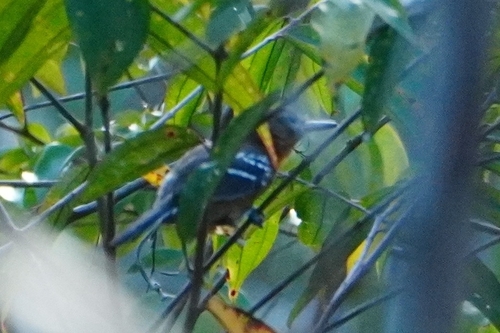 Batará Amazónico
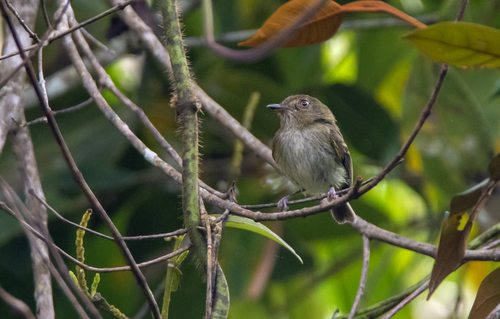 Titirijí Boliviano
En breve
La marca de campo más confiable para separar el Batará Amazónico del Titirijí Boliviano es la estructura general: el batará es mucho más grande y pesado, con un pico grueso y curvado y un fuerte dimorfismo sexual contrastante, mientras que el titirijí es diminuto, compacto y tiene un pico plano y de base ancha. En todos los plumajes, el batará muestra manchas y bordes blancos audaces en las alas y la cola (especialmente en los machos), mientras que las alas del titirijí son de un verde oliva oscuro con solo débiles y difusos listones amarillentos. Las hembras y los batarás inmaduros son de un rico color rufo o oliva por debajo, nunca grisáceo-oliva como el titirijí. Si ves un pájaro pequeño, con cresta arbustiva y de color oliva con un vientre pálido y sutiles listones en las alas, es el titirijí; un pájaro más grande, con un pico grueso y un patrón audaz es el batará.
Consejos de identificación
- Tamaño y estructura: El batará es casi el doble de pesado que el titirijí, con un cuerpo robusto y de pecho ancho y un pico grueso y curvado. El titirijí es diminuto, compacto y tiene un pico plano y de base ancha. Si el pájaro parece pequeño y delicado, es probable que sea el titirijí.
- Forma del pico: El pico del Batará Amazónico es robusto, profundo y curvado en la punta (similar a un alcaudón), ideal para desgarrar insectos. El pico del Titirijí Boliviano es plano y ancho en la base, más adecuado para atrapar insectos en vuelo.
- Dimorfismo sexual: Solo el batará muestra fuertes diferencias entre los sexos: los machos son negros/grises con marcas blancas audaces, las hembras son rufo/oliva. Los sexos del titirijí se parecen.
- Cresta y corona: El titirijí tiene una corona verde oliva oscura con una cresta corta y arbustiva (a menudo erguida). Los machos del batará tienen una corona negra o gris, las hembras una corona rufo brillante, pero sin cresta arbustiva.
- Patrón de alas: El batará (especialmente los machos) tiene manchas y bordes blancos audaces en las alas y la cola, visibles tanto posados como en vuelo. El titirijí tiene solo débiles listones amarillentos-oliva en las alas—nunca blanco.
- Patrón de cola: La cola del batará es negra con puntas y manchas blancas (machos) o más marrón con bordes pálidos (hembras). La cola del titirijí es de un oscuro oliva uniforme sin puntas o manchas pálidas.
- Partes inferiores: Los machos del batará son grises por debajo; las hembras son de un brillante color rufo marrón amarillento a beige. El titirijí es de un oliva grisáceo con débiles estrías blanquecinas y un vientre amarillo-blanquecino claro—nunca rufo o beige como la hembra del batará.
- Patrón facial: El titirijí tiene lore grisáceo-beige en una cara oliva; los machos del batará tienen una cara negra/gris, las hembras una cara rufo/oliva.
- Color de ojos: El titirijí tiene un iris amarillo pálido; el color de los ojos del batará no está especificado pero no es una marca de campo conocida.
- Color de patas: El titirijí tiene patas y pies de un gris rosado a rosado; el color de las patas del batará no está especificado.
- Hábitat y rango: Si estás en las tierras bajas amazónicas, espera ver el batará; si estás en los Yungas de Bolivia/Perú, espera ver el titirijí.
- Comportamiento: El batará es metódico, a menudo en parejas o bandadas mixtas, a veces siguiendo a las hormigas. El titirijí es probablemente más activo y similar a un atrapamoscas.
- Sin blanco en alas/cola: Si ves algún blanco en las alas o la cola, no es el titirijí.
- Sin dimorfismo sexual: Si ambos sexos se parecen, es el titirijí; si el macho/la hembra se ven muy diferentes, es el batará.
- Trampas de plumaje: Las hembras del batará pueden confundirse con el titirijí debido a los tonos oliva/rufo, pero siempre verifica el tamaño, la forma del pico y la presencia/ausencia de blanco audaz en las alas/cola.
Tamaño
El Batará Amazónico es significativamente más grande y pesado, midiendo 14–15 cm de longitud y pesando 17–21 g. En contraste, el Titirijí Boliviano es mucho más pequeño, con aproximadamente 11 cm y solo 7 g. El batará parece robusto y de pecho ancho, mientras que el titirijí es pequeño, compacto y casi la mitad de la masa del batará. Esta diferencia de tamaño es obvia en el campo, especialmente cuando se ve uno al lado del otro o se compara con especies de referencia conocidas.
Plumaje
- Plumaje juvenil/inmaduro: No hay notas específicas sobre los patrones de alas inmaduros para ninguna de las especies, pero el plumaje adulto es fuertemente diagnóstico.
- Batará Amazónico: Los machos adultos son negros y grises por encima con manchas y bordes blancos audaces en las alas y la cola; las hembras son de un brillante color rufo en la corona y partes inferiores, con espaldas de un profundo color oliva y alas/cola más marrones con bordes de un oliva pálido. Las subespecies varían, pero todas muestran alguna combinación de partes superiores oscuras y partes inferiores contrastantes pálidas o rufas, con blanco en las alas/cola.
- Titirijí Boliviano: Ambos sexos son similares. La corona es de un verde oliva oscuro con una cresta corta y arbustiva; la cara es verde oliva con lore grisáceo-beige. Las alas y la cola son de un oscuro oliva con dos débiles listones amarillentos-oliva. Las partes inferiores son de un oliva grisáceo con débiles estrías blanquecinas y un vientre amarillo-blanquecino claro. No hay blanco audaz en las alas o la cola, y no hay dimorfismo sexual.
- Contraste clave: El batará (especialmente los machos) siempre muestra manchas/bordes blancos audaces en las alas y la cola, y un fuerte dimorfismo sexual; el titirijí es uniformemente oliva y grisáceo, con solo sutiles listones en las alas y sin blanco en las alas/cola.
Comportamiento
El Batará Amazónico típicamente busca alimento solo o en parejas, moviéndose metódicamente a través de matorrales y enredos de lianas, a menudo uniéndose a bandadas de especies mixtas o siguiendo ocasionalmente a hormigas. Salta y se lanza desde posaderos, recogiendo insectos de la vegetación. El comportamiento del Titirijí Boliviano no se detalla aquí, pero como un pequeño atrapamoscas tirano, es probable que realice rápidas emboscadas desde posaderos bajos y muestre movimientos más ágiles y similares a los de un atrapamoscas. La construcción más pesada del batará y sus movimientos más lentos y deliberados contrastan con el comportamiento probablemente más activo y ligero del titirijí.
Hábitat
El Batará Amazónico es común en los bosques amazónicos de tierras bajas en la mayor parte de América del Sur (excepto el cono sur), favoreciendo matorrales densos, enredos de lianas y el sotobosque del bosque. El Titirijí Boliviano está restringido a la región de los Yungas de Bolivia y Perú, un hábitat de bosque montano. Por lo tanto, el rango y el hábitat pueden ser una pista fuerte: si estás en las tierras bajas amazónicas, espera ver el batará; en las húmedas laderas andinas (Yungas), espera ver el titirijí.