

choca-canela vs yungas tody-tyrant
Thamnophilus amazonicus versus Hemitriccus spodiops
Jogue um quiz com choca-canela e yungas tody-tyrant
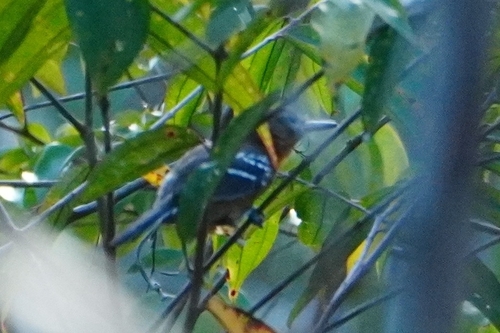 choca-canela
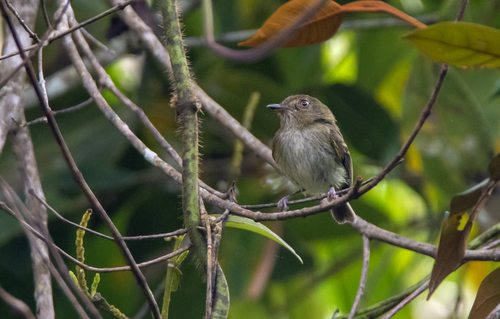 yungas tody-tyrant
Em resumo
A marca de campo mais confiável para separar choca-canela de yungas tody-tyrant é a estrutura geral: a choca-canela é muito maior e mais robusta, com um bico grosso e curvado e um forte dimorfismo sexual contrastante, enquanto o yungas tody-tyrant é pequeno, compacto e tem um bico plano e de base larga. Em todas as plumagens, a choca-canela apresenta manchas e bordas brancas ousadas nas asas e na cauda (especialmente nos machos), enquanto as asas do yungas tody-tyrant são de um verde oliva escuro com apenas barras de asas amarelas pálidas e indistintas. Fêmeas e imaturos de choca-canela são de um rico tom ruivo ou oliva na parte inferior, nunca cinza-oliva como o yungas tody-tyrant. Se você ver um pássaro pequeno, com crista espessa e oliva, com um ventre pálido e barras de asas sutis, é o yungas tody-tyrant; um pássaro maior, de bico pesado e com padrão ousado é a choca-canela.
Dicas de identificação
- Tamanho e estrutura: A choca-canela é quase duas vezes mais pesada que o yungas tody-tyrant, com um corpo robusto e peitoral largo e um bico grosso e curvado. O yungas tody-tyrant é pequeno, compacto e tem um bico plano e de base larga. Se o pássaro parecer pequeno e delicado, provavelmente é o yungas tody-tyrant.
- Formato do bico: O bico da choca-canela é robusto, profundo e curvado na ponta (semelhante a um gavião), ideal para rasgar insetos. O bico do yungas tody-tyrant é plano e largo na base, mais adequado para pegar insetos em voo.
- Dimorfismo sexual: Apenas a choca-canela apresenta diferenças marcantes entre os sexos: os machos são pretos/cinzas com marcas brancas ousadas, enquanto as fêmeas são ruivas/olivas. Os sexos do yungas tody-tyrant são semelhantes.
- Coroa e crista: O yungas tody-tyrant tem uma coroa verde oliva escura com uma crista curta e espessa (frequentemente erguida). Os machos da choca-canela têm uma coroa preta ou cinza, enquanto as fêmeas têm uma coroa ruiva brilhante, mas sem crista espessa.
- Padrão das asas: A choca-canela (especialmente os machos) tem manchas e bordas brancas ousadas nas asas e na cauda, visíveis tanto empoleirados quanto em voo. O yungas tody-tyrant tem apenas barras de asas amarelas pálidas e indistintas—nunca branco.
- Padrão da cauda: A cauda da choca-canela é preta com pontas e manchas brancas (machos) ou mais marrons com bordas pálidas (fêmeas). A cauda do yungas tody-tyrant é simplesmente de um verde oliva escuro, sem pontas ou manchas pálidas.
- Parte inferior: Os machos da choca-canela são cinzas na parte inferior; as fêmeas são de um vermelho-amarelado brilhante a buff. O yungas tody-tyrant é de um oliva cinza com listras brancas pálidas e uma barriga amarelada clara—nunca ruiva ou buff como a fêmea da choca-canela.
- Padrão do rosto: O yungas tody-tyrant tem lore cinza-buff em um rosto oliva; os machos da choca-canela têm um rosto preto/cinza, as fêmeas um rosto ruivo/oliva.
- Cor dos olhos: O yungas tody-tyrant tem uma íris amarela pálida; a cor dos olhos da choca-canela não é especificada, mas não é uma marca de campo conhecida.
- Cor das pernas: O yungas tody-tyrant tem pernas e pés cinza rosado a rosa; a cor das pernas da choca-canela não é especificada.
- Habitat e distribuição: Se estiver nas terras baixas amazônicas, espere encontrar a choca-canela; se estiver nos Yungas da Bolívia/Peru, espere encontrar o yungas tody-tyrant.
- Comportamento: A choca-canela é metódica, frequentemente em pares ou bandos mistos, às vezes seguindo formigas. O yungas tody-tyrant é provavelmente mais ativo e semelhante a um pega-insetos.
- Sem branco nas asas/cauda: Se você ver qualquer branco nas asas ou na cauda, não é o yungas tody-tyrant.
- Sem dimorfismo sexual: Se ambos os sexos parecerem semelhantes, é o yungas tody-tyrant; se macho/fêmea parecerem muito diferentes, é a choca-canela.
- Armadilhas de plumagem: As fêmeas da choca-canela podem ser confundidas com o yungas tody-tyrant devido aos tons oliva/ruivos, mas sempre verifique o tamanho, formato do bico e a presença/ausência de branco ousado nas asas/cauda.
Tamanho
A choca-canela é significativamente maior e mais pesada, medindo 14–15 cm de comprimento e pesando 17–21 g. Em contraste, o yungas tody-tyrant é muito menor, com cerca de 11 cm e apenas 7 g. A choca-canela parece robusta e de peito largo, enquanto o yungas tody-tyrant é pequeno, compacto e quase metade da massa da choca-canela. Essa diferença de tamanho é óbvia em campo, especialmente quando vistas lado a lado ou comparadas a espécies de referência conhecidas.
Plumagem
- Plumagem juvenil/imatura: Não há notas específicas sobre padrões de asas imaturas para ambas as espécies, mas a plumagem adulta é fortemente diagnóstica.
- Choca-canela: Os machos adultos são pretos e cinzas na parte superior com manchas e bordas brancas ousadas nas asas e na cauda; as fêmeas são ruivas brilhantes na coroa e na parte inferior, com costas de um oliva profundo e asas/cauda marrons com bordas de oliva pálida. As subespécies variam, mas todas mostram alguma combinação de partes superiores escuras e partes inferiores contrastantes pálidas ou ruivas, com branco nas asas/cauda.
- Yungas Tody-Tyrant: Ambos os sexos são semelhantes. A coroa é verde oliva escura com uma crista curta e espessa; o rosto é verde oliva com lore cinza-buff. As asas e a cauda são de um verde oliva escuro com duas barras de asas amarelas pálidas. As partes inferiores são de um oliva cinza com listras brancas pálidas e uma barriga amarelada clara. Não há branco ousado nas asas ou na cauda, e não há dimorfismo sexual.
- Contraste chave: A choca-canela (especialmente os machos) sempre mostra manchas/bordas brancas ousadas nas asas e na cauda, e um forte dimorfismo sexual; o yungas tody-tyrant é uniformemente oliva e cinza, com apenas barras de asas sutis e sem branco nas asas/cauda.
Comportamento
A choca-canela geralmente forrageia sozinha ou em pares, movendo-se metódica através de arbustos e emaranhados de cipós, frequentemente juntando-se a bandos de espécies mistas ou ocasionalmente seguindo formigas. Ela salta e se lança de poleiros, coletando insetos da folhagem. O comportamento do yungas tody-tyrant não é detalhado aqui, mas como um pequeno pega-insetos tirano, é provável que faça rápidas investidas de poleiros baixos e mostre movimentos mais ágeis e semelhantes a um pega-insetos. A construção mais pesada da choca-canela e seus movimentos mais lentos e deliberados contrastam com o comportamento provavelmente mais ativo e ágil do yungas tody-tyrant.
Habitat
A choca-canela é amplamente distribuída em florestas de baixa altitude da Amazônia em grande parte da América do Sul (exceto o cone sul), favorecendo arbustos densos, emaranhados de cipós e o sub-bosque da floresta. O yungas tody-tyrant é restrito à região dos Yungas na Bolívia e no Peru, um habitat de floresta montana. Assim, a distribuição e o habitat podem ser uma forte pista: se você estiver nas terras baixas amazônicas, espere encontrar a choca-canela; nas encostas úmidas dos Andes (Yungas), espere encontrar o yungas tody-tyrant.