

Alder Flycatcher vs Asian Brown Flycatcher
Empidonax alnorum versus Muscicapa dauurica
Play a quiz with Alder Flycatcher and Asian Brown Flycatcher
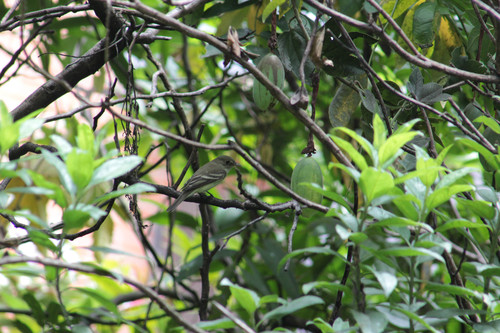 Alder Flycatcher
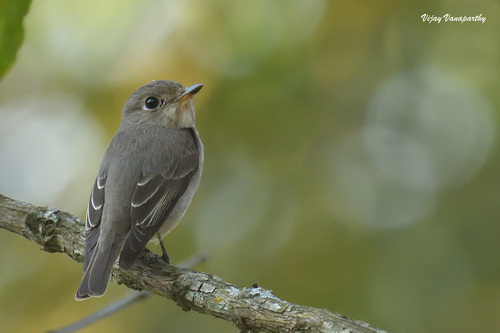 Asian Brown Flycatcher
In short
The most reliable field mark between Alder Flycatcher and Asian Brown Flycatcher is the wing and upperpart coloration in juveniles and the structure of the bill and face in adults. Juvenile Alder Flycatchers show brownish upperparts and yellowish-buff wingbars, while juvenile Asian Brown Flycatchers have scaly brown upperparts and a more mottled breast. Adults can be separated by the Alder Flycatcher's olive-green tones and strong white wingbars versus the Asian Brown Flycatcher's plainer grey-brown upperparts and more subdued wing markings. Bill color and shape, as well as subtle differences in face pattern, are also useful, especially at close range. Voice is a clincher in the field if heard.
Identification tips
- Juvenile/First-winter wing and upperpart pattern: Look for brownish upperparts and crisp, yellowish-buff wingbars in young Alder Flycatcher; Asian Brown Flycatcher juveniles are scaly brown above and on the breast, with much less distinct wingbars.
- Adult wingbars: Alder Flycatcher adults have strong, white wingbars and white-edged tertials; Asian Brown Flycatcher adults have much fainter wingbars and less contrast on the wing.
- Upperpart color: Alder Flycatcher is olive-greenish above, especially fresh adults; Asian Brown Flycatcher is grey-brown to brown, lacking olive tones, and may appear plainer overall.
- Face pattern: Alder Flycatcher shows thin white eye-rings and a more contrasting face; Asian Brown Flycatcher has a plainer face, with less obvious spectacles and a more diffuse eye-ring, especially in the poonensis subspecies.
- Bill color and shape: Alder Flycatcher has a broad-based bill with a pinkish or yellow-orange lower mandible and black upper mandible; Asian Brown Flycatcher has a relatively large, broad-based, but darker bill, sometimes with a pale lower mandible in some populations.
- Throat and breast: Alder Flycatcher has a white throat with a darker breast band; Asian Brown Flycatcher has a whitish throat and underparts, but the breast and flanks are tinged brown and may be mottled in juveniles.
- Tail and jizz: Alder Flycatcher is slightly shorter-tailed and often flicks its tail upward; Asian Brown Flycatcher is longer-tailed, more slender, and does not flick its tail in the same way.
- Perched posture: Alder Flycatcher often sits more horizontally and low in vegetation; Asian Brown Flycatcher perches more upright and often higher up.
- Habitat context: Alder Flycatcher is found in wet, shrubby thickets, usually low down; Asian Brown Flycatcher prefers open woodland, edge, or parkland, and is a rare vagrant in North America.
- Vocalizations: Alder Flycatcher's 'fee-bee-o' song and sharp 'pit' call are diagnostic; Asian Brown Flycatcher is much quieter and lacks these vocalizations.
- Primary projection/wing formula: In the hand or in good photos, Alder Flycatcher can be separated from other Empidonax by primary feather ratios, but this is not useful for Asian Brown Flycatcher, which is not an Empidonax.
- Sex and season: No strong sexual dimorphism in either species; focus on age-related plumage for separation.
- Pitfalls: Do not rely on size alone, as both are similar; beware of dull-plumaged Alder Flycatchers appearing plain, but the combination of olive tones, strong wingbars, and tail flicking is distinctive.
- Geographic context: If seen in North America, Asian Brown Flycatcher is extremely rare; in Eurasia, Alder Flycatcher does not occur.
- When in doubt: If you hear the song, identification is straightforward. If silent, focus on juvenile plumage and wingbar strength, bill color, and habitat.
Size
Both species are similar in length, with Alder Flycatcher at 13–17 cm and Asian Brown Flycatcher at about 13 cm [wikipedia][avonet]. Alder Flycatcher is slightly heavier (12–14 g) and has a broader wingspan (21–24 cm) compared to Asian Brown Flycatcher (wingspan not specified, but generally more slender and longer-tailed in appearance). In the field, size alone is not reliable for separation.
Plumage
-
Juvenile/First-winter: Alder Flycatcher juveniles have brownish upperparts, yellow underparts, and yellowish-buff wingbars. Asian Brown Flycatcher juveniles show scaly brown upperparts, head, and breast, lacking the strong wingbars of Alder. The Asian Brown's breast and flanks are more mottled, and the overall impression is plainer and more diffuse than the crisp, buffy wingbars of young Alder.
-
Adult: Alder Flycatcher adults are dull greenish-olive above with a slightly darker crown, white throat, and a darker breast band. They have distinct white wingbars and white-edged tertials. Asian Brown Flycatcher adults are grey-brown above (becoming greyer with age), with whitish underparts and brown-tinged flanks. Their wingbars are much less contrasting, and the face is plainer, with less obvious eye-rings and spectacles than Alder. Bill color differs: Alder has a pinkish or yellow-orange lower mandible, while Asian Brown's bill is darker, sometimes with a pale lower mandible in some subspecies.
Behaviour
Alder Flycatcher is known for its upward tail flicking, especially when singing or agitated, a behavior not typical of Asian Brown Flycatcher. Asian Brown Flycatcher often perches upright and can appear more slender and longer-tailed, sometimes flicking its wings but not its tail. Alder Flycatcher is more likely to be seen in dense, wet thickets, often low in vegetation, while Asian Brown Flycatcher may be found in more open woodland or edge habitats, often higher up.
Habitat
Alder Flycatcher breeds in wet thickets, especially those dominated by alder, birch, or maple, and is usually found low in shrubby, damp areas. Asian Brown Flycatcher is more typical of open woodland, forest edge, or parks, and is not tied to wet thickets. If seen in North America, Asian Brown Flycatcher is a rare vagrant, usually in open or edge habitats, while Alder is a regular breeder in the right habitat.
Voice
Alder Flycatcher has a distinctive, sharp 'fee-bee-o' song and a variety of calls, including a 'pit' note and several aggressive or excitement calls. These vocalizations are diagnostic and are not matched by Asian Brown Flycatcher, which has a much softer, less distinctive song and is generally quieter. If you hear an Empidonax-like song, you are almost certainly dealing with Alder Flycatcher.