

African Penduline Tit vs Southern Penduline Tit
Anthoscopus caroli versus Anthoscopus minutus
Play a quiz with African Penduline Tit and Southern Penduline Tit
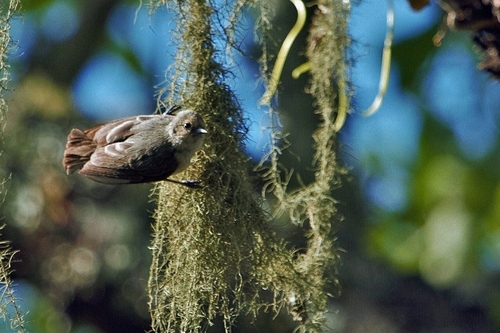 African Penduline Tit
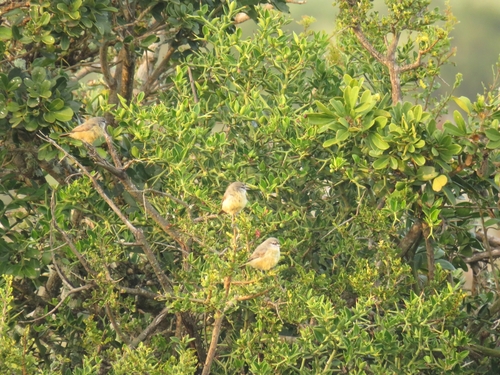 Southern Penduline Tit
In short
The most reliable way to separate African Penduline Tit from Southern Penduline Tit is by their habitat and range: African Penduline Tit is widespread in eastern and central Africa and uses a broader range of wooded and savanna habitats, while Southern Penduline Tit is more restricted to southern Africa and prefers dry shrubland and Mediterranean-type vegetation. In the field, both species are tiny and similar in overall jizz, so confusion is common, especially outside their core ranges. Structural and plumage differences are subtle and not well documented in the available notes, so context and location are often your best clues. If you encounter a penduline tit in dry, shrubby habitats in southern Africa, Southern Penduline Tit is more likely; in moister savanna or woodland, especially further north or east, African Penduline Tit is favored.
Identification tips
- Check your location first: If you are north or east of Namibia, Botswana, or Zimbabwe, African Penduline Tit is far more likely; Southern Penduline Tit is largely absent from these areas.
- Habitat context is key: Southern Penduline Tit prefers dry shrubland and Mediterranean-type vegetation, while African Penduline Tit is found in a wider range of habitats, including moister savanna and woodland.
- Range overlap is limited: Both species occur in Angola, Botswana, Namibia, South Africa, and Zimbabwe, but outside these countries, only African Penduline Tit is expected.
- No reliable size difference: Both species are tiny and similar in structure; do not attempt to separate them by size in the field.
- Plumage is not diagnostic in the field: No distinctive age-specific wing or body plumage marks are described in the available notes. Both are typical penduline tits in appearance.
- Behavior is not a separator: Both species are likely to be active, acrobatic foragers, often seen in pairs or small groups.
- If in doubt, use habitat and range: In areas of overlap, prioritize habitat type and local abundance based on region.
- Voice not described here: Do not rely on vocalizations for separation unless you have access to local recordings or guides.
- Season and sex are not helpful: No seasonal or sexual plumage differences are described that aid separation.
- **If you see a penduline tit in dry, shrubby southern African habitats, lean toward Southern Penduline Tit; in moister or more wooded areas, especially outside southern Africa, African Penduline Tit is the default.
- In mixed habitat or ambiguous locations, be cautious: Without clear habitat or range cues, identification may not be possible from field views alone.
- Consult local checklists: eBird or local guides may provide abundance clues for your specific site.
- Photograph for expert review: If you are unsure, document the bird and seek local expertise, as subtle differences may not be visible in the field.
Size
Both species are among the smallest African passerines and are very similar in size and structure. The available sources do not provide distinguishing measurements or mass differences between African Penduline Tit and Southern Penduline Tit. Expect both to appear tiny, short-tailed, and delicate, with no reliable size difference in the field.
Plumage
There is no detailed, age-specific plumage or wing pattern information in the provided notes for either species. Both are described as typical penduline tits, with subtle differences not elaborated here. No juvenile or immature upperwing marks are mentioned, so field separation by plumage alone is not supported by these sources.
Behaviour
Behavioral differences are not described in the available notes. Both species are likely to behave similarly, foraging actively in small groups or pairs, often hanging from branches or gleaning insects, as is typical for penduline tits.
Habitat
Habitat is the most useful separation feature in the field. African Penduline Tit occupies a wide range across eastern, central, and southern Africa, using subtropical or tropical dry forests, dry savanna, and moist savanna. Southern Penduline Tit is more restricted to southern Africa (Angola, Botswana, Namibia, South Africa, Zimbabwe) and prefers dry savannah, subtropical or tropical dry shrubland, and Mediterranean-type shrubby vegetation. If you are in a dry, shrubby, or Mediterranean-type area in southern Africa, Southern Penduline Tit is more likely; in moister or more wooded savanna, especially north or east of southern Africa, African Penduline Tit is the better bet.
African Penduline Tit · Southern Penduline Tit · My Tricky Birds