

yellow-bellied flycatcher vs hammond's flycatcher
Empidonax flaviventris versus Empidonax hammondii
Jogue um quiz com yellow-bellied flycatcher e hammond's flycatcher
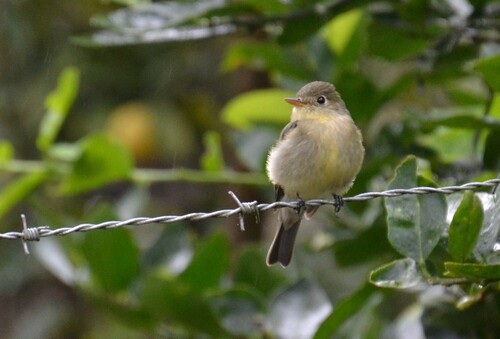 yellow-bellied flycatcher
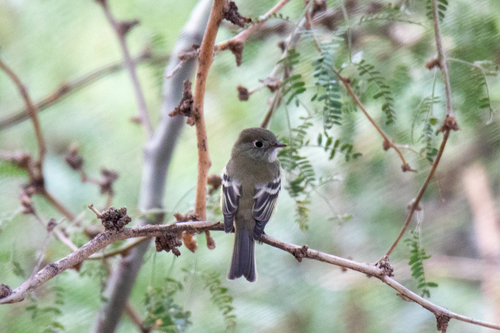 hammond's flycatcher
Em resumo
A marca de campo mais confiável entre o papa-mosquitos-pequeno e o hammond's flycatcher é a cor geral das partes inferiores: o papa-mosquitos-pequeno apresenta partes inferiores distintamente amareladas (especialmente na garganta e no ventre), enquanto o hammond's é muito mais branco embaixo, com apenas um leve tom amarelo nas laterais do ventre. Ambas as espécies têm anéis oculares fortes e barras alares, mas as do papa-mosquitos-pequeno são frequentemente mais amareladas e contrastam mais com as asas pretas. A cor e a estrutura do bico também ajudam: o papa-mosquitos-pequeno tem um bico mais largo e plano, com uma mandíbula superior escura e uma inferior laranja-rosa, enquanto o hammond's tem um bico menor e mais estreito. Pássaros juvenis/imaturos de ambas as espécies podem mostrar barras alares mais largas e mais claras, mas a cor geral das partes inferiores e a forma do bico continuam sendo úteis. Dicas estruturais e comportamentais, bem como diferenças sutis na voz, podem ajudar ainda mais na separação.
Dicas de identificação
- Cor das Partes Inferiores (Todas as Idades): O papa-mosquitos-pequeno tem partes inferiores distintamente amareladas, especialmente na garganta e no ventre, enquanto o hammond's flycatcher é esbranquiçado embaixo, com apenas um leve tom amarelo nas laterais do ventre e um tom acinzentado no peito. Esta é a marca de campo mais consistente.
- Tom das Partes Superiores: O papa-mosquitos-pequeno é esverdeado acima, contrastando com suas partes inferiores amarelas. O hammond's é acinzentado-oliva acima, dando uma impressão geral mais apagada e fria.
- Barras Alares (Todas as Idades): Ambas as espécies apresentam duas barras alares pálidas, mas as do papa-mosquitos-pequeno são frequentemente mais amareladas e contrastam fortemente com as asas pretas, enquanto as do hammond's são brancas e menos contrastantes. Imaturos de ambas as espécies podem ter barras alares mais largas e mais claras, mas a cor das partes inferiores continua sendo uma pista melhor.
- Anel Ocular: Ambas têm um anel ocular forte, mas o do papa-mosquitos-pequeno pode ser mais amarelado, enquanto o do hammond's é geralmente branco brilhante. A forma do anel ocular não é um separador forte entre os dois.
- Estrutura e Cor do Bico: O papa-mosquitos-pequeno tem um bico largo e plano, com uma mandíbula superior escura e uma mandíbula inferior laranja-rosa. O hammond's tem um bico menor e mais estreito, geralmente mais escuro no geral. A cor do bico é especialmente útil em boa luz.
- Comprimento e Forma da Cauda: Ambas têm caudas relativamente curtas, mas a do papa-mosquitos-pequeno é especialmente curta para um Empidonax. Esta é uma distinção sutil e nem sempre confiável em campo.
- Altura do Pouso e Comportamento: O papa-mosquitos-pequeno tende a pousar mais baixo ou em nível médio nas árvores, enquanto o hammond's prefere pousos mais altos e mais abertos na parte superior da copa. Use isso em combinação com outras marcas.
- Vocalizações: Se cantando, o papa-mosquitos-pequeno emite um "tse-berk" áspero e descendente; o hammond's dá uma canção mais complexa e em várias partes. Chamadas são menos distintas, mas podem ajudar com a experiência.
- Contexto do Habitat: Nas florestas do leste ou boreais, o papa-mosquitos-pequeno é mais provável; em florestas coníferas ocidentais maduras, especialmente de abeto/aspen, o hammond's é esperado. A distribuição e o habitat são pistas de apoio, não marcas de campo primárias.
- Diferenças de Sexo: Fêmeas do hammond's podem ter um bico mais curto e mais largo do que os machos, mas isso é sutil e não é uma marca de campo confiável para separação do papa-mosquitos-pequeno.
- Pássaros Juvenis/Imaturos: Ambos podem mostrar barras alares claras ou amareladas quando imaturos, mas as partes inferiores amarelas do papa-mosquitos-pequeno ainda são distintas. Os imaturos do hammond's são mais claros no geral, mas permanecem esbranquiçados embaixo.
- Impressão de Voo: Ambas as espécies atacam insetos e fazem coleta em voo, mas o hammond's pode parecer ligeiramente mais esguio e com asas mais longas devido à sua envergadura marginalmente maior.
- Armadilhas: Não confie apenas na cor da barra alar ou na forma do anel ocular; sempre verifique a cor das partes inferiores e a estrutura do bico. Pássaros imaturos podem ser especialmente confusos, mas o tom amarelo do papa-mosquitos-pequeno é geralmente visível.
- Quando as Marcas Falham: Em luz fraca ou plumagem desgastada, a cor das partes inferiores pode estar atenuada. Use a cor/formato do bico e o comportamento como backup. A voz é essencial se vista de forma inadequada.
- Resumo: Sempre combine a cor das partes inferiores, a estrutura do bico e o habitat/comportamento para a identificação mais confiável, especialmente em bandos mistos ou migração.
Tamanho
Ambas as espécies são muito semelhantes em tamanho, com o papa-mosquitos-pequeno apresentando uma massa corporal média de 11,3 g [wikidata] e o hammond's flycatcher variando de 8 a 12 g [wikipedia]. Em comprimento, o papa-mosquitos-pequeno mede de 13 a 15 cm (5,1 a 5,9 pol.) e o hammond's de 12 a 14 cm (4,7 a 5,5 pol.), portanto, há uma sobreposição extensa e o tamanho sozinho não é uma marca de campo confiável. A envergadura é ligeiramente maior no hammond's (22 cm vs. 18–20 cm), mas isso é sutil e não facilmente julgado em campo.
Plumagem
-
Pássaros Juvenis/Imaturos: Os imaturos de ambas as espécies têm barras alares mais largas e mais claras do que os adultos. Os imaturos do hammond's são especialmente notados por suas barras alares claras e uma aparência geralmente mais clara, mas o papa-mosquitos-pequeno também pode mostrar barras alares amareladas ou claras. A diferença chave permanece nas partes inferiores: os imaturos do papa-mosquitos-pequeno são amarelados em toda a parte inferior (especialmente na garganta e no ventre), enquanto os imaturos do hammond's são esbranquiçados embaixo, com apenas um leve tom amarelo nas laterais do ventre e um tom acinzentado no peito.
-
Adultos: O papa-mosquitos-pequeno tem partes superiores esverdeadas e partes inferiores amareladas, com um anel ocular amarelado ou branco e barras alares amareladas ou brancas que contrastam fortemente com as asas pretas. O hammond's flycatcher é acinzentado-oliva acima, com partes inferiores esbranquiçadas, um anel ocular branco conspícuo e barras alares brancas; o peito é lavado de cinza e apenas as laterais do ventre mostram um tom amarelo. A cor do bico também é uma pista: a mandíbula inferior do papa-mosquitos-pequeno é laranja-rosa, enquanto a do hammond's é geralmente mais escura e menor.
Comportamento
Ambas as espécies usam estratégias de alimentação semelhantes, atacando de poleiros para capturar insetos em voo e às vezes pairando para colher da folhagem. O papa-mosquitos-pequeno normalmente pousa baixo ou em nível médio nas árvores, enquanto o hammond's frequentemente escolhe poleiros mais altos e mais abertos nas partes superiores das árvores. Essa diferença na altura de pouso preferida pode ser uma pista comportamental sutil no habitat certo.
Habitat
O papa-mosquitos-pequeno é mais frequentemente encontrado em florestas mistas ou coníferas úmidas, especialmente na zona boreal, e prefere poleiros baixos ou em nível médio. O hammond's flycatcher é característico de florestas coníferas e mistas maduras do oeste da América do Norte, especialmente florestas densas de abeto, aspen e dogwood, e é mais provável que seja encontrado na copa superior. Embora ambas possam se sobrepor em alguns habitats coníferos, o hammond's está mais estritamente associado a florestas ocidentais maduras.
Voz
A canção do papa-mosquitos-pequeno é um "tse-berk" áspero e descendente, que pode ser confundido com o papa-mosquitos-pequeno, mas é menos rápido e mais descendente. O hammond's flycatcher emite uma canção em várias partes, rouca, "ssilit, greeep, silit, pweet" e uma chamada aguda "peek". O hammond's não canta durante a migração ou em áreas de invernada. No campo, as vocalizações são sutis e podem ser difíceis de separar, a menos que sejam ouvidas bem, mas a canção do papa-mosquitos-pequeno é tipicamente mais simples e mais descendente, enquanto a do hammond's é mais complexa e variável.
yellow-bellied flycatcher · hammond's flycatcher · Minhas aves difíceis