

Mosquero Ventriamarillo vs Mosquero de Hammond
Empidonax flaviventris frente a Empidonax hammondii
Juega un quiz con Mosquero Ventriamarillo y Mosquero de Hammond
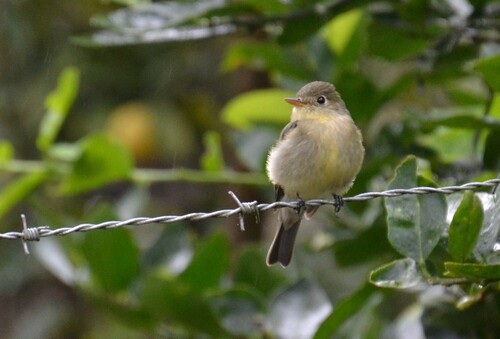 Mosquero Ventriamarillo
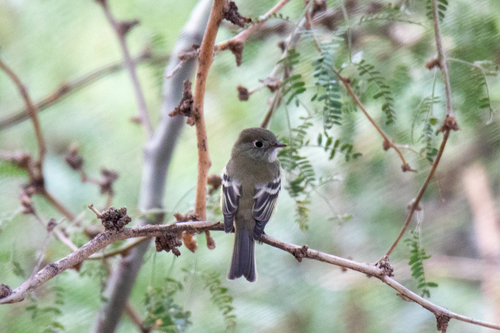 Mosquero de Hammond
En breve
La marca de campo más confiable entre el Mosquero Ventriamarillo y el Mosquero de Hammond es el color general de las partes inferiores: el Mosquero Ventriamarillo muestra partes inferiores distintivamente amarillentas (especialmente en la garganta y el vientre), mientras que el Mosquero de Hammond es mucho más blanco por debajo, con solo un leve lavado amarillo en los lados del vientre. Ambas especies tienen anillos oculares fuertes y barras alares, pero las del Mosquero Ventriamarillo son a menudo más amarillentas y contrastan más con las alas negras. El color y la estructura del pico también ayudan: el Mosquero Ventriamarillo tiene un pico más ancho y plano con una mandíbula superior oscura y una inferior de color naranja-rosado, mientras que el Mosquero de Hammond tiene un pico más pequeño y estrecho. Las aves juveniles/inmaduras de ambas especies pueden mostrar barras alares más anchas y de color más claro, pero el color general de las partes inferiores y la forma del pico siguen siendo útiles. Las pistas estructurales y de comportamiento, así como las diferencias sutiles en la voz, pueden ayudar aún más en la separación.
Consejos de identificación
- Color de las Partes Inferiores (Todas las Edades): El Mosquero Ventriamarillo tiene partes inferiores distintivamente amarillentas, especialmente en la garganta y el vientre, mientras que el Mosquero de Hammond es blanquecino por debajo, con solo un leve lavado amarillo en los lados del vientre y un lavado grisáceo en el pecho. Esta es la marca de campo más consistente.
- Tono de las Partes Superiores: El Mosquero Ventriamarillo es verdoso por encima, contrastando con sus partes inferiores amarillentas. El Mosquero de Hammond es grisáceo-oliva por encima, dando una impresión general más apagada y fría.
- Barras Alares (Todas las Edades): Ambas especies muestran dos barras alares pálidas, pero las del Mosquero Ventriamarillo son a menudo más amarillentas y contrastan fuertemente con las alas negras, mientras que las del Mosquero de Hammond son blancas y menos contrastantes. Las inmaduras de ambas especies pueden tener barras alares más anchas y de color más claro, pero el color de las partes inferiores sigue siendo una mejor pista.
- Anillo Ocular: Ambas tienen un anillo ocular fuerte, pero el del Mosquero Ventriamarillo puede ser más amarillento, mientras que el del Mosquero de Hammond es generalmente blanco brillante. La forma del anillo ocular no es un separador fuerte entre estos dos.
- Estructura y Color del Pico: El Mosquero Ventriamarillo tiene un pico ancho y plano con una mandíbula superior oscura y una mandíbula inferior de color naranja-rosado. El Mosquero de Hammond tiene un pico más pequeño y estrecho, generalmente más oscuro en general. El color del pico es especialmente útil en buena luz.
- Longitud y Forma de la Cola: Ambas tienen colas relativamente cortas, pero la del Mosquero Ventriamarillo es especialmente corta para un Empidonax. Esta es una distinción sutil y no siempre confiable en el campo.
- Altura de Posado y Comportamiento: El Mosquero Ventriamarillo tiende a posarse más bajo o a nivel medio en los árboles, mientras que el Mosquero de Hammond prefiere posaderos más altos y abiertos en el dosel superior. Usa esto en combinación con otras marcas.
- Vocalizaciones: Si canta, el Mosquero Ventriamarillo emite un "tse-berk" áspero y descendente; el Mosquero de Hammond da una canción más compleja y de múltiples versos. Los llamados son menos distintivos, pero pueden ayudar con la experiencia.
- Contexto de Hábitat: En el este o en los bosques boreales, es más probable encontrar al Mosquero Ventriamarillo; en los bosques de coníferas occidentales maduros, especialmente abeto/álamo, se espera al Mosquero de Hammond. El rango y el hábitat son pistas de apoyo, no marcas de campo primarias.
- Diferencias de Sexo: Las hembras del Mosquero de Hammond pueden tener un pico más corto y ancho que los machos, pero esto es sutil y no es una marca de campo confiable para la separación del Mosquero Ventriamarillo.
- Aves Juveniles/Inmaduras: Ambas pueden mostrar barras alares de color claro o amarillento cuando son inmaduras, pero las partes inferiores amarillentas del Mosquero Ventriamarillo siguen siendo distintivas. Las inmaduras del Mosquero de Hammond son más claras en general, pero permanecen blanquecinas por debajo.
- Impresión de Vuelo: Ambas especies se lanzan para atrapar insectos y a veces se quedan suspendidas para recolectar de la vegetación, pero el Mosquero de Hammond puede parecer ligeramente más esbelto y con alas más largas debido a su envergadura marginalmente mayor.
- Trampas: No confíes únicamente en el color de las barras alares o la forma del anillo ocular; siempre verifica el color de las partes inferiores y la estructura del pico. Las aves inmaduras pueden ser especialmente confusas, pero el lavado amarillo del Mosquero Ventriamarillo suele ser visible.
- Cuando las Marcas Fallan: En condiciones de poca luz o plumaje desgastado, el color de las partes inferiores puede estar atenuado. Usa el color/forma del pico y el comportamiento como respaldo. La voz es esencial si se ve mal.
- Resumen: Siempre combina el color de las partes inferiores, la estructura del pico y el hábitat/comportamiento para la identificación más confiable, especialmente en bandadas mixtas o migración.
Tamaño
Ambas especies son muy similares en tamaño, con el Mosquero Ventriamarillo promediando una masa corporal de 11.3 g [wikidata] y el Mosquero de Hammond variando de 8 a 12 g [wikipedia]. En longitud, el Mosquero Ventriamarillo mide de 13 a 15 cm (5.1 a 5.9 in) y el Mosquero de Hammond de 12 a 14 cm (4.7 a 5.5 in), por lo que hay una superposición extensa y el tamaño por sí solo no es una marca de campo confiable. La envergadura es ligeramente mayor en el Mosquero de Hammond (22 cm frente a 18-20 cm), pero esto es sutil y no se juzga fácilmente en el campo.
Plumaje
-
Aves Juveniles/Inmaduras: Las inmaduras de ambas especies tienen barras alares más anchas y de color más claro que los adultos. Las inmaduras del Mosquero de Hammond son especialmente notadas por sus barras alares claras y una apariencia generalmente más clara, pero el Mosquero Ventriamarillo también puede mostrar barras alares amarillentas o claras. La diferencia clave sigue siendo las partes inferiores: las inmaduras del Mosquero Ventriamarillo son amarillentas en toda la parte inferior (especialmente en la garganta y el vientre), mientras que las inmaduras del Mosquero de Hammond son blanquecinas por debajo, con solo un leve lavado amarillo en los lados del vientre y un lavado grisáceo en el pecho.
-
Adultos: El Mosquero Ventriamarillo tiene partes superiores verdosas y partes inferiores amarillentas, con un anillo ocular amarillento o blanco y barras alares amarillentas o blancas que contrastan fuertemente con las alas negras. El Mosquero de Hammond es grisáceo-oliva por encima, con partes inferiores blanquecinas, un anillo ocular blanco conspicuo y barras alares blancas; el pecho está lavado de gris y solo los lados del vientre muestran un tinte amarillo. El color del pico también es una pista: la mandíbula inferior del Mosquero Ventriamarillo es de color naranja-rosado, mientras que la del Mosquero de Hammond es generalmente más oscura y más pequeña.
Comportamiento
Ambas especies utilizan estrategias de alimentación similares, lanzándose desde posaderos para atrapar insectos en vuelo y a veces suspendiéndose para recolectar de la vegetación. El Mosquero Ventriamarillo típicamente se posa bajo o a nivel medio en los árboles, mientras que el Mosquero de Hammond a menudo elige posaderos más altos y abiertos en las partes superiores de los árboles. Esta diferencia en la altura de posado preferida puede ser una pista de comportamiento sutil en el hábitat adecuado.
Hábitat
El Mosquero Ventriamarillo se encuentra más a menudo en bosques húmedos, mixtos o de coníferas, especialmente en la zona boreal, y prefiere posaderos bajos o a nivel medio. El Mosquero de Hammond es característico de bosques de coníferas y mixtos maduros del oeste de América del Norte, especialmente bosques densos de abeto, álamo y cornejo, y es más probable que se encuentre en el dosel superior. Aunque ambos pueden superponerse en algunos hábitats de coníferas, el Mosquero de Hammond está más estrictamente asociado con bosques occidentales maduros.
Voz
La canción del Mosquero Ventriamarillo es un "tse-berk" áspero y descendente, que puede confundirse con el Mosquero Mínimo, pero es menos rápido y más descendente. El Mosquero de Hammond emite una canción de múltiples versos y ronca "ssilit, greeep, silit, pweet" y un llamado agudo "peek". El Mosquero de Hammond no canta durante la migración o en los terrenos de invernada. En el campo, las vocalizaciones son sutiles y pueden ser difíciles de separar a menos que se escuchen bien, pero la canción del Mosquero Ventriamarillo es típicamente más simple y más descendente, mientras que la del Mosquero de Hammond es más compleja y variable.
Mosquero Ventriamarillo · Mosquero de Hammond · Mis aves difíciles