

Yellow-bellied Flycatcher vs Hammond's Flycatcher
Empidonax flaviventris contro Empidonax hammondii
Fai un quiz con Yellow-bellied Flycatcher e Hammond's Flycatcher
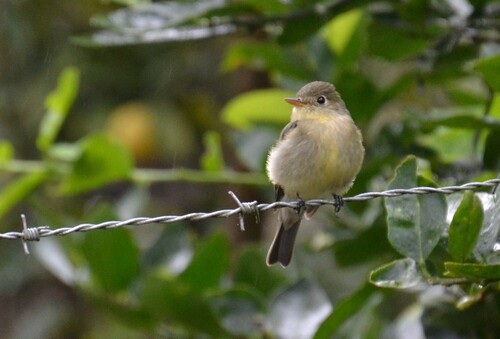 Yellow-bellied Flycatcher
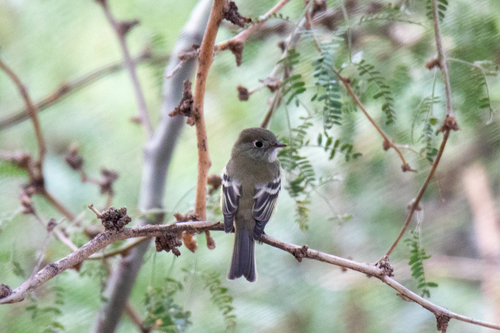 Hammond's Flycatcher
In breve
Il segno di campo più affidabile tra il Yellow-bellied Flycatcher e l'Hammond's Flycatcher è il colore complessivo delle parti inferiori: il Yellow-bellied mostra parti inferiori distintamente giallastre (soprattutto sulla gola e sul ventre), mentre l'Hammond's è molto più bianco sotto con solo una leggera sfumatura gialla sui lati del ventre. Entrambe le specie hanno anelli oculari forti e barre alari, ma quelle del Yellow-bellied sono spesso più giallastre e contrastano di più con le ali nere. Anche il colore e la struttura del becco aiutano: il Yellow-bellied ha un becco più largo e piatto con una mandibola superiore scura e una inferiore arancio-rosa, mentre l'Hammond's ha un becco più piccolo e stretto. Gli uccelli giovanili/immaturi di entrambe le specie possono mostrare barre alari più larghe e color crema, ma il colore complessivo delle parti inferiori e la forma del becco rimangono utili. Indizi strutturali e comportamentali, così come differenze sottili nella voce, possono ulteriormente aiutare la separazione.
Consigli di identificazione
- Underpart Color (All Ages): Il Yellow-bellied Flycatcher ha parti inferiori distintamente giallastre, soprattutto sulla gola e sul ventre, mentre l'Hammond's Flycatcher è biancastro sotto con solo una leggera sfumatura gialla sui lati del ventre e una sfumatura grigia sul petto. Questo è il segno di campo più consistente.
- Upperparts Tone: Il Yellow-bellied è verdastro sopra, in contrasto con le sue parti inferiori gialle. L'Hammond's è grigio-oliva sopra, dando un'impressione complessiva più opaca e fredda.
- Wing Bars (All Ages): Entrambe le specie mostrano due barre alari chiare, ma quelle del Yellow-bellied sono spesso più giallastre e contrastano fortemente con le ali nere, mentre quelle dell'Hammond's sono bianche e meno contrastanti. Gli immaturi di entrambe le specie possono avere barre alari più larghe e color crema, ma il colore delle parti inferiori rimane un indizio migliore.
- Eye Ring: Entrambi hanno un forte anello oculare, ma quello del Yellow-bellied può essere più giallastro, mentre l'Hammond's è solitamente bianco brillante. La forma dell'anello oculare non è un forte separatore tra questi due.
- Bill Structure and Color: Il Yellow-bellied ha un becco largo e piatto con una mandibola superiore scura e una mandibola inferiore arancio-rosa. L'Hammond's ha un becco più piccolo e stretto, generalmente più scuro nel complesso. Il colore del becco è particolarmente utile in buona luce.
- Tail Length and Shape: Entrambi hanno code relativamente corte, ma quella del Yellow-bellied è particolarmente corta per un Empidonax. Questa è una distinzione sottile e non sempre affidabile sul campo.
- Perch Height and Behavior: Il Yellow-bellied tende a posarsi più in basso o a livello medio negli alberi, mentre l'Hammond's preferisce posatoi più alti e aperti nella parte superiore della chioma. Usa questo in combinazione con altri segni.
- Vocalizations: Se canta, il Yellow-bellied emette un "tse-berk" ruvido e discendente; l'Hammond's emette una canzone più complessa e multiverso. Le chiamate sono meno distintive ma possono aiutare con l'esperienza.
- Habitat Context: Nei boschi orientali o boreali, il Yellow-bellied è più probabile; nei boschi coniferi maturi occidentali, soprattutto abete/popolare, ci si aspetta l'Hammond's. L'areale e l'habitat sono indizi di supporto, non segni di campo primari.
- Sex Differences: Le femmine dell'Hammond's possono avere un becco più corto e più largo rispetto ai maschi, ma questo è sottile e non è un segno di campo affidabile per la separazione dal Yellow-bellied.
- Juvenile/Immature Birds: Entrambi possono mostrare barre alari color crema o giallastre quando immaturi, ma le parti inferiori gialle del Yellow-bellied sono ancora distintive. Gli immaturi dell'Hammond's sono più color crema nel complesso ma rimangono bianchi sotto.
- Flight Impression: Entrambe le specie si lanciano per catturare insetti e si librano per raccogliere, ma l'Hammond's può apparire leggermente più snello e con ali più lunghe a causa della sua apertura alare marginalmente maggiore.
- Pitfalls: Non fare affidamento solo sul colore delle barre alari o sulla forma dell'anello oculare; controlla sempre il colore delle parti inferiori e la struttura del becco. Gli uccelli immaturi possono essere particolarmente confusi, ma la sfumatura gialla del Yellow-bellied è solitamente visibile.
- When Marks Fail: In scarsa luce o piumaggio usurato, il colore delle parti inferiori può essere attenuato. Usa il colore/forma del becco e il comportamento come backup. La voce è essenziale se vista male.
- Summary: Combina sempre il colore delle parti inferiori, la struttura del becco e l'habitat/comportamento per la identificazione più affidabile, specialmente in stormi misti o durante la migrazione.
Taglia
Entrambe le specie sono molto simili in dimensioni, con il Yellow-bellied Flycatcher che ha una massa corporea media di 11,3 g [wikidata] e l'Hammond's Flycatcher che varia da 8 a 12 g [wikipedia]. In lunghezza, il Yellow-bellied è di 13-15 cm (5,1-5,9 in) e l'Hammond's è di 12-14 cm (4,7-5,5 in), quindi c'è un'ampia sovrapposizione e la dimensione da sola non è un segno di campo affidabile. L'apertura alare è leggermente più grande nell'Hammond's (22 cm contro 18-20 cm), ma questa è sottile e non facilmente giudicabile sul campo.
Piumaggio
-
Juvenile/Immature birds: Gli immaturi di entrambe le specie hanno barre alari più larghe e color crema rispetto agli adulti. Gli immaturi dell'Hammond's sono particolarmente noti per le barre alari color crema e un aspetto generalmente più color crema, ma il Yellow-bellied può anche mostrare barre alari giallastre o color crema. La differenza chiave rimane nelle parti inferiori: gli immaturi del Yellow-bellied sono giallastri in tutte le parti inferiori (soprattutto gola e ventre), mentre gli immaturi dell'Hammond's sono bianchi sotto con solo una leggera sfumatura gialla sui lati del ventre e una sfumatura grigia sul petto.
-
Adults: Il Yellow-bellied Flycatcher ha parti superiori verdastre e parti inferiori giallastre, con un anello oculare giallastro o bianco e barre alari giallastre o bianche che contrastano fortemente con le ali nere. L'Hammond's Flycatcher è grigio-oliva sopra, con parti inferiori bianche, un anello oculare bianco evidente e barre alari bianche; il petto è lavato di grigio e solo i lati del ventre mostrano una sfumatura gialla. Anche il colore del becco è un indizio: la mandibola inferiore del Yellow-bellied è arancio-rosa, mentre quella dell'Hammond's è generalmente più scura e più piccola.
Comportamento
Entrambe le specie utilizzano strategie alimentari simili, lanciandosi dai posatoi per catturare insetti in volo e a volte librandosi per raccogliere dalla vegetazione. Il Yellow-bellied Flycatcher si posiziona tipicamente in basso o a livello medio negli alberi, mentre l'Hammond's sceglie spesso posatoi più alti e aperti nelle parti superiori degli alberi. Questa differenza nell'altezza preferita del posatoio può essere un indizio comportamentale sottile nell'habitat giusto.
Habitat
Il Yellow-bellied Flycatcher si trova più spesso in foreste miste o conifere umide, specialmente nella zona boreale, e preferisce posatoi più bassi o a livello medio. L'Hammond's Flycatcher è caratteristico delle foreste conifere mature e miste del Nord America occidentale, specialmente delle foreste dense di abete, pioppo e corniolo, ed è più probabile trovarlo nella parte superiore della chioma. Anche se entrambe possono sovrapporsi in alcuni habitat coniferi, l'Hammond's è più strettamente associato a foreste occidentali mature.
Voce
Il canto del Yellow-bellied Flycatcher è un "tse-berk" ruvido e discendente, che può essere confuso con il Least Flycatcher ma è meno scattante e più discendente. L'Hammond's Flycatcher emette una canzone multiverso e rauca "ssilit, greeep, silit, pweet" e una chiamata acuta "peek". L'Hammond's non canta durante la migrazione o nei terreni invernali. Sul campo, le vocalizzazioni sono sottili e possono essere difficili da separare a meno che non siano udite bene, ma il canto del Yellow-bellied è tipicamente più semplice e più discendente, mentre quello dell'Hammond's è più complesso e variabile.
Yellow-bellied Flycatcher · Hammond's Flycatcher · I miei uccelli difficili